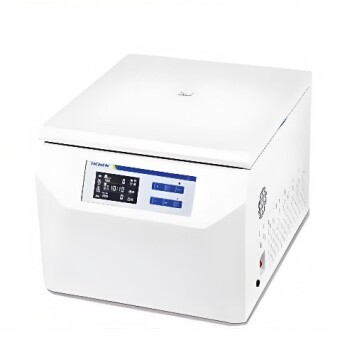
The high-pressure reactor is the operational core of the Supercritical Fluid Extraction (SFE) system. Its primary significance lies in its ability to maintain the precise temperature and pressure conditions necessary to transform carbon dioxide (CO2) into a supercritical fluid, a state required to effectively extract hesperidin.
The high-pressure reactor enables CO2 to achieve a dual nature, combining the penetrating speed of a gas with the dissolving strength of a liquid. This allows for the highly selective extraction of hesperidin while eliminating the risk of leaving toxic organic residues in the final product.
The Mechanics of the Reactor
Achieving the Supercritical State
The fundamental purpose of the reactor is to bring CO2 beyond its critical point.
To do this, the vessel must sustain specific high-pressure environments that force the gas into a supercritical state. Without this precise pressure control, CO2 remains a gas or liquid, neither of which is sufficient for this type of extraction.
Dual Extraction Properties
Once inside the high-pressure reactor, supercritical CO2 exhibits gas-like diffusivity.
This property allows the solvent to penetrate the solid matrix of the raw material with exceptional ease.
Simultaneously, the fluid demonstrates liquid-like solvating power. This enables it to dissolve and transport the target compounds out of the raw material effectively.
Optimizing for Hesperidin
Utilizing Polar Co-Solvents
While supercritical CO2 is a powerful solvent, it is naturally non-polar. Hesperidin, however, requires specific polarity for extraction.
The high-pressure reactor accommodates the introduction of polar co-solvents. This modification tunes the solvent's chemistry, facilitating the highly selective extraction of hesperidin that pure CO2 might miss.
Ensuring Purity and Safety
A distinct advantage of using a high-pressure reactor for SFE is the purity of the final isolate.
Because the process relies on CO2, the method results in no organic solvent residues. Once the pressure is released, the CO2 reverts to a gas and evaporates completely, leaving behind a pure extract suitable for high-quality applications.
Understanding the Operational Trade-offs
The Necessity of Precision
The effectiveness of the reactor relies entirely on maintaining stability.
Fluctuations in pressure or temperature can cause the CO2 to drop out of its supercritical state. This immediately degrades solvating power and stops the extraction process.
Engineering Complexity
Operating a high-pressure reactor introduces complexity regarding safety and equipment durability.
Unlike standard atmospheric extraction, these vessels must be engineered to withstand immense physical stress to keep the volatile supercritical fluids contained safely.
Making the Right Choice for Your Goal
When evaluating extraction technologies for hesperidin, consider your end-product requirements:
- If your primary focus is product purity and safety: The high-pressure SFE reactor is the ideal choice, as it guarantees an extract free from organic solvent residues.
- If your primary focus is targeting specific compounds: This method offers superior control, as the use of polar co-solvents allows for highly selective extraction of hesperidin.
The high-pressure reactor transforms standard CO2 into a precision tool, delivering a cleaner, more targeted extraction than traditional methods.
Summary Table:
| Feature | Significance in SFE | Impact on Hesperidin Extraction |
|---|---|---|
| Phase Control | Maintains CO2 above critical point | Transforms CO2 into a high-solvency supercritical fluid |
| Diffusivity | Gas-like penetration speed | Rapidly permeates solid matrices for faster extraction |
| Solvating Power | Liquid-like dissolving strength | Effectively transports target compounds out of raw materials |
| Co-solvent Support | Integration of polar modifiers | Enhances selectivity for non-polar CO2 to capture hesperidin |
| Safety & Purity | High-pressure containment | Eliminates organic residues; CO2 evaporates cleanly after use |
Elevate Your Extraction Purity with KINTEK Technology
Precision is the heartbeat of supercritical fluid extraction. KINTEK specializes in advanced laboratory equipment, offering high-performance high-temperature high-pressure reactors and autoclaves designed to withstand the rigorous demands of SFE and hesperidin isolation.
Whether you are scaling up pharmaceutical research or optimizing botanical purity, our expertise ensures your lab is equipped with the most durable and precise pressure vessels, heating systems, and specialized consumables. From CVD/PECVD furnaces to precision hydraulic presses and PTFE consumables, KINTEK provides the comprehensive tools needed for cutting-edge material science and chemical engineering.
Ready to achieve superior extraction results? Contact our technical specialists today to find the perfect high-pressure solution for your laboratory's needs.
References
- Mahesh Kumar Samota, P. N. Guru. Hesperidin from citrus peel waste: extraction and its health implications. DOI: 10.15586/qas.v15i2.1256
This article is also based on technical information from Kintek Solution Knowledge Base .
Related Products
- Customizable Laboratory High Temperature High Pressure Reactors for Diverse Scientific Applications
- Customizable High Pressure Reactors for Advanced Scientific and Industrial Applications
- Stainless High Pressure Autoclave Reactor Laboratory Pressure Reactor
- Mini SS High Pressure Autoclave Reactor for Laboratory Use
- High Pressure Laboratory Autoclave Reactor for Hydrothermal Synthesis
People Also Ask
- How do high-pressure and high-temperature reactors ensure the effective treatment of lignocellulosic wastewater in WAO?
- What equipment is required for high-pressure high-temperature reactions? Master Extreme Chemistry Safely
- How do you control high pressure in a reactor? A Guide to Safe & Stable Operation
- How does initial oxygen pressure affect the wet oxidation of pharmaceutical sludge? Master Your Oxidation Depth
- Why is argon better than nitrogen for inert atmosphere? Ensure Absolute Reactivity & Stability