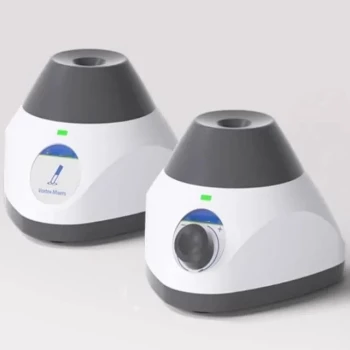
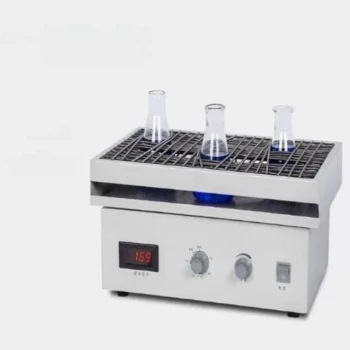
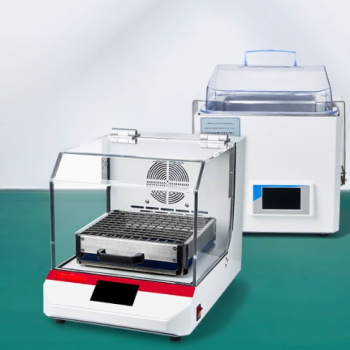
The constant temperature water bath shaker is a critical tool for M-SSAC adsorption experiments. It provides two primary conditions: precise thermal regulation (typically within ±1°C) and continuous mechanical oscillation (often ranging from 150 to 200 rpm). These combined factors ensure that the adsorption of methylene blue is driven by the chemical affinity of the modified carbon rather than physical transport limitations.
Core Takeaway: By providing a stable thermal environment and forced convection, the water bath shaker allows researchers to accurately measure the thermodynamic parameters and kinetic rates of methylene blue adsorption on Modified Soybean Straw Activated Carbon (M-SSAC).
The Role of Precise Thermal Control
Analyzing Thermodynamic Properties
Maintaining a constant temperature, such as 298 K or 30 °C, is essential for determining if the adsorption process is spontaneous, endothermic, or exothermic. This stability allows for the accurate calculation of thermodynamic variables, including Gibbs free energy, enthalpy, and entropy.
Eliminating Thermal Fluctuations
Adsorption is sensitive to even minor temperature shifts, which can alter the energy of the methylene blue molecules. A water bath acts as a thermal buffer, preventing fluctuations that would otherwise lead to inconsistent data regarding the saturated adsorption capacity of the M-SSAC.
Mechanical Oscillation and Kinetic Efficiency
Overcoming Liquid Film Mass Transfer Resistance
Continuous shaking creates forced convection, which helps methylene blue molecules overcome the "liquid film" or boundary layer surrounding the carbon particles. By minimizing this external diffusion resistance, the shaker ensures that the dye molecules reach the adsorbent surface at a rate dictated by the material's pore structure.
Maintaining Uniform Suspension of M-SSAC
The mechanical power provided by the shaker (e.g., 160 rpm) keeps the M-SSAC particles in homogenous suspension. This prevents the adsorbent from settling at the bottom of the flask, thereby maximizing the collision frequency between the dye molecules and the active adsorption sites on the modified soybean straw.
Accelerating Adsorption Equilibrium
By providing continuous kinetic input, the shaker shortens the time required for the system to reach adsorption equilibrium. This is vital for the accurate determination of kinetic models, such as pseudo-first-order or pseudo-second-order equations, which describe how fast the M-SSAC captures the dye.
Understanding the Trade-offs and Pitfalls
Speed and Structural Integrity
While higher oscillation speeds reduce diffusion resistance, excessively high speeds (e.g., over 250 rpm) can cause mechanical attrition. This may physically break down the M-SSAC particles, creating "fines" that are difficult to filter and may lead to overestimations of surface area.
Temperature Gradients in the Bath
If the water level in the shaker is too low or the circulation is poor, localized hot spots can occur. This creates an inconsistent environment where different flasks in the same batch may yield varying results, undermining the reproducibility of the experiment.
How to Apply This to Your Project
Recommendations for Experimental Design
- If your primary focus is Thermodynamic Modeling: Prioritize the calibration of the temperature sensor and use multiple set points (e.g., 20°C, 30°C, 40°C) to establish clear trends in enthalpy and entropy.
- If your primary focus is Adsorption Kinetics: Prioritize a consistent oscillation speed (e.g., 180 rpm) to ensure that the mass transfer resistance is minimized across all time intervals.
- If your primary focus is Industrial Scaling: Use the shaker to determine the minimum agitation speed required to achieve equilibrium, which helps in calculating the energy requirements for larger stirred-tank reactors.
By effectively balancing thermal stability and mechanical agitation, you ensure that your M-SSAC adsorption data is both technically sound and scientifically reproducible.
Summary Table:
| Feature | Primary Function | Experimental Impact |
|---|---|---|
| Precise Thermal Control | Maintains stable temp (typically ±1°C) | Accurate Thermodynamic Modeling (Gibbs, Enthalpy) |
| Mechanical Oscillation | Continuous shaking (150-200 rpm) | Overcomes liquid film resistance & ensures suspension |
| Forced Convection | Increases molecular collisions | Accelerates kinetic equilibrium & reduces test time |
| Thermal Buffering | Eliminates local temperature spikes | Ensures data reproducibility & consistent adsorption capacity |
Elevate Your Adsorption Research with KINTEK Precision
Achieving scientific breakthroughs in material science requires equipment that guarantees reproducibility. KINTEK specializes in high-performance laboratory equipment designed to meet the rigorous demands of researchers working on M-SSAC and activated carbon studies.
Our comprehensive portfolio supports your entire workflow:
- Preparation: High-efficiency crushing and milling systems and sieving equipment for consistent particle sizing.
- Synthesis: Advanced high-temperature furnaces (CVD, Vacuum, Muffle) and high-pressure reactors for material modification.
- Analysis: Precision shakers, homogenizers, and cooling solutions (ULT freezers, freeze dryers) to ensure stable experimental environments.
Ready to optimize your lab’s efficiency and data accuracy? Contact our technical experts today to find the perfect solution for your research goals!
References
- Rurong Jiang, Yonglian Yao. Optimization of The Modified Soybean StrawActivated Carbon for Adsorption of MethyleneBlue Dye by Response Surface Methodology. DOI: 10.15244/pjoes/166348
This article is also based on technical information from Kintek Solution Knowledge Base .
Related Products
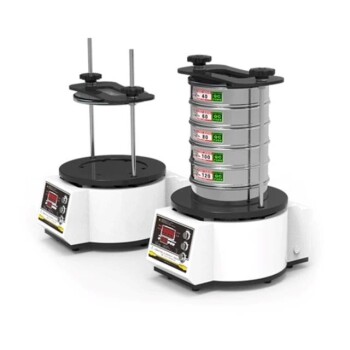
- Laboratory Wet Three-Dimensional Vibratory Sieve Shaker Machine
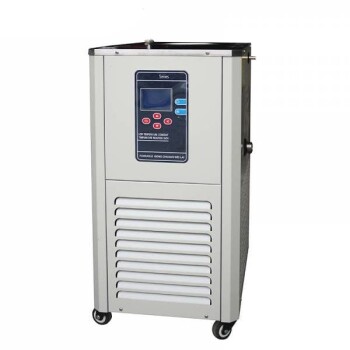
- 50L Chiller Water Bath Cooling Circulator Low Temperature Constant Temperature Reaction Bath
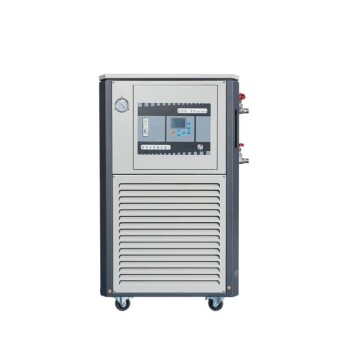
- High Temperature Constant Temperature Heating Circulator Water Bath Chiller Circulator for Reaction Bath
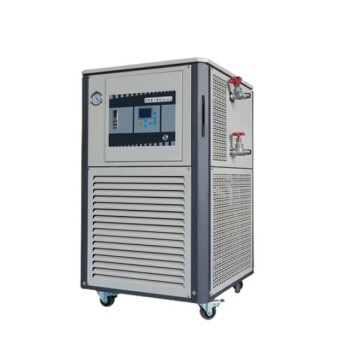
- 20L Heating Chilling Circulator Cooling Water Bath Circulator for High and Low Temperature Constant Temperature Reaction
- 30L Chiller Water Bath Cooling Circulator Low Temperature Constant Temperature Reaction Bath
People Also Ask
- How does a laboratory vibratory sieve shaker facilitate the microstructural study of gas-atomized alloy powders?
- Why use a vibratory sieve shaker for PET powder? Achieve Precise Particle Size Control for Chemical Research
- How is a vibratory sieve shaker used in the particle size analysis of mechanically alloyed powders? Expert Guide
- What is the principle of vibratory sieve shaker? Achieve Accurate Particle Size Analysis
- What is the function of a vibratory sieve shaker? Achieve Precise Particle Size Analysis