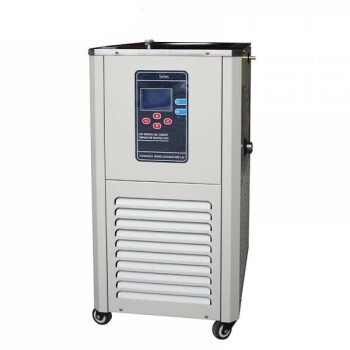
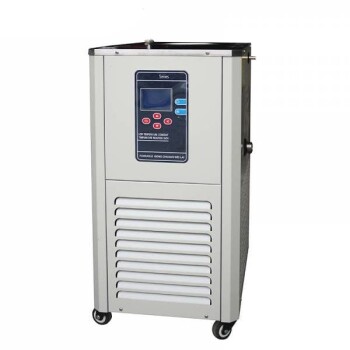
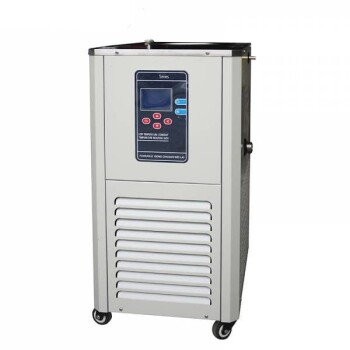
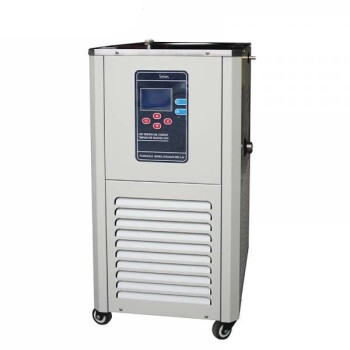
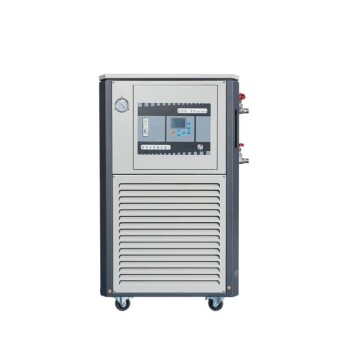
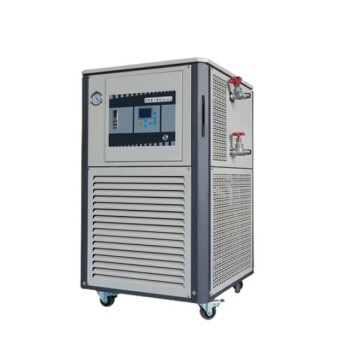
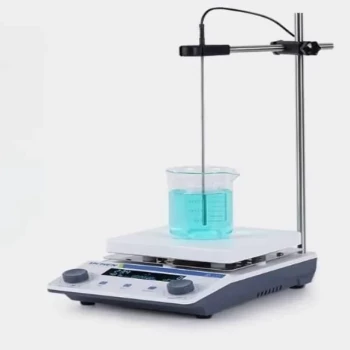
Precision temperature control is the single most critical variable for optimizing gold recovery in thiourea leaching. Constant temperature water baths or heating reaction systems are required to maintain the reaction environment strictly within a narrow window—typically around 45°C—to effectively balance reaction speed against chemical stability.
The thiourea leaching process operates on a knife's edge: insufficient heat results in sluggish gold recovery, while excessive heat triggers the rapid, irreversible decomposition of the expensive thiourea reagent.
The Delicate Thermal Balance of Thiourea
Accelerating Reaction Kinetics
To achieve efficient gold recovery, the leaching solution requires thermal energy.
At moderate temperatures, specifically around 45°C, the kinetics of the reaction accelerate.
This increased molecular activity leads to faster dissolution of gold, significantly improving the processing rate compared to ambient temperatures.
The Danger of Thermal Decomposition
While heat aids the reaction, thiourea is highly sensitive to thermal stress.
The primary reference indicates that temperatures exceeding 60°C are detrimental to the process.
Crossing this threshold causes severe and irreversible decomposition of the thiourea. Once decomposed, the chemical can no longer dissolve gold, leading to process failure.
Why Precision Equipment is Non-Negotiable
Eliminating Localized Overheating
Standard heating methods often create "hot spots" where the temperature locally exceeds the average of the solution.
Constant temperature water baths and specialized heating reaction systems are designed to distribute heat evenly.
This ensures that no part of the solution inadvertently crosses the 60°C danger zone, even if the average temperature is safe.
Protecting Reagent Investment
Thiourea is a costly reagent, making its preservation an economic priority.
High-precision control minimizes the loss of this expensive chemical due to thermal breakdown.
By maintaining stability, you ensure that the reagent is consumed by the gold leaching process, not destroyed by the heating system.
Understanding the Trade-offs
Equipment Cost vs. Operational Efficiency
Implementing high-precision heating systems requires a higher initial capital investment than basic heating elements.
However, the trade-off is clear: low-precision heating risks fluctuating yields and high chemical consumption.
The cost of constantly replenishing decomposed thiourea will quickly exceed the cost of investing in a stable, constant temperature system.
Making the Right Choice for Your Goal
To maximize the efficiency of your thiourea leaching process, consider the following parameters when setting up your thermal control system:
- If your primary focus is maximizing reaction speed: Target a precise setpoint of 45°C to achieve optimal kinetics without approaching the thermal safety limit.
- If your primary focus is reagent conservation: Implement a system with a hard safety limit below 60°C to guarantee zero loss of thiourea due to accidental overheating.
Precise thermal regulation is not merely a technical requirement; it is the economic keystone that makes thiourea leaching a viable alternative for gold recovery.
Summary Table:
| Parameter | Optimal Range | Impact of Deviation |
|---|---|---|
| Target Temperature | ~45°C | Below 25°C: Sluggish reaction; Above 60°C: Rapid decomposition |
| Thiourea Stability | < 60°C | High heat causes irreversible chemical breakdown and reagent loss |
| Reaction Kinetics | Moderate (45°C) | Optimal balance between gold dissolution speed and cost efficiency |
| Heating Method | Uniform (Water Bath) | Prevents localized hot spots that destroy expensive reagents |
Maximize Gold Recovery with KINTEK Precision Solutions
Maintaining a delicate thermal balance is the difference between efficient gold recovery and costly reagent loss. At KINTEK, we specialize in providing high-performance laboratory equipment designed to meet the rigorous demands of chemical leaching and material processing.
Our extensive portfolio includes constant temperature water baths, high-temperature high-pressure reactors, and cooling solutions like chillers and freeze dryers, ensuring your reactions stay within the optimal window. From PTFE products and crucibles for corrosive environments to homogenizers and shakers for solution uniformity, KINTEK offers the comprehensive tools you need to optimize your lab's performance.
Ready to upgrade your thermal control and protect your reagent investment? Contact our technical experts today to find the perfect heating system for your gold recovery application!
References
- Daniel A. Ray, Sébastien Farnaud. Thiourea Leaching: An Update on a Sustainable Approach for Gold Recovery from E-waste. DOI: 10.1007/s40831-022-00499-8
This article is also based on technical information from Kintek Solution Knowledge Base .
Related Products
- High Temperature Constant Temperature Heating Circulator Water Bath Chiller Circulator for Reaction Bath
- 50L Chiller Water Bath Cooling Circulator Low Temperature Constant Temperature Reaction Bath
- 10L Chilling Circulator Cooling Water Bath Low Temperature Constant Temperature Reaction Bath
- 30L Chiller Water Bath Cooling Circulator Low Temperature Constant Temperature Reaction Bath
- 5L Chilling Circulator Cooling Water Bath Circulator for Low Temperature Constant Temperature Reaction Bath
People Also Ask
- What is the necessity of a circulating water bath in chlorate production? Optimize Yield & Purity with Precision
- How do constant temperature circulators impact weight-loss immersion tests? Ensure Precision in Corrosion Analysis
- How does a constant temperature circulator support the leaching reaction of gold scrap? Optimize Gold Recovery Results
- Why is a constant temperature water bath used for precursor storage in CVD? Achieve Stable Nanocrystalline SiC Deposition
- Why is a high-precision constant temperature water bath necessary for anaerobic digestion? Ensure Success at 37±0.02°C