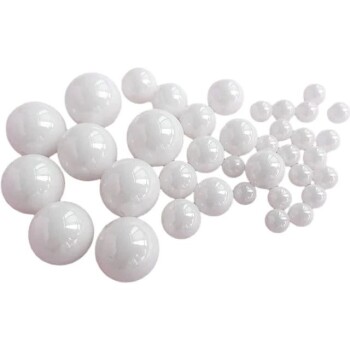
Zirconia grinding beads are the standard consumable for processing LLZTO solid-state electrolytes due to their unique balance of extreme physical hardness and chemical inertness. They provide the necessary kinetic energy to fracture tough oxide particles while virtually eliminating the risk of metallic contamination that would otherwise destroy the material's electrochemical performance.
The use of zirconia beads is critical for solving the dual challenge of high-energy mechanical refinement and strict purity control, ensuring the final electrolyte maintains the high ionic conductivity required for solid-state batteries.
The Physics of Efficient Grinding
Generating High Kinetic Energy
LLZTO (Lithium Lanthanum Zirconium Tantalum Oxide) involves processing hard ceramic particles that resist fracture. Zirconia beads possess high density, which translates to significant kinetic energy during the ball milling process. This energy is essential to break through the tough impurity layers found on raw electrolyte particles.
Optimizing Mechanical Refinement
The hardness of zirconia allows for the efficient transfer of mechanical energy directly to the target material. This capability shortens reaction times and facilitates mechanical alloying, ensuring the powder reaches the necessary fineness for sintering.
Chemical Purity and Electrochemical Stability
Preventing Metallic Contamination
Standard grinding media, such as stainless steel, inevitably shed microscopic particles during high-energy collisions. Zirconia is chemically inert and highly wear-resistant, preventing the introduction of fatal metallic impurities like iron or chromium.
Preserving Ionic Conductivity
The presence of foreign impurities in a solid-state electrolyte acts as a barrier to lithium-ion movement. By minimizing contamination, zirconia grinding media ensure that the synthesized material retains the high ionic conductivity required for efficient battery operation.
Avoiding Unwanted Side Reactions
Solid-state electrolytes are chemically sensitive and can degrade if exposed to reactive materials during processing. Zirconia’s inert nature prevents side reactions between the media and the electrolyte powder, maintaining the chemical stability of the final product.
Understanding the Trade-offs
Cost vs. Quality Assurance
Zirconia media are generally more expensive than traditional steel grinding balls. However, in the context of solid-state electrolytes, this cost is a necessary investment to prevent batch failure caused by conductive impurities.
Wear Resistance vs. Absolute Purity
While zirconia exhibits superior wear resistance, no grinding media is infinitely durable. Over extended milling durations (e.g., five hours or more), minute amounts of wear may occur. However, unlike metallic wear, zirconia residue is far less detrimental to the electrochemical performance of zirconium-based electrolytes like LLZTO.
Making the Right Choice for Your Goal
To maximize the performance of your solid-state electrolyte project, consider the following regarding your processing parameters:
- If your primary focus is maximizing Ionic Conductivity: Prioritize high-quality zirconia media to completely eliminate the risk of iron contamination, which blocks ion transport pathways.
- If your primary focus is Process Efficiency: Utilize high-density zirconia beads to generate the impact force needed to pulverize hard oxides and reduce milling time.
Success in solid-state battery fabrication begins with the purity of the raw powder processing.
Summary Table:
| Feature | Zirconia Grinding Beads | Traditional Steel Media |
|---|---|---|
| Material Hardness | Extremely High | Moderate to High |
| Chemical Inertness | Chemically Inert | Reactive/Oxidizing |
| Contamination Risk | Minimal (Zirconium-compatible) | High (Fe, Cr, Ni metallic particles) |
| Energy Transfer | High (Dense material) | Moderate |
| Impact on LLZTO | Preserves ionic conductivity | Degrades electrochemical performance |
Elevate Your Solid-State Battery Research with KINTEK
Precision in LLZTO processing starts with the right equipment and consumables. KINTEK specializes in high-performance laboratory solutions designed for the rigorous demands of battery research. Whether you are refining powders using our crushing and milling systems or synthesizing electrolytes in our advanced vacuum and tube furnaces, we provide the tools necessary to ensure maximum chemical purity and ionic conductivity.
From high-density zirconia grinding beads and PTFE consumables to isostatic hydraulic presses for pellet preparation, our comprehensive portfolio supports every stage of your workflow. Don't let impurities compromise your electrochemical performance.
Ready to optimize your lab's efficiency? Contact KINTEK today to discover how our expert-grade milling solutions and high-temperature systems can accelerate your materials science breakthroughs.
Related Products
- Precision Machined Zirconia Ceramic Ball for Engineering Advanced Fine Ceramics
- Laboratory Jar Mill with Agate Grinding Jar and Balls
- Nature Agate Mortar and Pestle for Grinding and Mixing
People Also Ask
- What are the applications of zirconia ceramics? Unlock High-Performance Solutions for Extreme Environments
- What is the physical mechanism for selecting hard grinding media? Optimize Your ZrC-Al Matrix Composite Production
- Why are zirconia milling balls preferred for P2-type layered oxides? Ensure High Purity and Grinding Efficiency
- What is the purpose of using zirconia milling balls of different diameters? Optimize Solid Electrolyte Processing
- Why are zirconia grinding jars and balls required for solid-state electrolyte powders? Ensure High Purity & Performance