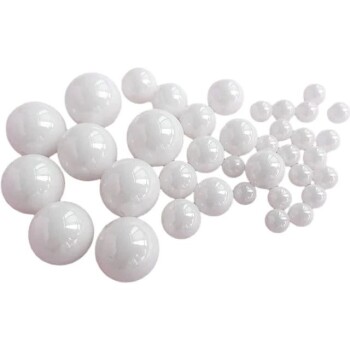
Zirconia grinding media are strictly required to ensure the chemical purity of the final electrolyte powder. Their extreme hardness prevents the shedding of metallic contaminants, such as iron or chromium, during the aggressive mechanical impact of high-energy milling.
High-energy ball milling involves intense physical impact that degrades softer materials. Zirconia is the industry standard because it possesses the necessary wear resistance to pulverize hard precursors without introducing conductive impurities that would ruin the electrochemical performance of the solid electrolyte.
The Criticality of Purity
Using the correct grinding media is not merely a matter of efficiency; it is a matter of chemical viability. Solid electrolytes are hypersensitive to foreign materials.
Preventing Metallic Contamination
The primary function of zirconia (ZrO2) is to act as a non-contaminating barrier. During prolonged milling sessions—often exceeding five hours—standard stainless steel jars would wear down, introducing iron or chromium into your mixture.
Even trace amounts of these metals can be catastrophic. Metallic impurities create electron conduction pathways within the electrolyte, leading to short circuits or parasitic side reactions during battery operation.
Chemical Inertness
Beyond hardness, zirconia is chemically inert. This property is vital when synthesizing complex materials like sulfides or oxides (e.g., LLZO, LLZTO).
It ensures that the grinding media does not react with the precursors, preserving the ionic conductivity and stability of the final synthesized product.
Mechanical Requirements of Milling
High-energy ball milling is a violent process intended to facilitate mechanochemical reactions. The equipment must withstand this environment without failing.
Withstanding High-Impact Forces
Solid electrolyte precursors, particularly oxides, can be extremely hard. Zirconia offers superior hardness compared to many other ceramics.
This allows the balls to deliver sufficient impact force to fracture and pulverize raw materials without the balls themselves shattering or degrading under the stress.
Efficient Energy Transfer
The high density of zirconia contributes to efficient kinetic energy transfer. This ensures the mechanical alloying process proceeds at the required rate to achieve the correct phase formation in the electrolyte.
Understanding the Trade-offs
While zirconia is the superior technical choice for this application, it introduces specific operational constraints that differ from metallic media.
Cost and Brittleness
Zirconia is significantly more expensive than stainless steel. It is also a ceramic, meaning it has lower fracture toughness than metal; while hard, it is brittle and can crack if dropped or subjected to thermal shock.
Density Considerations
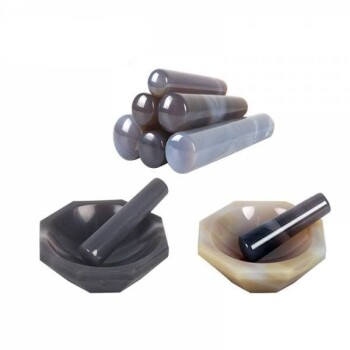
Zirconia is denser than agate or alumina but less dense than steel or tungsten carbide. You may need to adjust milling times or rotational speeds to achieve the same kinetic energy input you might expect from heavier metallic media.
Making the Right Choice for Your Goal
The selection of grinding media dictates the success of your solid-state battery research.
- If your primary focus is High Ionic Conductivity: Use high-density zirconia to ensure zero metallic contamination, which is the leading cause of poor conductivity in sulfides and oxides.
- If your primary focus is Electrochemical Stability: Rely on zirconia's chemical inertness to prevent side reactions that degrade voltage windows during cycling.
- If your primary focus is Cost Reduction: Do not substitute steel for zirconia in this specific application; the resulting impurities will render the electrolyte electrically useless.
Purity is the prerequisite for performance in solid electrolytes; zirconia is the only material that guarantees it.
Summary Table:
| Feature | Zirconia (ZrO2) | Stainless Steel | Agate/Alumina |
|---|---|---|---|
| Contamination Risk | Extremely Low | High (Fe, Cr) | Low (Si, Al) |
| Hardness (Mohs) | 8.5 - 9.0 | 5.0 - 6.0 | 6.5 - 7.5 |
| Chemical Inertness | Excellent | Poor (Reacts with Sulfides) | Good |
| Primary Benefit | Prevents Short Circuits | High Kinetic Energy | Low Cost |
| Best For | Solid-State Electrolytes | General Ores/Metals | Soft Powders |
Elevate Your Battery Research with KINTEK Precision
Don’t let trace impurities compromise your solid-state electrolyte performance. KINTEK specializes in premium laboratory equipment, providing high-density zirconia grinding jars and media, planetary ball mills, and crushing systems designed for the most demanding material syntheses.
Whether you are working on LLZO/Sulfide electrolytes or advanced battery precursors, our comprehensive range—including high-temperature furnaces, vacuum systems, and hydraulic pellet presses—ensures your lab has the tools needed for breakthrough results.
Ready to optimize your milling process? Contact our experts today to find the perfect grinding solution for your application.
Related Products
- Laboratory Jar Ball Mill with Alumina Zirconia Grinding Jar and Balls
- Precision Machined Zirconia Ceramic Ball for Engineering Advanced Fine Ceramics
- Laboratory Jar Mill with Agate Grinding Jar and Balls
- Laboratory Ball Mill Jar Mill with Metal Alloy Grinding Jar and Balls
- High Energy Planetary Ball Mill Milling Machine for Laboratory
People Also Ask
- What are the primary functions of using a ball mill for BZCY72 powder? Achieve High Purity and Enhanced Sintering
- In what way does a laboratory ball mill affect material properties when modifying PHBV/pulp fiber composites?
- Why is a laboratory ball mill required for ultra-fine fly ash? Unlock Nano-Scale Adsorption Power
- What is the function of a laboratory ball mill in the preparation of AMMCs? Optimize Dispersion & Grain Refinement
- What is the function of a laboratory ball mill in the pretreatment of waste tire char (WTC)? Optimize Material Reactivity