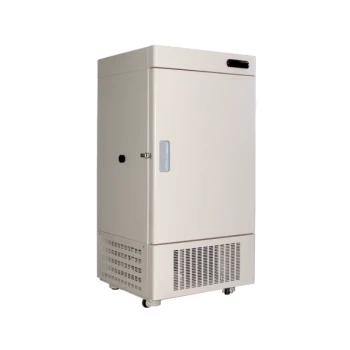
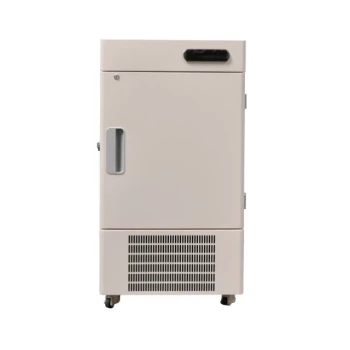
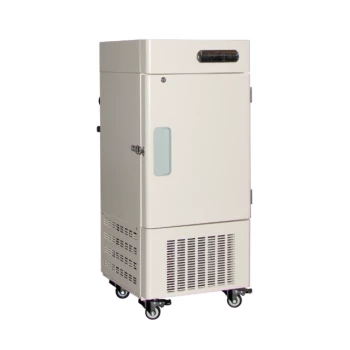
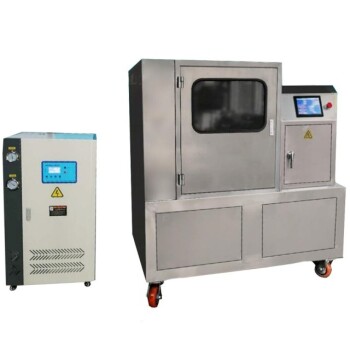
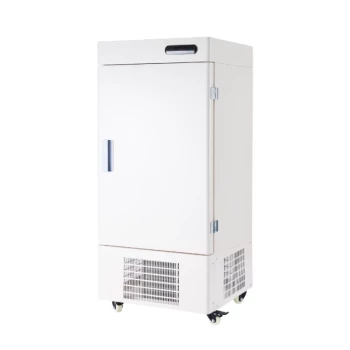
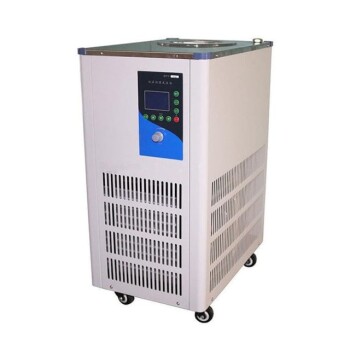
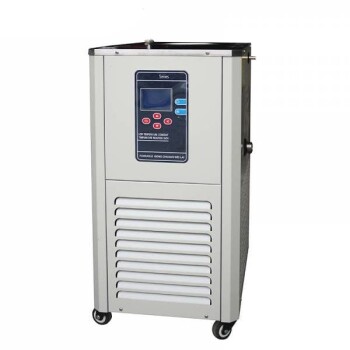
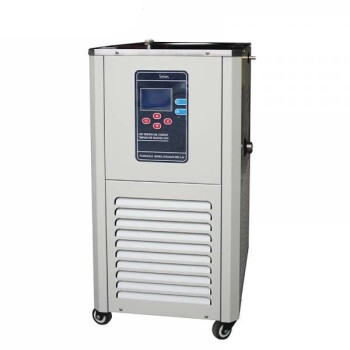
Precise thermal control is the single most critical variable in determining FATT50 accuracy. A high-precision ultra-low temperature cooling system is necessary because the assessment requires conducting multiple impact tests across a broad thermal spectrum, often reaching extremes like -60°C. Only a specialized cooling system can guarantee the temperature uniformity and stability required to ensure the specimen is at the exact preset temperature at the moment of impact.
The FATT50 (50% Fracture Appearance Transition Temperature) is not found via a single test, but by mapping a material's behavior across a thermal curve. High-precision cooling eliminates temperature gradients as a variable, ensuring that the data reflects true material properties rather than inconsistent preparation.
The Mechanics of FATT50 Assessment
Navigating the Wide Temperature Range
Determining the FATT50 requires plotting a transition curve. This involves testing specimens at multiple intervals ranging from room temperature down to -60°C or lower.
Standard cooling methods often struggle to maintain consistency across such a wide dynamic range. A dedicated ultra-low temperature system is engineered to handle these extremes without losing performance.
Capturing the Ductile-to-Brittle Transition
The goal of the test is to find the exact temperature where the fracture surface is 50% brittle and 50% ductile. This transition often happens within a narrow temperature window.
If the cooling system lacks precision, you may miss the transition point entirely. Precise control allows you to test at granular increments to pinpoint the exact transition temperature.
Why Precision Equipment is Non-Negotiable
Achieving Temperature Uniformity
It is not enough for the cooling bath liquid to be at the target temperature; the entire specimen must reach thermal equilibrium.
High-precision systems, such as advanced cold traps or cooling baths, ensure high temperature uniformity. This guarantees that the core of the specimen is at the same temperature as the surface, preventing skewed impact results.
Ensuring Stability Prior to Impact
The moments immediately preceding the impact test are critical. The specimen must be maintained at the exact preset temperature point right up until it is removed for the test.
Low-precision systems often fluctuate or drift. A high-precision system locks the temperature in, ensuring that the conditions recorded are the actual conditions during the fracture event.
Understanding the Risks of Inadequate Cooling
The Danger of Thermal Gradients
If a specimen is cooled unevenly, the fracture behavior will differ across the cross-section. The impact energy recorded will be an average of different thermal states, rendering the data invalid.
The Impact on Repeatability
Scientific validity hinges on repeatability. Without a stable cooling environment, two tests performed at the "same" target temperature may yield vastly different results.
This lack of repeatability makes it impossible to confidently determine the FATT50, potentially leading to the approval of unsafe materials or the rejection of valid ones.
Making the Right Choice for Your Goal
To ensure your material testing provides actionable data, consider the following regarding your cooling infrastructure:
- If your primary focus is Data Accuracy: Prioritize systems with high thermal uniformity to ensure the specimen's core temperature matches the bath temperature exactly.
- If your primary focus is Process Validation: Ensure the system offers high stability to guarantee that every specimen in a batch is tested under identical thermal conditions.
Precision in cooling is not a luxury in FATT50 testing; it is the prerequisite for valid results.
Summary Table:
| Key Feature | Impact on FATT50 Testing | Benefit to Researcher |
|---|---|---|
| Temperature Uniformity | Ensures core and surface reach thermal equilibrium. | Eliminates thermal gradients for valid data. |
| Wide Thermal Range | Supports testing from room temperature down to -60°C. | Allows full mapping of the transition curve. |
| High Stability | Prevents temperature drift prior to the impact event. | Ensures repeatability across multiple specimens. |
| Granular Control | Enables testing at narrow temperature increments. | Accurately pinpoints the 50/50 transition point. |
Elevate Your Material Testing Accuracy with KINTEK
Precision is the cornerstone of reliable FATT50 results. At KINTEK, we specialize in high-performance laboratory solutions designed to meet the rigorous demands of thermal analysis. From advanced cold traps and ultra-low temperature (ULT) freezers to specialized cooling baths, our equipment ensures the thermal stability and uniformity your research requires.
Beyond cooling solutions, KINTEK offers a comprehensive range of high-temperature furnaces, hydraulic presses, and crushing systems to support every stage of your specimen preparation. Partner with us to eliminate variables and secure repeatable, actionable data.
Contact KINTEK today to find the perfect cooling solution for your lab!
References
- Jijiang Liu, Jun Tan. Research Progress on the Ductile-to-Brittle Transition of Metal Materials: The Impact of FATT50. DOI: 10.57237/j.mater.2023.06.001
This article is also based on technical information from Kintek Solution Knowledge Base .
Related Products
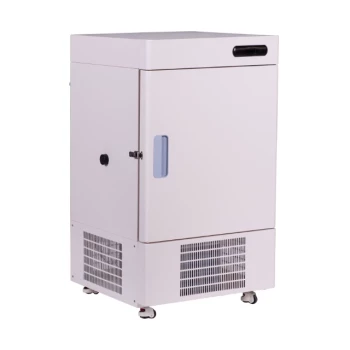
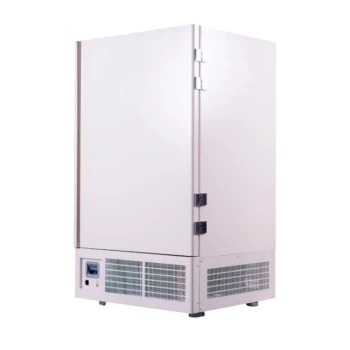
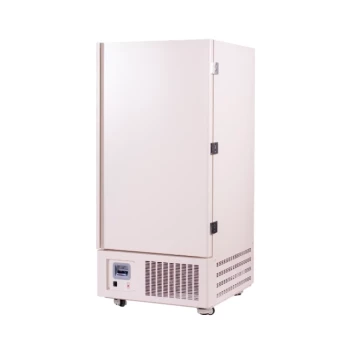
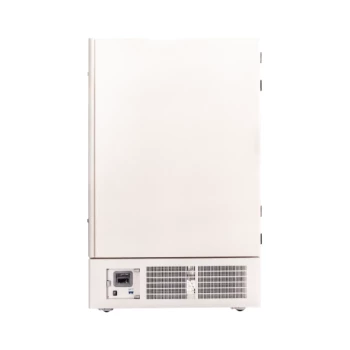
- 108L Vertical Ultra Low Temperature ULT Freezer
- 808L Precision Laboratory Vertical Ultra Low Temperature Freezer
- 408L Advanced Vertical Laboratory Ultra Low Temperature Freezer for Critical Research Material Preservation
- 938L Vertical Ultra Low Temperature Freezer for Advanced Laboratory Storage
- 308L Precision Ultra Low Temperature Freezer for Laboratory Applications
People Also Ask
- What are the common applications of ultra-low temperature freezers? Preserve Your Most Valuable Samples
- What are the different types of ultra-low temperature freezers available? Choose the Right ULT Freezer for Your Lab
- What are some key features of ultra-low temperature freezers? Essential Guide to Reliable Sample Storage
- Have other labs successfully stored samples at -70°C? Proven Long-Term Preservation for Biological Materials
- What features should be considered when choosing an ultra low temperature freezer? Secure Your Samples with Precision