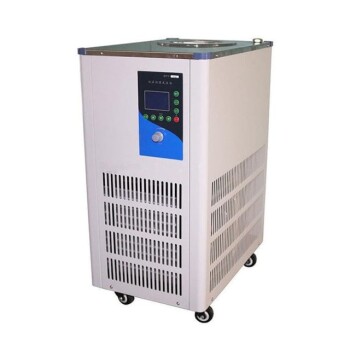
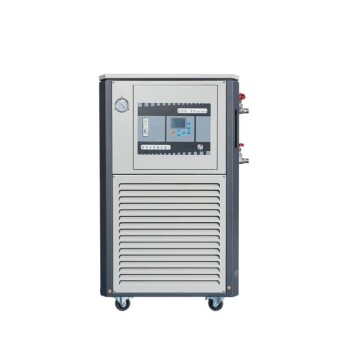
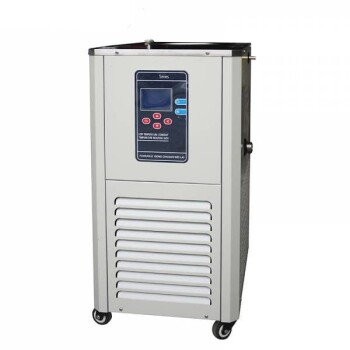
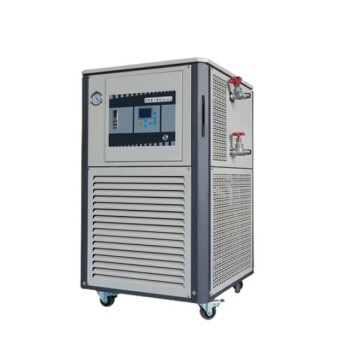
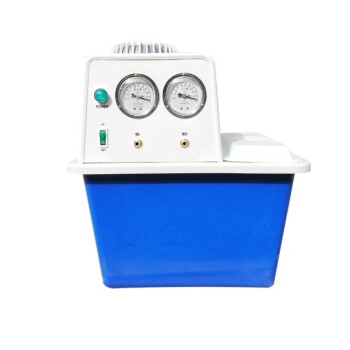
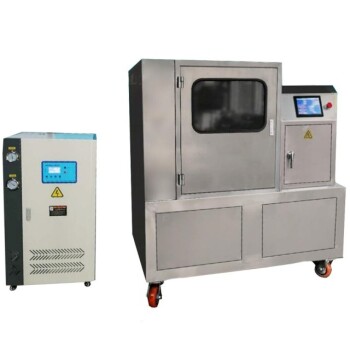
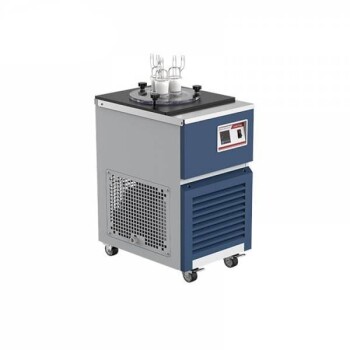
Photocatalytic experiments inherently generate significant heat due to the continuous, high-intensity light exposure required to drive the reaction. A circulating water cooling system is mandatory to counteract this thermal buildup, maintaining the reaction environment at a stable temperature—typically 25°C—to prevent the thermal decomposition of the hydrogen peroxide being produced.
While light is the catalyst for production, the resulting heat is a primary driver of product destruction. The cooling system acts as a critical stabilizer, preserving the synthesized hydrogen peroxide so that yield measurements reflect true photocatalytic efficiency rather than thermal instability.
The Physics of Thermal Buildup
The Consequence of Continuous Light
Photocatalytic reactions are not instantaneous; they require extended periods of exposure to a light source.
While the light provides the necessary energy for the reaction, it also transfers significant thermal energy to the apparatus. Without intervention, this causes the temperature of the reaction liquid to rise continuously throughout the experiment.
The Role of Jacketed Reactors
To manage this heat, researchers use specialized equipment such as jacketed reactors or cooling coils.
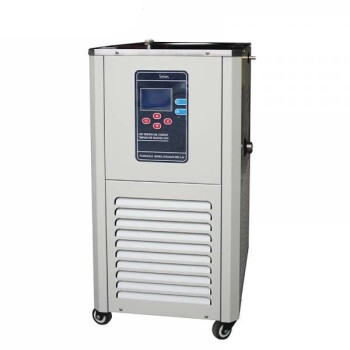
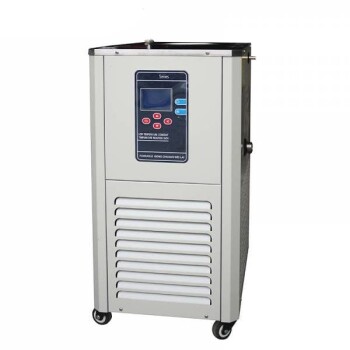
A circulating water cooling system pumps water through these jackets or coils. This process actively absorbs excess heat from the reaction liquid, clamping the temperature at a constant value regardless of the duration of light exposure.
The Chemistry of Product Stability
Preventing Thermal Decomposition
The primary reason for cooling is the chemical nature of the product itself. Hydrogen peroxide ($H_2O_2$) is highly sensitive to temperature.
In warm environments, hydrogen peroxide becomes unstable and rapidly decomposes into water and oxygen. If the reaction vessel is allowed to heat up, you are essentially destroying the product as fast as—or faster than—you are creating it.
The 25°C Prerequisite
The industry standard for these experiments is maintaining the liquid at approximately 25°C.
This temperature provides a stable baseline where the product remains viable. It is a strict prerequisite for achieving high yields, as it minimizes the variable of thermal degradation.
Understanding the Trade-offs
The Risk of Data Corruption
The most significant trade-off in these experiments is not financial, but analytical. If you neglect cooling, your data becomes compromised.
Without temperature control, a low yield could be interpreted as a failure of the photocatalyst. In reality, the catalyst might be performing perfectly, but the heat is masking its efficiency by destroying the output. Cooling eliminates this ambiguity.
Equipment Complexity vs. Reliability
Implementing a circulating water system adds mechanical complexity to the experimental setup. It requires tubing, pumps, and temperature controllers.
However, this complexity is the "cost of entry" for valid science. Attempting to simplify the setup by removing the cooling system renders the resulting data unreliable and effectively useless for comparative analysis.
Making the Right Choice for Your Experiment
To ensure your photocatalytic hydrogen peroxide production is successful, you must prioritize thermal management based on your specific goals.
- If your primary focus is maximizing yield: Ensure your cooling system is rated to handle the specific heat output of your light source to prevent any temperature spikes above 25°C.
- If your primary focus is data accuracy: Use the cooling system to maintain a strict constant temperature, allowing you to attribute all changes in concentration solely to catalyst performance.
By strictly controlling the temperature, you transform a volatile chemical reaction into a measurable, repeatable scientific process.
Summary Table:
| Factor | Without Cooling System | With Circulating Water Cooling |
|---|---|---|
| Temperature Control | Continuous rise due to light heat | Stable at constant 25°C |
| Product Stability | Rapid thermal decomposition of $H_2O_2$ | High product stability and preservation |
| Data Integrity | High risk of false negatives/low yield | Accurate measure of catalyst efficiency |
| Reaction Environment | Volatile and unpredictable | Measurable and repeatable |
Maximize Your Research Precision with KINTEK Advanced Cooling Solutions
Don't let thermal instability compromise your photocatalytic yields. KINTEK specializes in high-performance laboratory equipment designed to maintain the rigorous standards of modern research. Whether you need high-efficiency circulating cooling solutions (ULT freezers, cold traps), specialized jacketed reactors, or photocatalytic consumables, our portfolio is engineered for reliability and precision.
From high-temperature furnaces and hydraulic presses to battery research tools and high-pressure reactors, KINTEK provides the comprehensive infrastructure your lab needs to succeed.
Ready to stabilize your experimental environment? Contact KINTEK today for a customized quote!
References
- Shu Yang, Duozhi Wang. Nitrogen-Rich Triazine-Based Covalent Organic Frameworks as Efficient Visible Light Photocatalysts for Hydrogen Peroxide Production. DOI: 10.3390/nano14070643
This article is also based on technical information from Kintek Solution Knowledge Base .
Related Products
- 100L Chilling Circulator Cooling Water Circulator for Low Temperature Constant Temperature Reaction Bath Water Bath Cooling
- 80L Chilling Circulator Cooling Water Circulator for Water Bath Cooling and Low Temperature Constant Temperature Reaction Bath
- 40L Chiller Water Bath Cooling Circulator Low Temperature Constant Temperature Reaction Bath
- 10L Chilling Circulator Cooling Water Bath Low Temperature Constant Temperature Reaction Bath
- 10L Heating Chilling Circulator Cooling Water Bath Circulator for High and Low Temperature Constant Temperature Reaction
People Also Ask
- What function does a circulating cooling chiller perform during the gas adsorption isotherm testing of nanoporous carbon?
- Why is a circulating water chiller required for Prussian Blue nanoparticles? Ensure Stability & Batch Reproducibility
- What is the purpose of a cooling circulation water bath system in electrochemical experiments? Enhance Lab Precision
- How does a constant temperature circulator support the leaching reaction of gold scrap? Optimize Gold Recovery Results
- How do constant temperature circulators impact weight-loss immersion tests? Ensure Precision in Corrosion Analysis