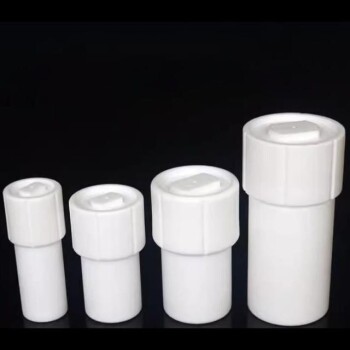
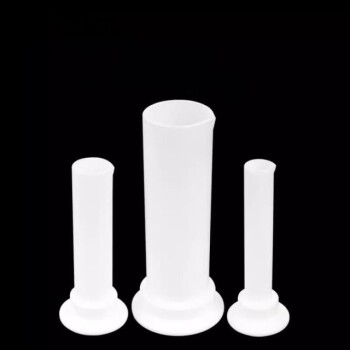
The high-pressure digestion tank with a PTFE liner is the fundamental reactor for NiMoO4/NF synthesis because it creates the subcritical hydrothermal conditions required for crystal growth. This equipment allows the reaction to reach temperatures like 150 °C and internal pressures that far exceed atmospheric levels, which are necessary to drive the oriented nucleation of nickel and molybdenum ions. Without the PTFE liner, the aggressive precursor chemistry would corrode the reactor vessel and contaminate the microrod arrays with stray metal ions.
Core Takeaway: The PTFE-lined digestion tank serves as a chemically inert, high-pressure crucible that enables controlled, in-situ growth of high-purity NiMoO4 microrods directly onto nickel foam by maintaining stable hydrothermal conditions.
Facilitating the Hydrothermal Environment
Driving Oriented Nucleation
The synthesis of NiMoO4/NF microrod arrays requires a hydrothermal environment where water acts as a solvent above its boiling point. Under these conditions, the solubility of nickel and molybdenum sources increases, allowing them to react and deposit onto the nickel foam (NF) surface.
Promoting In-Situ Growth
The sealed nature of the digestion tank ensures that pressure builds naturally as the temperature rises to 150 °C. This pressure is critical for pushing the precursor ions into the porous structure of the nickel foam, facilitating in-situ growth and high adhesion of the resulting microrods.
The Critical Role of the PTFE Liner
Ensuring Chemical Inertness
Polytetrafluoroethylene (PTFE) is chosen for its extreme resistance to chemical attack. Because the precursor solutions for NiMoO4 are often corrosive, the liner prevents the solution from reacting with the outer stainless steel shell of the autoclave.
Maintaining High Purity
Without the liner, metal ions from the reactor walls would leach into the solution, leading to sample contamination. The PTFE liner acts as a barrier that ensures the final NiMoO4 structure remains pure and chemically distinct from its containment vessel.
Morphological Control and Structural Integrity
Achieving Microrod Morphology
The stable, uniform heating provided by the digestion tank allows for the controlled growth of microrod arrays. This environment ensures that the nickel and molybdenum sources follow a specific orientation, resulting in the desired "microrod" shape rather than irregular clusters.
Protecting the Nickel Foam Substrate
The structural integrity of the nickel foam is preserved because the reaction is contained within the inert PTFE environment. This allows the NiMoO4 to form a uniform coating that mimics the underlying architecture of the foam without degrading the substrate's mechanical properties.
Understanding the Trade-offs
Temperature and Pressure Limitations
While PTFE is highly inert, it has a physical limit; it generally cannot be used for reactions exceeding 250 °C as it may soften or release toxic fumes. For the NiMoO4 synthesis at 150 °C, this is not an issue, but it limits the equipment's use for higher-temperature solvothermal processes.
Scalability and Reaction Time
Hydrothermal synthesis in these tanks is typically a batch process and can be time-consuming, often requiring several hours to achieve the desired crystal growth. Furthermore, the volume is limited by the size of the digestion tank, making large-scale industrial production more complex than continuous-flow methods.
How to Apply This to Your Synthesis Goals
Optimizing Your Experimental Setup
To achieve the best results with NiMoO4/NF microrod arrays, consider the specific requirements of your research or production phase.
- If your primary focus is phase purity: Ensure the PTFE liner is thoroughly cleaned with acid between runs to prevent cross-contamination from previous synthesis batches.
- If your primary focus is morphology control: Maintain a strict "fill ratio" (usually 60-80%) within the liner to ensure consistent pressure levels and uniform growth across the nickel foam.
- If your primary focus is substrate adhesion: Clean the nickel foam surface (e.g., via HCl etching) prior to placing it in the tank to maximize the interaction between the NF and the NiMoO4 precursors.
Selecting the right high-pressure digestion tank is the first step toward mastering the precision required for high-performance microrod array synthesis.
Summary Table:
| Feature | Role in Synthesis | Key Benefit |
|---|---|---|
| Hydrothermal Pressure | Drives oriented nucleation | Forces ions into porous nickel foam (NF) |
| PTFE Liner | Prevents chemical attack | Eliminates metal ion contamination/leaching |
| Sealed Environment | Subcritical solvent conditions | Promotes in-situ growth of stable microrods |
| 150°C Stability | Uniform heating profile | Achieves consistent microrod morphology |
| Inert Material | Protects NF substrate | Preserves structural integrity of the foam |
Elevate Your Material Synthesis with KINTEK Precision
Ready to achieve superior phase purity and morphological control in your hydrothermal research? KINTEK specializes in premium laboratory equipment designed for the most demanding applications. Our high-temperature high-pressure reactors and autoclaves feature high-quality PTFE liners, ensuring the chemical inertness and pressure stability required for synthesizing advanced structures like NiMoO4/NF microrod arrays.
Beyond reactors, KINTEK offers a comprehensive range of solutions, including:
- Thermal Processing: Muffle, tube, and vacuum furnaces for precise heat treatment.
- Sample Prep: Crushing, milling, and hydraulic presses (pellet, hot, isostatic) for substrate preparation.
- Lab Essentials: Specialized electrolytic cells, electrodes, and high-purity ceramics.
Don't let reactor contamination compromise your results. Contact us today to find the perfect high-pressure digestion solution for your lab!
References
- Shiming Yang, Yanqiu Zhu. In Situ Fabrication of Mn-Doped NiMoO4 Rod-like Arrays as High Performance OER Electrocatalyst. DOI: 10.3390/nano13050827
This article is also based on technical information from Kintek Solution Knowledge Base .
Related Products
- Custom PTFE Teflon Parts Manufacturer for Microwave Digestion Tank
- Custom PTFE Teflon Parts Manufacturer for PTFE Containers
- Custom PTFE Teflon Parts Manufacturer for Centrifuge Tube Racks
- Custom PTFE Teflon Parts Manufacturer for Culture Dish and Evaporation Dish
- Custom PTFE Teflon Parts Manufacturer for Conductive Glass Substrate Cleaning Rack
People Also Ask
- Why are PTFE containers required for PCT leaching tests? Ensure Chemical Inertness and Analytical Precision
- Why use high-quality PTFE containers for CO2 reduction electrolytes? Eliminate silicon contamination and ensure data.
- Why is PTFE Mandatory for Hydrofluoric Acid (HF) Handling? Ensure Safety and Data Integrity in Corrosion Testing
- Why is a PTFE container required for acid leaching of silicon nanosheets? Ensure High Purity and Safety
- Why are polytetrafluoroethylene (PTFE) containers essential for assessing the corrosion resistance of glassified waste?