A stainless steel Teflon-lined reactor is required for polymer gel treatment because it creates a sealed, high-pressure environment that facilitates solvothermal reactions while preventing chemical corrosion. This specific configuration allows organic precursors to reach critical reaction temperatures—typically around 130°C—while ensuring that reactive intermediates do not degrade the equipment or contaminate the final product with metal ions.
Core Takeaway: This reactor setup combines the structural strength of stainless steel with the chemical inertness of Teflon to enable safe, high-pressure synthesis. It is the industry standard for maintaining high product purity and equipment longevity during aggressive hydrothermal or solvothermal processing.
The Role of High Pressure and Temperature
Facilitating Solvothermal Reactions
Thermal treatment of polymer gels often requires solvothermal synthesis, a process that occurs above the boiling point of the solvent. The sealed stainless steel vessel allows the system to generate autogenous pressure as the liquid is heated.
This internal pressure significantly enhances the solubility and reactivity of precursors. It drives the efficient nucleation and growth of complex structures, such as Metal-Organic Frameworks (MOFs) or specialized nanocrystals, within the polymer matrix.
Enhancing Molecular Diffusion
High-pressure conditions increase the diffusion capacity of the reactants. This ensures that organic ligands and metal salts can interact fully and coordinate effectively under sealed conditions.
In processes like hydrothermal carbonization, this pressure is the core physical driver for dehydrating carbohydrates. It allows them to transform into furan-like molecules that eventually polymerize into uniform carbon structures.
The Necessity of the Teflon Liner
Preventing Metal Ion Contamination
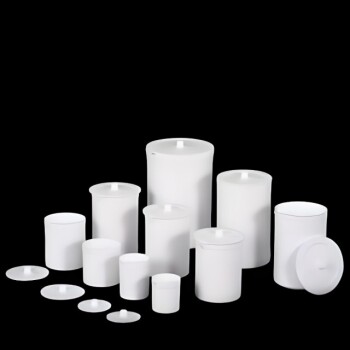
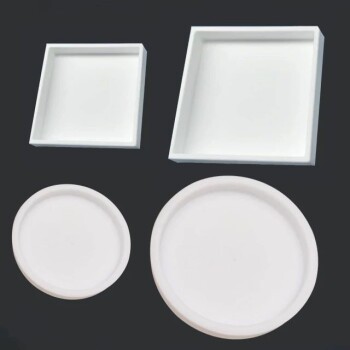
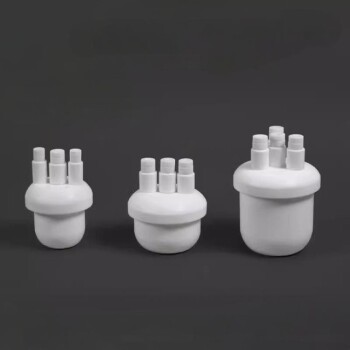
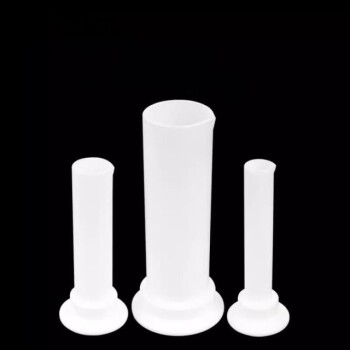
The Teflon (PTFE) liner acts as a critical barrier between the reaction media and the stainless steel walls. This prevents metal ions from leaching into the solution, which is vital for maintaining the high purity and accurate stoichiometric ratio of the polymer gel.
Without this liner, the resulting gel could be contaminated with iron, nickel, or chromium from the reactor shell. Such impurities often compromise the electrical, optical, or structural properties of the final material.
Resistance to Corrosive Intermediates
Many polymer gel syntheses involve highly reactive organic intermediates or acidic environments. Teflon is chosen for its exceptional chemical inertness and stability against these aggressive substances.
The liner protects the stainless steel vessel from pitting and corrosion. By shielding the metal from direct contact with corrosive solvents or salts, the liner ensures the structural integrity and safety of the high-pressure system over time.
Understanding the Trade-offs
Temperature Limitations
While Teflon is highly resistant to chemicals, it has a lower thermal threshold than the steel that surrounds it. Most Teflon liners are rated for continuous use only up to 220°C to 250°C.
Exceeding these temperatures can cause the liner to soften or deform, leading to seal failure or mechanical issues. For reactions requiring higher temperatures, alternative liners like PPL (Polyphenylene polymers) or quartz may be necessary.
Pressure and Cooling Constraints
The stainless steel shell provides the mechanical strength to withstand high internal pressure, but it also creates thermal lag. Heating and cooling must be performed gradually to prevent the Teflon liner from buckling due to different expansion rates.
Rapid pressure release can also cause "bubbling" or trapped gases behind the liner. Users must balance the need for speed with the mechanical constraints of a dual-material vessel.
How to Apply This to Your Project
Choosing the Right Setup
When selecting a reactor for thermal treatment, your choice should be dictated by your solvent and the required purity levels of your polymer gel.
- If your primary focus is high product purity: A Teflon-lined reactor is mandatory to prevent metal ion leaching during the gelation process.
- If your primary focus is high-temperature carbonization (above 250°C): You must look beyond standard Teflon liners toward specialized materials or high-alloy unlined reactors if corrosion allows.
- If your primary focus is maximizing reaction yield: Ensure the reactor volume allows for sufficient "headspace" to develop the autogenous pressure needed for complete precursor diffusion.
The synergy between the strength of stainless steel and the chemical resistance of Teflon provides the most reliable environment for advanced polymer gel synthesis.
Summary Table:
| Feature | Role in Polymer Gel Treatment | Key Benefit |
|---|---|---|
| Stainless Steel Shell | Provides mechanical strength to contain autogenous pressure | Ensures operator safety during high-pressure heating |
| Teflon (PTFE) Liner | Acts as a chemically inert barrier between media and metal | Prevents metal ion contamination and resists corrosion |
| Sealed Design | Enables solvothermal synthesis above solvent boiling points | Enhances precursor solubility and molecular diffusion |
| Pressure Control | Drives dehydration and nucleation processes | Facilitates uniform carbon structures and MOF synthesis |
Elevate Your Polymer Synthesis with KINTEK Precision
Are you looking to ensure the highest purity and structural integrity for your advanced materials? KINTEK specializes in high-performance laboratory equipment designed for the most demanding research environments. Our premium high-temperature high-pressure reactors and autoclaves provide the perfect synergy of stainless steel strength and Teflon chemical inertness, specifically engineered to prevent metal leaching and withstand aggressive solvothermal reactions.
Whether you are developing specialized nanocrystals, MOFs, or conducting hydrothermal carbonization, our comprehensive range—including high-temperature furnaces, hydraulic presses, and ceramic consumables—is built to optimize your lab's efficiency and results.
Ready to upgrade your thermal treatment setup? Contact our experts today to find the ideal reactor configuration for your specific project needs!
References
- Jijun Wang, Jinlong Zhao. Enhancement of microwave absorption performance of porous carbon induced by Ce (CO3) OH. DOI: 10.3389/fchem.2022.1100111
This article is also based on technical information from Kintek Solution Knowledge Base .
Related Products
- Stainless High Pressure Autoclave Reactor Laboratory Pressure Reactor
- Custom PTFE Teflon Parts Manufacturer for Reagent Wide Mouth Fine Mouth Sample High Temperature Bottles
- Custom PTFE Teflon Parts Manufacturer for Hydrothermal Synthesis Reactor Polytetrafluoroethylene Carbon Paper and Carbon Cloth Nano-growth
- Mini SS High Pressure Autoclave Reactor for Laboratory Use
- Custom PTFE Teflon Parts Manufacturer for Microwave Digestion Tank
People Also Ask
- Why is a laboratory high-pressure reactor necessary for synthesizing fly ash-based zeolite? Achieve Pure Crystallization
- Why is a laboratory high-pressure reactor used in the hydrothermal synthesis of hydroxyapatite catalysts?
- What role does a laboratory high-pressure reactor play in the leaching process of spent cathode materials? Optimize Recovery
- What conditions do laboratory high-pressure reactors provide for HTC? Optimize Your Biochar Production Processes
- How are high-pressure reactors used to prepare metaphosphate electrocatalysts? Master In-Situ Precursor Growth