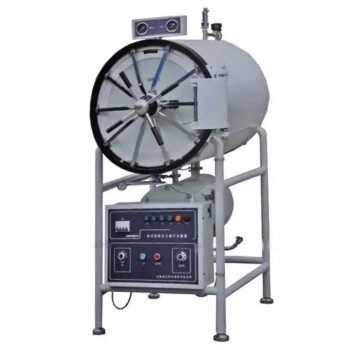
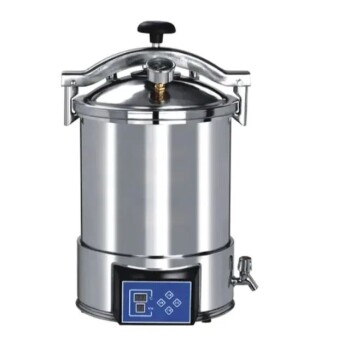
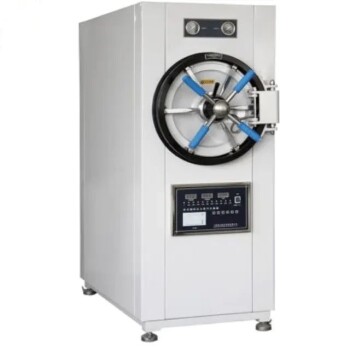
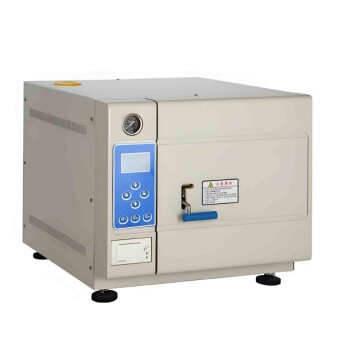
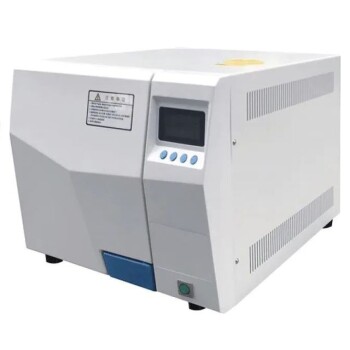
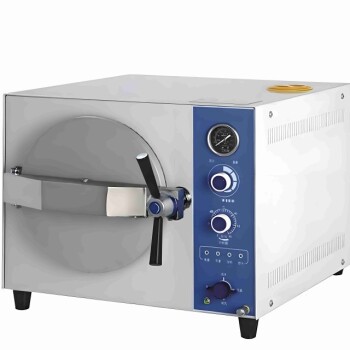
The primary advantage of using a high-pressure reactor, such as an autoclave, is its ability to maintain the reaction system in a liquid state at temperatures significantly exceeding the solvent's normal boiling point. By operating at pressures up to 20 MPa, these reactors prevent solvent evaporation, allowing for deep penetration into the crystalline regions of biomass and significantly accelerating the conversion of materials like lignocellulose into soluble sugars.
High-pressure reactors fundamentally alter the behavior of solvents, creating a subcritical environment where water or other media can decompose complex macromolecules more aggressively. This approach removes the need for energy-intensive pre-drying of feedstock and produces bio-oils with higher energy density compared to atmospheric processes.
Overcoming Thermodynamic Barriers
Maintaining Liquid State at High Temperatures
In an atmospheric reactor, heating a solvent beyond its boiling point results in evaporation. A high-pressure reactor circumvents this limitation by capping the system, which allows temperatures to reach 250–374 °C while keeping the solvent in a liquid phase.
Enhanced Solvent Penetration
The combination of high temperature and pressure forces the solvent deep into the structural matrix of the feedstock. Specifically, this environment allows the solvent to penetrate the tough crystalline regions of cellulose, a task that is inefficient or impossible at atmospheric pressure.
Accelerating Reaction Kinetics
Reducing Activation Energy
When used in conjunction with catalysts, the high-pressure environment lowers the activation energy required for cellulose deconstruction. This thermodynamic advantage facilitates the breakdown of complex structures with less total energy input per reaction cycle.
Shorter Processing Timeframes
Because the solvent can attack the biomass structure more effectively, the conversion rate increases. Complex lignocellulosic materials are converted into soluble sugar molecules or hydrocarbons much faster than in atmospheric systems.
Operational Efficiency and Feedstock Flexibility
Eliminating the Drying Step
A distinct advantage of high-pressure hydrothermal liquefaction (HTL) is the ability to process wet biomass, such as algae or sludge. Because the water inside the biomass acts as part of the reaction medium, there is no need for energy-intensive pre-drying stages required by other methods like pyrolysis.
Altering Solvent Properties
Under subcritical conditions (high pressure and temperature), the properties of water change; its dielectric constant decreases, making it behave similarly to an organic solvent. This allows the water to directly decompose and restructure algal macromolecules into bio-crude oil without additional chemical solvents.
Improved Product Quality
The bio-oil produced in these closed, high-pressure systems typically features a higher energy density and lower oxygen content. This results in a higher quality fuel precursor compared to bio-oils produced via conventional atmospheric pyrolysis.
Understanding the Trade-offs
Increased Equipment Complexity and Cost
Operating at pressures up to 20 MPa requires specialized, robust equipment capable of withstanding extreme stress. The reactor vessels must have thicker walls and complex sealing mechanisms, which significantly increases initial capital expenditure compared to atmospheric vessels.
Stringent Safety Requirements
High-pressure systems introduce safety risks that do not exist in atmospheric processing. Operators must implement rigorous safety protocols and utilize expensive pressure-relief systems to manage the potential hazards of maintaining subcritical fluids at high temperatures.
Making the Right Choice for Your Goal
To determine if a high-pressure reactor is the correct tool for your liquefaction process, consider your specific objectives:
- If your primary focus is processing efficiency: High pressure is essential to reduce reaction times and lower the activation energy required for deconstructing crystalline cellulose.
- If your primary focus is wet feedstock (e.g., algae, sludge): High-pressure HTL is the superior choice, as it eliminates the massive energy cost of pre-drying the biomass.
- If your primary focus is product quality: High-pressure environments favor the production of bio-oils with higher energy density and improved recovery rates.
By leveraging high pressure, you transition from simple heating to active structural modification, maximizing both the speed and yield of your liquefaction process.
Summary Table:
| Feature | Atmospheric Reactor | High-Pressure Reactor (Autoclave) |
|---|---|---|
| Temperature Range | Limited to solvent boiling point | Up to 374°C (Subcritical state) |
| Physical State | Evaporation occurs at heat | Maintains liquid state throughout |
| Feedstock Handling | Requires pre-drying | Handles wet biomass (algae, sludge) |
| Reaction Kinetics | Slower; limited penetration | Accelerated; deep structural penetration |
| Product Quality | Standard bio-oil | High-energy density, low-oxygen bio-crude |
| Capital Cost | Lower | Higher (specialized thick-wall vessels) |
Revolutionize Your Material Conversion with KINTEK
Transition from simple heating to active structural modification with KINTEK’s high-performance pressure solutions. Whether you are focused on hydrothermal liquefaction, biomass conversion, or advanced chemical synthesis, our specialized high-temperature high-pressure reactors and autoclaves provide the robust engineering required to withstand pressures up to 20 MPa.
Why partner with KINTEK?
- Comprehensive Lab Equipment: From vacuum furnaces and induction melting to hydraulic presses and crushing systems.
- Precision Engineering: Enhance reaction kinetics and eliminate energy-intensive drying stages with our specialized reactors.
- End-to-End Support: We supply the reactors, consumables (PTFE/Ceramics), and cooling solutions (ULT freezers/freeze dryers) necessary for a complete research workflow.
Ready to elevate your lab’s processing efficiency and product quality? Contact our technical specialists today to find the ideal reactor for your specific application.
References
- Jessica L. Brown, Robert C. Brown. Production of sugars from lignocellulosic biomass via biochemical and thermochemical routes. DOI: 10.3389/fenrg.2024.1347373
This article is also based on technical information from Kintek Solution Knowledge Base .
Related Products
- Stainless High Pressure Autoclave Reactor Laboratory Pressure Reactor
- Mini SS High Pressure Autoclave Reactor for Laboratory Use
- High Pressure Laboratory Autoclave Reactor for Hydrothermal Synthesis
- Customizable High Pressure Reactors for Advanced Scientific and Industrial Applications
- Desktop Fast High Pressure Laboratory Autoclave Sterilizer 16L 24L for Lab Use
People Also Ask
- Why is a laboratory high-pressure reactor used in the hydrothermal synthesis of hydroxyapatite catalysts?
- What role does a laboratory high-pressure reactor play in the leaching process of spent cathode materials? Optimize Recovery
- Why is a laboratory high-pressure reactor necessary for synthesizing fly ash-based zeolite? Achieve Pure Crystallization
- What conditions do laboratory high-pressure reactors provide for HTC? Optimize Your Biochar Production Processes
- What is the function of a high-pressure reactor autoclave? Enhancing Cu/N Co-Doped Carbon Catalyst Synthesis