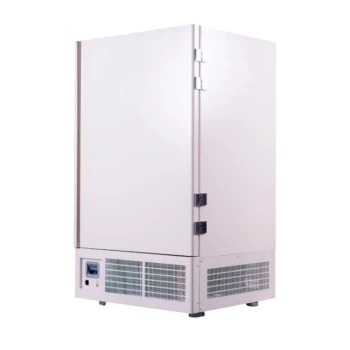
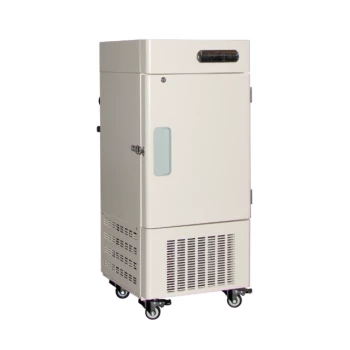
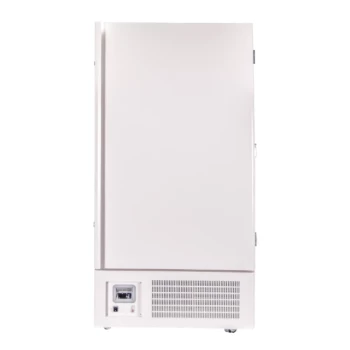
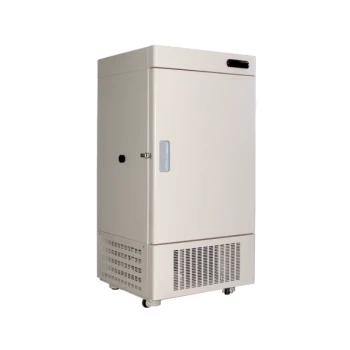
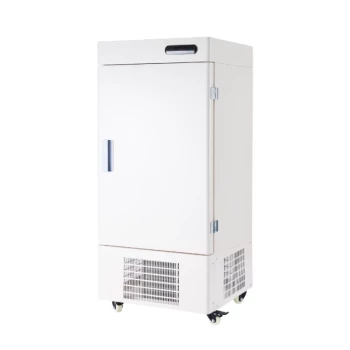
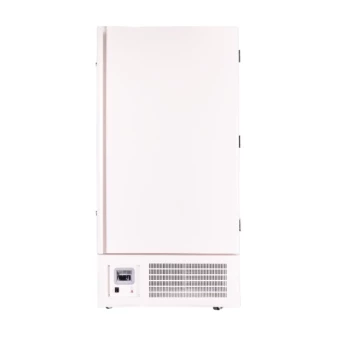
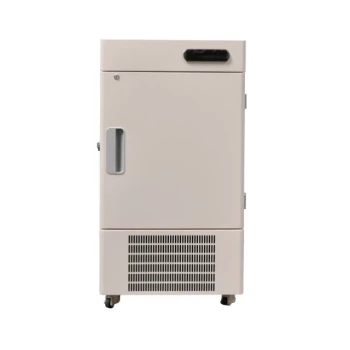
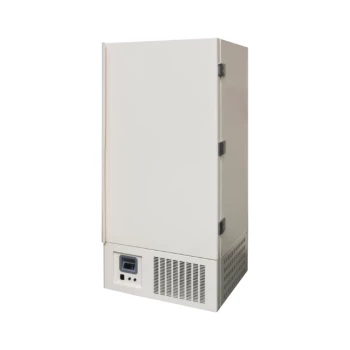
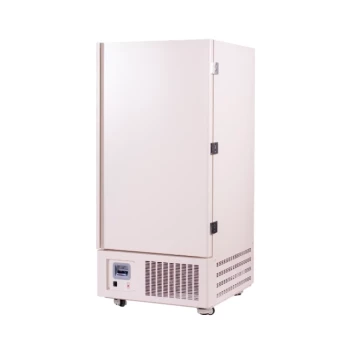
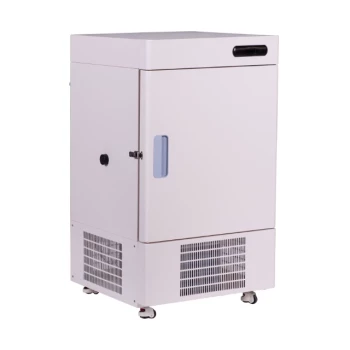
The primary function of using an ultra-low temperature freezer or laboratory refrigerator is to de-gas the cellulose acetate casting solution. By holding the solution at approximately 4 °C for 24 hours, the process stabilizes the liquid and minimizes solvent evaporation, allowing trapped micro-bubbles to escape before the casting process begins.
By stabilizing the liquid phase and preventing solvent loss, this cooling step eliminates air pockets created during stirring. The result is a casting solution capable of forming a membrane with a dense, defect-free physical structure.
The Physics of De-gassing
The Challenge of Micro-bubbles
During the preparation of cellulose acetate solution, the stirring process inevitably introduces air into the mixture. These micro-bubbles become trapped within the viscous liquid. If cast immediately, these bubbles would create voids, compromising the membrane's integrity.
Stabilizing the Liquid Phase
Placing the solution in a cold environment (4 °C) significantly increases the stability of the liquid phase. This stable environment is critical for allowing the bubbles to rise to the surface and escape. It creates a controlled setting where the solution creates a uniform consistency.
Minimizing Solvent Evaporation
De-gassing at room temperature would likely lead to the evaporation of the solvent. The low-temperature environment effectively minimizes solvent evaporation during the holding period. This ensures the chemical concentration of the solution remains constant while the air is removed.
Impact on Membrane Structure
Ensuring a Dense Physical Structure
The ultimate goal of this thermal treatment is to produce a membrane with a dense physical structure. Removing the gas ensures the polymer matrix creates a solid, continuous barrier. This density is vital for the membrane to function correctly in filtration applications.
Preventing Internal Defects
Any air remaining in the solution results in internal defects or "pinholes" in the final product. The 24-hour cooling cycle ensures the solution is completely free from these potential weak points. A defect-free membrane ensures reliable performance and longevity.
Understanding the Trade-offs
Time Constraints
The de-gassing process is time-intensive, requiring a hold time of approximately 24 hours. This creates a bottleneck in production, as the solution cannot be used immediately after mixing. Skipping or shortening this step introduces a high risk of structural failure in the membrane.
Temperature Precision
While the goal is cooling, precision is key; the reference specifies a 4 °C environment. Inconsistent temperatures could lead to partial evaporation or insufficient bubble removal. The equipment must be reliable enough to maintain this specific set point without fluctuation.
Making the Right Choice for Your Goal
To ensure the highest quality membrane casting, prioritize the following parameters:
- If your primary focus is Defect Elimination: Strictly adhere to the 24-hour waiting period to ensure every micro-bubble has time to escape the viscous solution.
- If your primary focus is Solution Consistency: Rely on the 4 °C temperature setting to prevent solvent evaporation from altering your chemical formulation during the de-gassing phase.
Correctly managing this thermal phase is the difference between a flawed casting and a high-performance membrane.
Summary Table:
| Feature | Cooling Treatment (4°C) | Impact on Membrane Quality |
|---|---|---|
| Primary Goal | De-gassing (Air Removal) | Prevents voids and internal pinholes |
| Solvent Control | Minimizes Evaporation | Maintains precise chemical concentration |
| Phase Stability | Increases Liquid Stability | Ensures a uniform, dense physical structure |
| Process Duration | ~24-Hour Hold Time | Eliminates micro-bubbles from viscous liquid |
| Equipment Need | Reliable Lab Refrigerator/Freezer | Constant temperature prevents formulation drift |
Elevate Your Membrane Research with KINTEK Precision
Don't let micro-bubbles or solvent loss compromise your filtration performance. KINTEK specializes in advanced laboratory solutions, providing high-precision ULT freezers and cooling systems designed to maintain the exact thermal stability required for de-gassing sensitive casting solutions.
Whether you are refining cellulose acetate formulations or exploring advanced polymer matrices, our comprehensive portfolio—ranging from homogenizers and shakers for mixing to high-pressure reactors and specialized cooling equipment—is engineered to meet the rigorous demands of battery research and material science.
Ready to achieve defect-free membrane structures? Contact our laboratory equipment experts today to find the perfect cooling solution for your workflow!
References
- Javad Torkashvand, Mahdi Farzadkia. Preparation of a cellulose acetate membrane using cigarette butt recycling and investigation of its efficiency in removing heavy metals from aqueous solution. DOI: 10.1038/s41598-022-24432-x
This article is also based on technical information from Kintek Solution Knowledge Base .
Related Products
- 808L Precision Laboratory Vertical Ultra Low Temperature Freezer
- 28L Compact Upright Ultra Low Temperature Freezer for Laboratory
- 708L Ultra Low Temperature Freezer High Performance Laboratory Freezer
- 938L Vertical Ultra Low Temperature Freezer for Advanced Laboratory Storage
- 308L Precision Ultra Low Temperature Freezer for Laboratory Applications
People Also Ask
- What are the different types of ultra-low temperature freezers available? Choose the Right ULT Freezer for Your Lab
- What are the common applications of ultra-low temperature freezers? Preserve Your Most Valuable Samples
- What are some key features of ultra-low temperature freezers? Essential Guide to Reliable Sample Storage
- Have other labs successfully stored samples at -70°C? Proven Long-Term Preservation for Biological Materials
- What are the key features of ultra low temperature freezers that ensure sample preservation? Choose the Right System for Your Lab