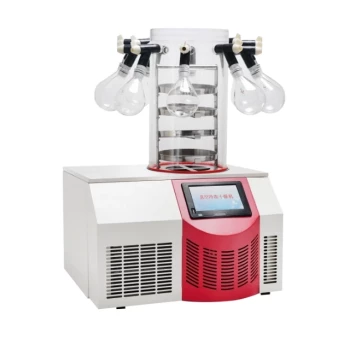
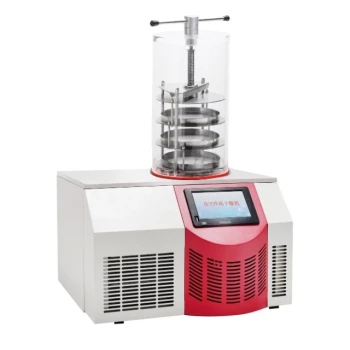
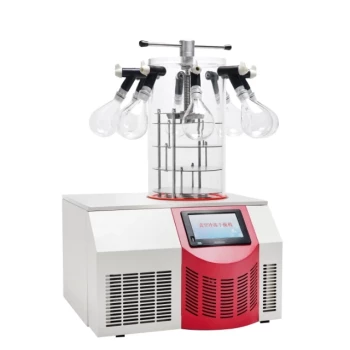
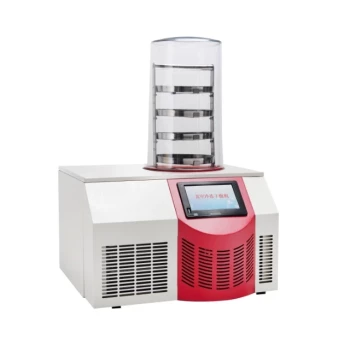
The decisive advantage of freeze dryers in wet chemical synthesis lies in their ability to maintain particle separation during solvent removal. Unlike traditional thermal evaporation, which relies on heat, freeze dryers utilize sublimation to remove solvents, effectively preventing the particle agglomeration that degrades electrolyte performance.
Core Takeaway Traditional thermal evaporation forces particles to clump together due to solvent surface tension, compromising material quality. Freeze-drying circumvents this by removing solvents at low temperatures under vacuum, yielding highly uniform, fine powders that are essential for creating tight solid-solid interfaces and ensuring superior cycling stability in all-solid-state batteries.
The Mechanism of Solvent Removal
Sublimation vs. Liquid Evaporation
The fundamental difference lies in how the solvent is extracted. Traditional methods evaporate liquid solvent using heat, which subjects the material to surface tension forces.
Freeze dryers, conversely, freeze the solvent first and then remove it via sublimation (transitioning directly from solid to gas) under high vacuum. This bypasses the liquid phase entirely.
Eliminating Surface Tension Effects
In thermal evaporation, the surface tension of the shrinking liquid droplets pulls particles together. This physical force is the primary driver of particle agglomeration.
By utilizing low-temperature sublimation, freeze-drying eliminates this tension. The result is a precursor structure that retains its distribution rather than collapsing into dense clumps.
Impact on Material Properties
Achieving Finer Particle Sizes
For Li3InCl6 electrolytes, particle geometry is critical. Freeze-drying produces powders with significantly smaller particle sizes compared to heat-treated alternatives.
Uniformity and Porosity
Beyond size, the distribution of particles is more uniform. The vacuum freeze-drying process fosters a porous structure with high physical fineness.
High Reaction Activity
The resulting powder is not just physically finer; it is chemically more potent. The porous nature leads to high reaction activity, which ensures that subsequent high-temperature calcination yields high-purity single-phase powders.
Performance Benefits in Batteries
Tighter Solid-Solid Interfaces
The ultimate goal in all-solid-state batteries is distinct physical contact between components. The fine, uniform powder from freeze-drying allows for tighter solid-solid contact interfaces.
Improved Cycling Performance
Better interfaces translate directly to longevity. Because the Li3InCl6 electrolyte has better contact mechanics, the battery demonstrates significantly improved cycling performance and stability over time.
The Hidden Pitfalls of Thermal Evaporation
The Agglomeration Risk
It is critical to recognize that traditional thermal evaporation is not merely a different method; it acts as a bottleneck for quality. The process inherently causes particle agglomeration, creating uneven clumps of material.
Compromised Purity Potential
When precursors agglomerate, they react less efficiently during calcination. Relying on evaporation risks producing materials with lower purity or inconsistent phase properties, undermining the battery's final efficiency.
Making the Right Choice for Your Goal
To maximize the potential of your Li3InCl6 electrolyte synthesis, align your equipment choice with your specific performance targets.
- If your primary focus is Cycle Life: Choose freeze-drying to create the tight solid-solid interfaces required for long-term battery stability.
- If your primary focus is Material Purity: Utilize freeze-drying to generate highly active, porous precursors that ensure high-purity single-phase results after calcination.
Select the method that protects the structural integrity of your material to guarantee the highest performance outcomes.
Summary Table:
| Feature | Traditional Thermal Evaporation | Freeze Drying (Sublimation) |
|---|---|---|
| Phase Transition | Liquid to Gas (Evaporation) | Solid to Gas (Sublimation) |
| Particle Size | Coarse, agglomerated clumps | Ultra-fine, separate particles |
| Surface Tension | High (causes particle collapse) | Eliminated (retains structure) |
| Material Porosity | Low / Dense | High / Porous |
| Interface Quality | Poor solid-solid contact | Excellent solid-solid contact |
| Battery Benefit | Inconsistent cycling stability | Superior cycling & long-term performance |
Elevate Your Electrolyte Synthesis with KINTEK Precision
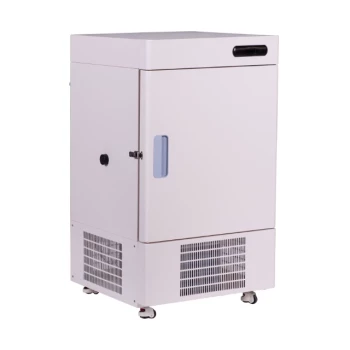
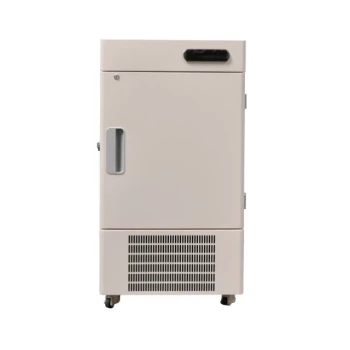
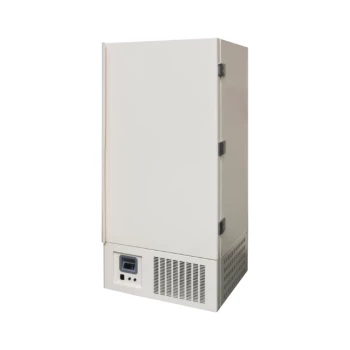
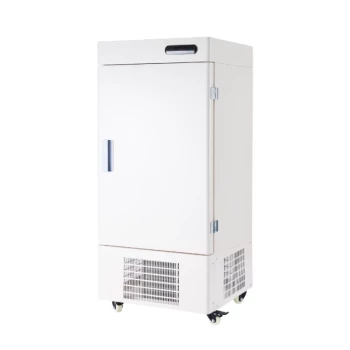
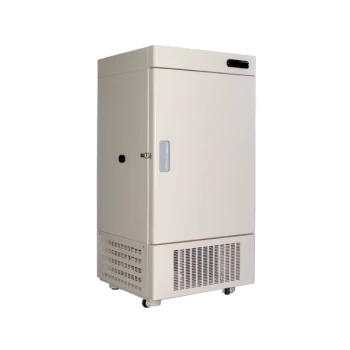
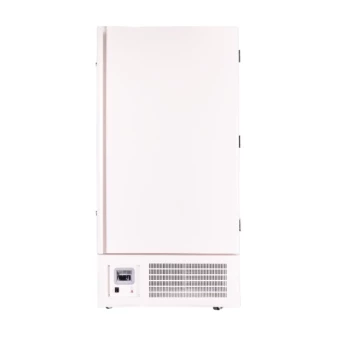
Don't let particle agglomeration compromise your solid-state battery research. KINTEK specializes in advanced laboratory solutions designed to optimize material performance. Our high-performance freeze dryers and cooling solutions (ULT freezers, cold traps) ensure your Li3InCl6 precursors achieve the porosity and fineness required for superior cycling stability.
Beyond drying, KINTEK offers a comprehensive range of equipment for battery researchers, including:
- High-Temperature Furnaces: Muffle, tube, and vacuum systems for precise calcination.
- Milling & Crushing: Achieve perfect powder consistency.
- Hydraulic Pellet Presses: For high-density solid-state component fabrication.
- Specialized Consumables: High-purity ceramics, crucibles, and PTFE products.
Ready to achieve high-purity single-phase results? Contact our laboratory experts today to find the perfect equipment configuration for your research goals.
Related Products
- High Performance Laboratory Freeze Dryer
- High Performance Laboratory Freeze Dryer for Research and Development
- Benchtop Laboratory Freeze Dryer for Lab Use
- Benchtop Laboratory Vacuum Freeze Dryer
- 108L Vertical Ultra Low Temperature ULT Freezer
People Also Ask
- What role does a laboratory freeze dryer play in the synthesis of graphene-based electrocatalysts? Preserve 3D Structures
- What are the technical advantages of using a laboratory freeze dryer for porous carbon precursors? Preserve 3D Networks
- What types of liquid samples can be processed using a laboratory freeze dryer? Preserve Your Sensitive Materials
- How do laboratory freeze dryers support scientific research? Preserve Sample Integrity for Reproducible Results
- Why is a laboratory freeze dryer preferred over traditional heating? Preserve Biochar Structure & Maximize Porosity