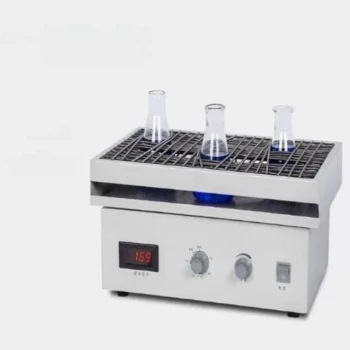
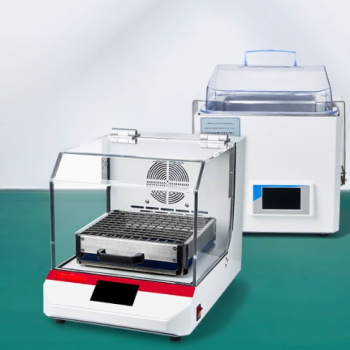
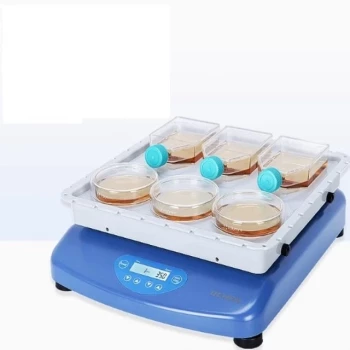
The accuracy of Cd (II) adsorption experiments depends on two fundamental variables: thermal stability and kinetic uniformity. A constant temperature shaker ensures accuracy by maintaining a precise, stable reaction temperature while providing continuous mechanical agitation. This combination eliminates external mass transfer resistance and ensures that cadmium ions in the solution can fully diffuse and bind to the available adsorption sites on the composite material.
The constant temperature shaker acts as a controlled environment that isolates the adsorption process from external physical variables. By stabilizing temperature and maximizing liquid-solid contact, it allows researchers to measure the material's intrinsic kinetic properties rather than the limitations of the experimental setup.
Thermal Precision and Thermodynamic Reliability
Maintaining Equilibrium Conditions
Adsorption is a temperature-sensitive process where even minor fluctuations can shift the thermodynamic equilibrium. By maintaining a set temperature, such as 25 °C, the shaker ensures that the energy levels within the system remain constant throughout the experiment.
Ensuring Data Reproducibility
Precise temperature control removes thermal interference, allowing for the collection of reliable thermodynamic data. This stability is essential for accurately calculating adsorption isotherm models and determining whether the reaction is exothermic or endothermic.
Standardizing Ion Activity
Temperature affects the mobility and activity of Cd (II) ions in the aqueous phase. A constant thermal environment ensures that the kinetic energy of the ions remains uniform, providing a "level playing field" for every sample tested in a series.
Mechanical Agitation and Mass Transfer Efficiency
Overcoming Boundary Layer Resistance
In a stagnant solution, a "liquid film" or boundary layer forms around the adsorbent particles, slowing down ion movement. The continuous oscillation of the shaker—often set between 110 and 220 rpm—provides the mechanical power needed to strip away this resistance.
Achieving Uniform Particle Suspension
For an adsorbent like biochar or activated carbon to work effectively, it must stay uniformly suspended in the liquid. The shaker prevents particles from settling at the bottom, ensuring that the entire surface area of the material is exposed to the cadmium ions.
Facilitating Effective Collisions
Agitation increases the frequency and efficiency of molecular collisions between the pollutant and the adsorbent. This ensures that the measured adsorption capacity reflects the true microscopic interface properties of the material rather than a lack of physical contact.
Understanding the Trade-offs
The Risk of Particle Attrition
While high agitation speeds improve mass transfer, they can also cause mechanical degradation of fragile adsorbents. If the rpm is too high, the resulting shear stress may break down composite materials, leading to an artificial increase in surface area and skewed results.
Heat Generation from Friction
In long-duration experiments—some lasting up to 24 hours—continuous mechanical movement can generate a small amount of internal friction heat. High-quality shakers compensate for this by using integrated cooling or precise sensors to keep the internal chamber at the exact setpoint.
Limitations of External Diffusion
Even with optimal shaking, the device only addresses external mass transfer. It cannot speed up "intra-particle diffusion," which is the movement of ions into the deep pores of the adsorbent, meaning the shaker cannot "fix" a slow-performing material.
Optimizing Your Kinetic Study Parameters
Recommendations for Experimental Design
To achieve the most accurate data for your specific research goals, consider how you calibrate the environment of your shaker.
- If your primary focus is determining maximum adsorption capacity: Set the shaker to a higher rpm (e.g., 220 rpm) to ensure that external mass transfer resistance is completely eliminated and all sites are reachable.
- If your primary focus is studying temperature effects (Thermodynamics): Utilize multiple shakers or sequential runs at strictly controlled intervals (e.g., 15 °C, 25 °C, and 35 °C) to plot accurate energy gradients.
- If your primary focus is industrial scaling: Use a moderate, standardized rotation speed (e.g., 150-180 rpm) to simulate the flow conditions found in real-world water treatment reactors.
By mastering the balance between thermal stability and mechanical energy, you ensure your adsorption data is a true reflection of material performance.
Summary Table:
| Key Feature | Functional Mechanism | Impact on Experimental Accuracy |
|---|---|---|
| Thermal Stability | Maintains constant temperature (e.g., 25°C) | Ensures thermodynamic equilibrium and stable ion activity. |
| Mechanical Agitation | Continuous oscillation (110-220 rpm) | Eliminates liquid film resistance and boundary layers. |
| Uniform Suspension | Prevents particle settling | Maximizes solid-liquid contact and surface area exposure. |
| Precision Control | Compensates for frictional heat | Prevents data skewing from unintended temperature rises. |
Elevate Your Research Precision with KINTEK
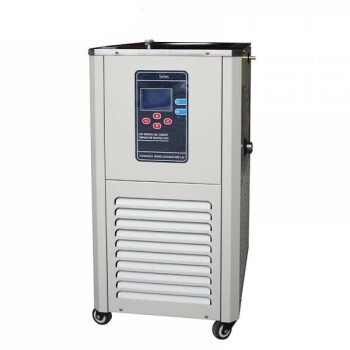
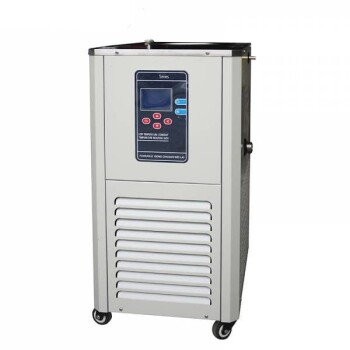
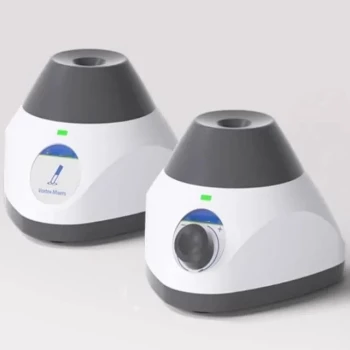
Achieving reproducible results in adsorption kinetics requires equipment that offers uncompromising stability. KINTEK specializes in high-performance laboratory solutions, including precision constant temperature shakers, homogenizers, and cooling solutions designed to maintain the exact environment your materials require.
Beyond agitation, our comprehensive portfolio features:
- Thermal Processing: Muffle, tube, and vacuum furnaces for adsorbent synthesis.
- Material Preparation: Crushing, milling, and hydraulic presses for pelletizing composites.
- Advanced Reactors: High-temperature high-pressure reactors and autoclaves for complex chemical studies.
Ensure your data reflects the true potential of your materials, not the limitations of your lab setup. Contact KINTEK today to find the perfect equipment and consumables for your specific research goals.
References
- Yongxiang Huang, Youkuan Yu. Efficient Adsorption Capacity of MgFe-Layered Double Hydroxide Loaded on Pomelo Peel Biochar for Cd (II) from Aqueous Solutions: Adsorption Behaviour and Mechanism. DOI: 10.3390/molecules28114538
This article is also based on technical information from Kintek Solution Knowledge Base .
Related Products
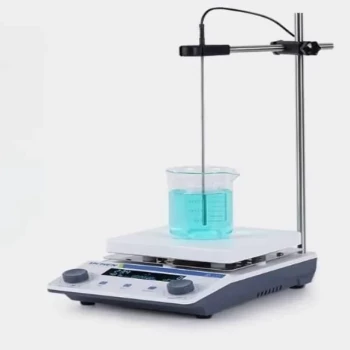
- Laboratory Small Constant Temperature Heated Magnetic Stirrer Heater and Stirrer
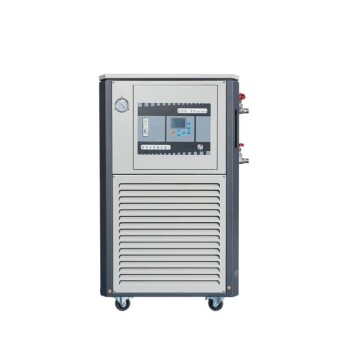
- High Temperature Constant Temperature Heating Circulator Water Bath Chiller Circulator for Reaction Bath
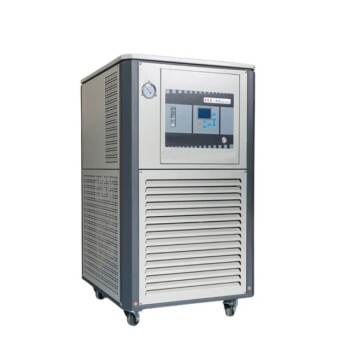
- 5L Heating Chilling Circulator Cooling Water Bath Circulator for High and Low Temperature Constant Temperature Reaction
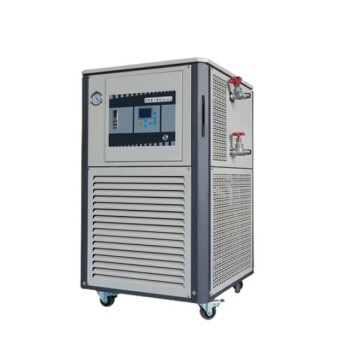
- 50L Chiller Water Bath Cooling Circulator Low Temperature Constant Temperature Reaction Bath
- 10L Heating Chilling Circulator Cooling Water Bath Circulator for High and Low Temperature Constant Temperature Reaction
People Also Ask
- What role does a magnetic stirrer with heating play in ZnO nanoparticle synthesis? Precision Control for Quality Results
- What role does a constant temperature heating magnetic stirrer play in MFC-HAp synthesis? Achieve Material Homogeneity
- What is the function of a laboratory magnetic stirrer in Ni–Cr–P electrodeposition? Optimize Ion Transport & Coating
- Why is a laboratory magnetic stirrer required for benzoic acid esters? Boost Reaction Speed & Yield with High RPM
- What role does a laboratory magnetic stirrer play in TiO2 and TiO2-Ag sol preparation? Master Chemical Kinetics