The high-pressure hydrothermal reactor acts as a precision thermodynamic chamber. It facilitates the loading of FeS2 nanoparticles onto TiO2 nanotubes by creating a sealed, high-pressure environment at 180 °C. This specific environment drives deep chemical reactions that allow FeS2 to crystallize in situ, chemically anchoring the nanoparticles firmly to the nanotube surface rather than simply physically coating them.
Core Takeaway: The reactor is not merely a heating vessel; it is a tool for forcing heterojunction formation. By maintaining high pressure and temperature, it overcomes kinetic barriers, ensuring the FeS2 nanoparticles grow directly on the TiO2 structure to create a high-performance composite with strong interfacial bonds.
Creating the Thermodynamic Environment
The Role of the Sealed System
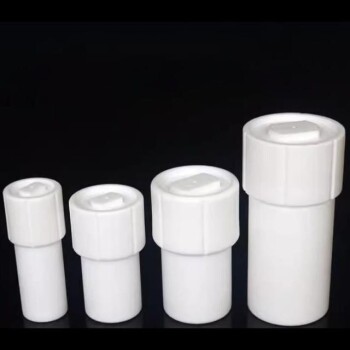
The reactor utilizes a stainless steel autoclave equipped with a PTFE liner to create a hermetically sealed environment.
Because the system is sealed, heating the internal solution generates significant internal pressure.
This pressure is the catalyst that forces the precursor solution to penetrate the intricate geometry of the TiO2 nanotubes.
Driving Deep Chemical Reactions
Standard heating often results in superficial coatings.
However, the hydrothermal reactor, set to 180 °C, promotes what is known as "deep chemical reactions."
This elevated thermal energy, combined with high pressure, accelerates the reaction kinetics between the iron and sulfur sources within the precursor solution.
Mechanism of In-Situ Loading
Promoting In-Situ Crystallization
The reactor does not mechanically mix pre-formed particles; it grows them.
The thermodynamic conditions induce the crystallization of pyrite-type FeS2 nanoparticles directly from the solution.
Because this happens in the presence of the TiO2 nanotubes, the nucleation sites for the FeS2 are often on the nanotube walls themselves.
Forming a Robust Heterojunction
The ultimate goal of this process is the formation of a composite heterojunction.
The reactor ensures that the FeS2 nanoparticles anchor firmly onto the TiO2 surface.
This strong physical and chemical connection facilitates better electron transfer between the materials, which is critical for high-performance applications.
The Function of the PTFE Liner
Chemical Resistance and Purity
The PTFE (polytetrafluoroethylene) liner is critical for process integrity.
It creates a chemically resistant barrier between the reactive precursor solution and the steel reactor shell.
This prevents metallic contamination from the autoclave walls, ensuring the purity of the synthesized FeS2/TiO2 composite.
Handling Corrosive Conditions
Hydrothermal synthesis often requires aggressive precursors to dissolve reactants or modify crystal structures.
The PTFE liner allows the system to withstand these conditions without degrading.
While the primary synthesis occurs at 180 °C, PTFE liners are generally robust enough to handle the thermal stress while maintaining chemical inertness.
Understanding the Trade-offs
Process Scalability
Hydrothermal synthesis in autoclaves is inherently a batch process.
While it produces high-quality, uniform nanocomposites, scaling up to industrial quantities can be difficult compared to continuous flow methods.
Temperature Limitations of PTFE
While PTFE is excellent for chemical resistance, it has thermal limits.
At temperatures significantly exceeding 200°C–250°C, PTFE can deform or degrade.
For reactions requiring extreme temperatures (well above the 180 °C used here), a different liner material, such as PPL (polyphenylene), would be required.
Making the Right Choice for Your Goal
When designing your synthesis protocol, consider your specific performance requirements:
- If your primary focus is interfacial stability: Prioritize the 180 °C high-pressure parameter, as this drives the "deep chemical reaction" required to firmly anchor the FeS2 to the TiO2.
- If your primary focus is material purity: Rely on the integrity of the PTFE liner, ensuring it is inspected regularly for scratches or deformation that could leach contaminants into your precursor solution.
Success in this process relies on using the reactor not just to heat the materials, but to force them into a unified crystalline structure.
Summary Table:
| Feature | Function in FeS2/TiO2 Synthesis | Benefit |
|---|---|---|
| High-Pressure Environment | Forces precursor solution into nanotube geometry | Ensures deep, uniform penetration |
| 180 °C Thermal Energy | Accelerates reaction kinetics & in-situ crystallization | Facilitates strong interfacial bonding |
| PTFE Liner | Provides a chemically inert reaction chamber | Prevents metallic contamination and corrosion |
| Sealed Autoclave | Enables thermodynamic "deep chemical reactions" | Creates stable composite heterojunctions |
Elevate Your Nanomaterial Synthesis with KINTEK
Precision is non-negotiable when creating high-performance composites like FeS2/TiO2. KINTEK specializes in premium laboratory equipment, providing the high-temperature high-pressure reactors and autoclaves you need to achieve superior interfacial stability and material purity.
Whether you require robust PTFE-lined reactors, advanced CVD/PECVD systems, or specialized crushing and milling tools, our comprehensive portfolio is designed to meet the rigorous demands of battery research and chemical engineering.
Ready to optimize your hydrothermal protocols? Contact our technical experts today to find the perfect equipment solution for your laboratory.
References
- Ning Wang, Yiteng Hu. Preparation of FeS2/TiO2 nanocomposite films and study on the performance of photoelectrochemistry cathodic protection. DOI: 10.1038/s41598-021-87132-y
This article is also based on technical information from Kintek Solution Knowledge Base .
Related Products
- Custom PTFE Teflon Parts Manufacturer for Hydrothermal Synthesis Reactor Polytetrafluoroethylene Carbon Paper and Carbon Cloth Nano-growth
- High Pressure Laboratory Autoclave Reactor for Hydrothermal Synthesis
- Customizable Laboratory High Temperature High Pressure Reactors for Diverse Scientific Applications
- Stainless High Pressure Autoclave Reactor Laboratory Pressure Reactor
- Customizable High Pressure Reactors for Advanced Scientific and Industrial Applications
People Also Ask
- What is the function of a PTFE reactor in MXene etching? Ensure Safe, High-Purity MAX Phase Conversion
- Why is a PTFE reactor required for titanium-based nano-ceramic coating solutions? Ensure Chemical Inertness & Purity
- Why must a Polytetrafluoroethylene (PTFE) reactor be used for Ti3C2TX MXene etching? Ensure Safety and Purity
- Why are PTFE reactors preferred for silver phosphate glass testing? Ensure Purity and Kinetic Accuracy
- What are the advantages of using polytetrafluoroethylene (PTFE) liners in hydrothermal synthesis reactors? High Purity