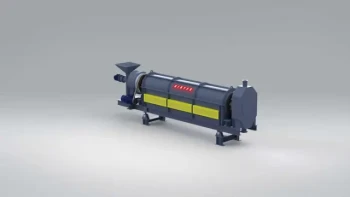
The optimization of biofuel performance in a hydrothermal carbonization (HTC) reactor is achieved by creating a subcritical water environment under high pressure. This specialized environment triggers dehydration and decarboxylation reactions that fundamentally alter the chemical structure of spent mushroom substrate. These reactions convert the raw, moist biomass into a hydrochar with significantly improved energy density and combustion properties.
Core Takeaway The HTC reactor transforms low-value agricultural waste into high-grade solid biofuel by subjecting it to heat and pressure in a sealed aqueous environment. This process eliminates the need for energy-intensive pre-drying and lowers the combustion activation energy, making the resulting fuel easier to ignite and more efficient to burn.
The Mechanism of Optimization
The HTC reactor does not merely dry the substrate; it chemically restructures it. By operating as a sealed system, it leverages specific physical conditions to optimize the conversion process.
The Power of Subcritical Water
The reactor creates a subcritical water environment. This occurs when water is heated (typically around 180°C) but kept liquid by high pressure (autogenous pressure).
In this state, water acts as a powerful solvent and catalyst. It penetrates the biomass structure more effectively than steam or liquid water at standard pressure, facilitating deep chemical changes.
Driving Dehydration and Decarboxylation
The core optimization mechanisms are dehydration (removing water molecules chemically) and decarboxylation (removing carboxyl groups).
These reactions strip away oxygen and hydrogen from the biomass. This leaves behind a product that is carbon-dense, similar to how geological processes form coal over millions of years, but accelerated into a matter of hours.
Enhancing Fuel Characteristics
The physical and chemical changes induced by the reactor directly translate to superior performance metrics for the final biofuel product.
Lowering Combustion Activation Energy
One of the most critical optimizations is the reduction of combustion activation energy.
This refers to the minimum energy required to start the combustion process. By lowering this barrier, the HTC reactor ensures that the hydrochar ignites more easily and burns more consistently than raw mushroom substrate.
Increasing Heating Value
The process concentrates carbon, resulting in a higher heating value (HHV).
Because the oxygen-to-carbon ratio is reduced, the resulting hydrochar packs more energy per unit of weight. This makes it a far more potent fuel source than the original, untreated substrate.
Optimizing Structure for Combustion
The high-pressure environment promotes the development of porosity and specific oxygen-containing functional groups on the surface of the hydrochar.
While often associated with adsorption, this increased porosity also aids combustion kinetics. A more porous structure allows for better airflow and oxygen interaction during burning, leading to improved combustion characteristics.
Understanding the Trade-offs
While the HTC reactor offers significant optimization for biofuel production, it is important to recognize the operational requirements involved in this process.
Pressure Management is Critical
Unlike simple drying or atmospheric pyrolysis, this process relies on autogenous high pressure (often reaching 2 to 10 MPa).
The reactor must be a robust, sealed vessel capable of withstanding these forces. This requires more sophisticated equipment and safety protocols than open-air processing methods.
The State of the Final Product
The output is hydrochar, a solid fuel similar to coal.
While it is eco-friendly and energy-dense, it is distinct from liquid biofuels like ethanol or biodiesel. It is optimized specifically for solid fuel combustion applications, such as co-firing in coal plants or use in biomass boilers.
Making the Right Choice for Your Goal
The HTC reactor is a specialized tool that solves specific problems related to moisture and energy density.
- If your primary focus is Energy Efficiency: The HTC process is ideal because it eliminates the energy-intensive pre-drying stage required by traditional methods, processing moist substrate directly.
- If your primary focus is Combustion Quality: The reactor optimizes the fuel by lowering the activation energy, ensuring the final product ignites easier and burns with a higher heat output.
Ultimately, the HTC reactor turns a disposal liability—wet mushroom substrate—into a high-performance energy asset by leveraging pressure to fundamentally restructure the biomass.
Summary Table:
| Feature | Raw Mushroom Substrate | HTC-Produced Hydrochar |
|---|---|---|
| Energy Density | Low | High (Carbon-dense) |
| Moisture Content | High (Requires drying) | Low (Naturally dehydrated) |
| Ignition Ease | High Activation Energy | Low Activation Energy |
| Heating Value | Low HHV | Significantly Higher HHV |
| Structure | Fibrous/Bulky | Porous/Coal-like |
Maximize Your Biofuel Potential with KINTEK
Ready to transform agricultural waste into high-performance energy assets? KINTEK specializes in advanced laboratory and industrial solutions, providing the high-temperature high-pressure reactors and autoclaves essential for successful hydrothermal carbonization.
Our equipment is engineered for precision and safety, ensuring you can reliably achieve the subcritical water environments needed for superior dehydration and decarboxylation. Whether you are researching battery materials, developing biofuels, or scaling up chemical processes, KINTEK offers the expertise and the tools—from crushing systems and hydraulic presses to PTFE products and ceramics—to drive your innovation forward.
Elevate your research and production efficiency today.
Contact a KINTEK Specialist Now
References
- Arkadiusz Żarski, Janusz Kapuśniak. Starch wars - looking for ecofriendly packaging materials. DOI: 10.21175/rad.abstr.book.2023.17.4
This article is also based on technical information from Kintek Solution Knowledge Base .
Related Products
- High Pressure Laboratory Autoclave Reactor for Hydrothermal Synthesis
- Customizable Laboratory High Temperature High Pressure Reactors for Diverse Scientific Applications
- Electric Rotary Kiln Small Rotary Furnace for Activated Carbon Regeneration
- Customer Made Versatile CVD Tube Furnace Chemical Vapor Deposition Chamber System Equipment
- Electric Rotary Kiln Small Rotary Furnace Biomass Pyrolysis Plant
People Also Ask
- What role does a high-pressure reactor (autoclave) play in the synthesis of NiCuFe-LDH? Master Hydrothermal Growth
- What Role Does a High-Pressure Reactor or Autoclave Play in HA Catalyst Synthesis? Achieve High Surface Area Materials
- What equipment is required for hydrothermal synthesis of Ga0.25Zn4.67S5.08? Optimize Your Semiconductor Production
- What is the function of a high-pressure reactor in the hydrothermal synthesis of boehmite? Expert Process Insights
- What role does an autoclave play in the synthesis of MnO2 nanofibers? Mastering Hydrothermal Growth