The inclusion of a 400°C holding stage acts as a critical stabilization period designed to prevent catastrophic structural failure during the early phases of processing. Its primary function is to facilitate the complete thermal decomposition and degassing of organic binders, such as Polypropylene Carbonate (PPC), preventing the formation of cracks and pores in the final Nickel-Alumina composite.
By pausing at 400°C, you effectively decouple the binder removal process from the high-temperature densification phase. This prevents the rapid volatilization of organic matter that would otherwise generate internal pressure spikes, ensuring the final microstructure remains dense and free of macroscopic defects.
The Role of Binder Removal in Microstructure
Controlled Thermal Decomposition
In the molding phase of Nickel-Alumina composites, organic binders like PPC are essential for shaping. However, these must be entirely removed before the material is fully sintered.
The 400°C holding stage provides a thermal window where these organics can decompose systematically. This controlled breakdown ensures that the binder transforms into gas at a manageable rate rather than exploding out of the material.
Efficient Degassing
Once the binders decompose, the resulting gases must exit the porous structure of the "green" (unsintered) body.
Holding the temperature allows sufficient time for these gases to migrate to the surface and escape. Without this pause, gases may become trapped as the material begins to densify, leading to permanent structural flaws.
Consequences for Structural Integrity
Preventing Macroscopic Cracks
If the temperature ramps up too quickly past the decomposition point, the binder volatilizes rapidly.
This rapid expansion creates significant internal stress. The 400°C hold mitigates this stress, preventing the formation of macroscopic cracks that compromise the mechanical strength of the composite.
Minimizing Closed Pores
Skipping this holding stage often results in "closed pores"—pockets of trapped gas sealed inside the material.
By ensuring complete degassing at 400°C, you maximize the final density of the composite. This leads to a more uniform, defect-free microstructure that is essential for high-performance applications.
Common Pitfalls to Avoid
The Danger of Rapid Heating
A common mistake is accelerating the heating rate through the low-temperature range to save time.
Rapid heating during the binder burnout phase triggers aggressive volatilization. This creates internal pressures that the fragile, unsintered material cannot withstand, leading to immediate structural degradation.
Precision vs. Speed
While high-temperature precision (as seen in TiAl alloys) controls grain size and phase, low-temperature precision at 400°C controls material continuity.
Neglecting precision at this lower temperature renders high-temperature optimization useless. If the part is cracked or porous due to poor binder removal, no amount of high-temperature tuning can salvage the microstructure.
Making the Right Choice for Your Goal
To optimize your Nickel-Alumina sintering profile, consider the following:
- If your primary focus is Structural Integrity: Ensure the 400°C hold is long enough to fully decompose all PPC binder based on the thickness of your component.
- If your primary focus is Maximum Density: Combine the 400°C hold with a slow ramp rate leading up to it to prevent any gas entrapment before pore closure begins.
The 400°C stage is not merely a pause; it is the foundation that dictates whether your final composite will be a solid, high-performance material or a defective failure.
Summary Table:
| Stage | Purpose | Impact on Microstructure |
|---|---|---|
| 400°C Hold | Controlled Binder Decomposition | Prevents internal pressure spikes and macroscopic cracks. |
| Degassing | Gas Migration & Escape | Eliminates trapped gases to minimize closed pores. |
| Densification | High-Temp Sintering | Produces a dense, uniform, and defect-free final structure. |
| Rapid Heating | Time Saving (Risk) | Leads to aggressive volatilization and structural degradation. |
Elevate Your Material Research with KINTEK Precision
Achieving a defect-free nickel-alumina composite requires more than just a precise sintering curve—it requires reliable, high-performance equipment. KINTEK specializes in advanced laboratory solutions, including high-temperature muffle, tube, and vacuum furnaces designed to provide the thermal stability needed for critical stages like binder burnout and densification.
Whether you are refining sintering profiles or scaling production, our comprehensive range of crushing and milling systems, hydraulic presses, and ceramic crucibles ensures your materials meet the highest standards of structural integrity and density.
Ready to optimize your lab's performance? Contact KINTEK today to discover how our expert tools can transform your research outcomes!
References
- Vayos Karayannis, A. Moutsatsou. Synthesis and Characterization of Nickel-Alumina Composites from Recycled Nickel Powder. DOI: 10.1155/2012/395612
This article is also based on technical information from Kintek Solution Knowledge Base .
Related Products
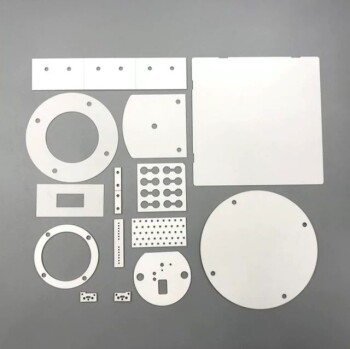
- Custom-Made Alumina Zirconia Special-Shaped Ceramic Plates for Engineering Advanced Fine Ceramics Processing
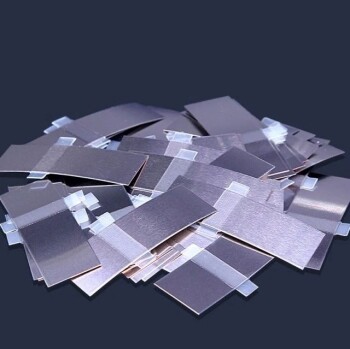
- Nickel Aluminum Tabs for Soft Pack Lithium Batteries
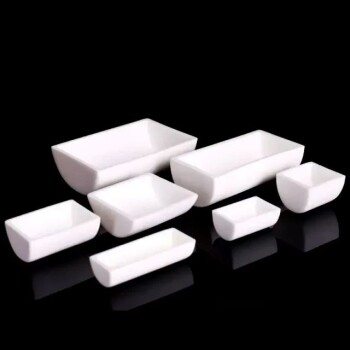
- Alumina Al2O3 Ceramic Crucible Semicircle Boat with Lid for Engineering Advanced Fine Ceramics
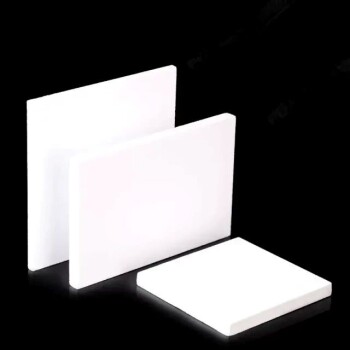
- High Temperature Wear-Resistant Alumina Al2O3 Plate for Engineering Advanced Fine Ceramics
- Engineering Advanced Fine Ceramics Alumina Al2O3 Crucible With Lid Cylindrical Laboratory Crucible
People Also Ask
- What function do alumina ceramic plates serve as supports in the preparation of molecular sieve membranes?
- Why are ceramics more resistant to corrosion? Unlock the Secret to Unmatched Chemical Stability
- What are the process advantages of selecting an alumina plate for CuO nanofilm synthesis? Achieve Superior Purity
- How is alumina ceramic made? A Guide to Manufacturing Methods and Material Properties
- What are the applications of zirconia ceramics? Unlock High-Performance Solutions for Extreme Environments