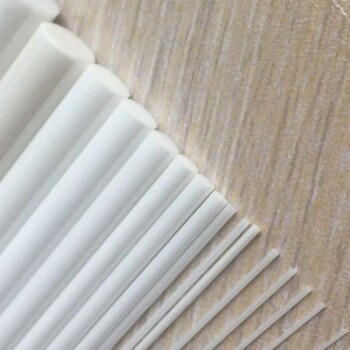
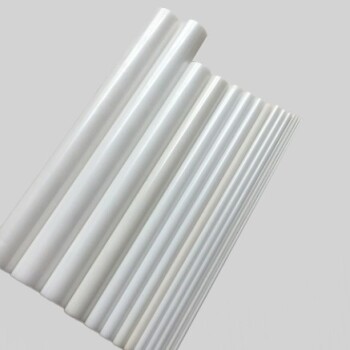
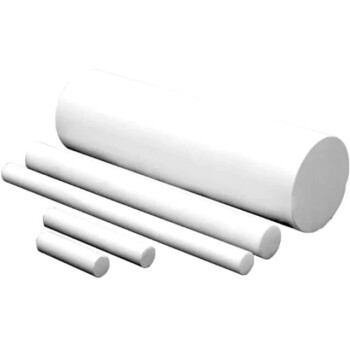
High-purity alumina rods serve as inert simulators for nuclear fuel pellets. In these experiments, they are inserted into cladding tubes to create a precise physical geometry—specifically, a minute gap between the rod and the tube wall. This setup is essential for replicating the "steam starvation" conditions that occur during actual Loss-of-Coolant Accidents (LOCA).
By mimicking the tight physical clearance of actual fuel rods, alumina inserts create a restricted environment that forces localized hydrogen generation. This allows researchers to accurately test how well protective internal coatings can withstand secondary hydrogenation under realistic accident conditions.
Replicating Reactor Conditions
To understand the behavior of fuel cladding during an accident, researchers must look beyond simple external oxidation. They must recreate the internal environment of the fuel rod.
Simulating the Fuel-Cladding Gap
In an actual nuclear reactor, fuel pellets sit inside zirconium alloy cladding tubes with very tight clearances.
The alumina rod acts as a dummy fuel pellet. By inserting this rod, researchers establish a realistic volume-to-surface-area ratio inside the tube.
Creating Steam Starvation
During a LOCA, steam enters the ruptured cladding. However, it cannot flow freely due to the fuel pellets occupying most of the space.
The alumina rod replicates this flow restriction. It prevents an infinite supply of steam from reaching the inner wall, creating a condition known as steam starvation.
Promoting Localized Hydrogen Generation
When steam is starved in this narrow gap, the oxidation process changes significantly.
The reaction consumes the available oxygen, leaving behind high concentrations of hydrogen gas. This localized hydrogen buildup is the critical factor researchers are trying to capture.
It allows them to assess the secondary hydrogenation protection efficiency of internal coatings, determining if the coating can stop the cladding from absorbing this dangerous hydrogen.
Why Alumina is the Material of Choice
While the geometry is the primary driver, the material properties of alumina are equally vital for the success of these experiments.
Thermal Stability
LOCA simulations involve extreme heat.
Alumina is chosen for its ability to withstand very high temperatures without melting or deforming. This ensures the gap geometry remains consistent throughout the experiment.
Chemical Inertness
Researchers need to isolate the interaction between the steam/hydrogen and the cladding wall.
Alumina maintains good chemical resistance under reducing environments. Because it does not react aggressively with the cladding or the steam, it ensures the test results reflect the cladding's performance, not artifacts from the simulator rod.
Understanding the Simulation Limits
While alumina rods are excellent for geometric simulation, they do not perfectly replicate every aspect of a nuclear accident.
Mechanical Integrity vs. Fragmentation
Real fuel pellets often crack and fragment during operation, changing the gap geometry dynamically.
Solid alumina rods represent a "fresh" or intact fuel column. They may not fully capture the chaotic gas flow paths created by fragmented uranium dioxide pellets.
The Absence of Radiochemistry
Alumina is a non-nuclear material.
It simulates the physical presence of fuel but cannot simulate the radiological heat generation or specific chemical interactions (such as pellet-cladding mechanical interaction) that occur with actual uranium fuel.
Making the Right Choice for Your Goal
When designing or evaluating LOCA simulation experiments, the use of alumina rods indicates a specific focus on geometric and hydraulic fidelity.
- If your primary focus is Aerodynamics and Oxidation: The alumina rod is the ideal choice to model the steam starvation and gas flow restrictions accurately.
- If your primary focus is Fuel-Cladding Bonding: The alumina rod is insufficient; you would need reactive surrogates or actual fuel to test chemical bonding between the pellet and the tube.
Ultimately, the use of alumina rods transforms a standard oxidation test into a high-fidelity simulation of the complex geometric and chemical failures inherent in nuclear accidents.
Summary Table:
| Feature | Purpose in LOCA Experiments | Advantage of High-Purity Alumina |
|---|---|---|
| Physical Geometry | Replicates the fuel-cladding gap | Precise volume-to-surface-area ratio |
| Steam Starvation | Limits steam flow to inner walls | Forces realistic localized hydrogen buildup |
| Thermal Stability | Maintains shape at extreme heat | Ensures consistent gap geometry during test |
| Chemical Inertness | Prevents secondary reactions | Isolates cladding behavior from the simulator |
| Research Goal | Tests internal coatings | Accurate secondary hydrogenation assessment |
Elevate Your Nuclear Research with High-Purity Ceramics
Precise simulations require materials that withstand the most extreme conditions. KINTEK specializes in providing high-performance laboratory equipment and consumables tailored for advanced material science and nuclear safety research.
Our high-purity alumina products, including rods, tubes, and crucibles, offer the exceptional thermal stability and chemical inertness required for LOCA simulations. Beyond ceramics, we provide a comprehensive range of high-temperature furnaces (vacuum, tube, and atmosphere), high-pressure reactors, and precision crushing and milling systems to support every stage of your experimental workflow.
Partner with KINTEK to ensure your research achieves maximum fidelity and reliability.
Contact Us Today to Discuss Your Custom Requirements
References
- Jean-Christophe Brachet, F. Maury. DLI-MOCVD CrxCy coating to prevent Zr-based cladding from inner oxidation and secondary hydriding upon LOCA conditions. DOI: 10.1016/j.jnucmat.2021.152953
This article is also based on technical information from Kintek Solution Knowledge Base .
Related Products
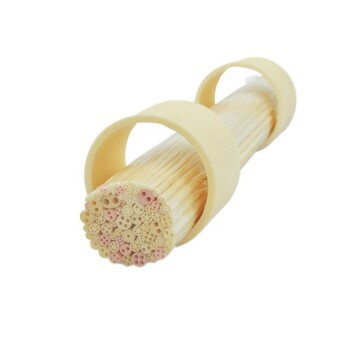
- Engineering Advanced Fine Alumina Al2O3 Ceramic Rod Insulated for Industrial Applications
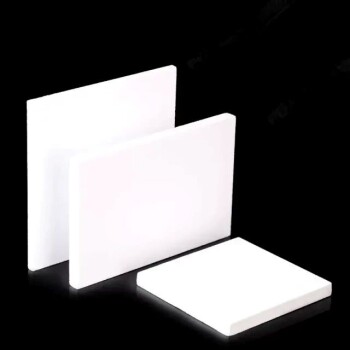
- High Temperature Wear-Resistant Alumina Al2O3 Plate for Engineering Advanced Fine Ceramics
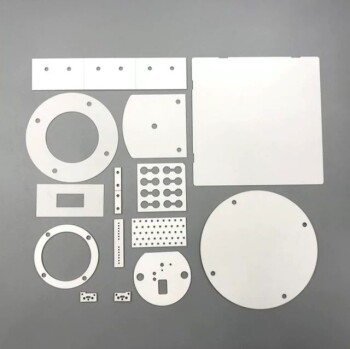
- Custom-Made Alumina Zirconia Special-Shaped Ceramic Plates for Engineering Advanced Fine Ceramics Processing
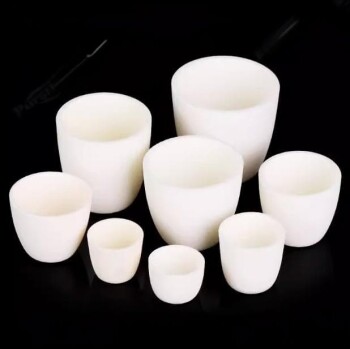
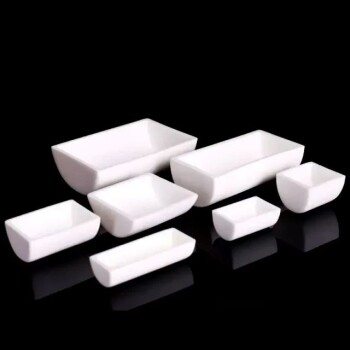
- Arc-Shaped Alumina Ceramic Crucible High Temperature Resistant for Engineering Advanced Fine Ceramics
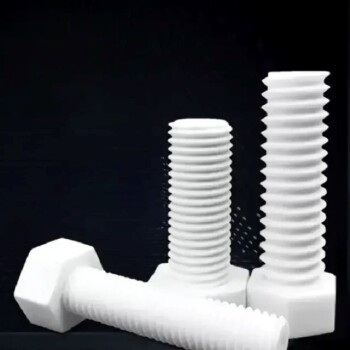
- High Quality Alumina Ceramic Screw for Engineering Advanced Fine Ceramics with High Temperature Resistance and Insulation
People Also Ask
- How is alumina ceramic made? A Guide to Manufacturing Methods and Material Properties
- What ceramics are used for insulation? Choose the Right Material for Thermal or Electrical Needs
- Why are alumina insulation discs used as sample supports in CCPN? Ensure Arcing-Free, Uniform Plasma Nitriding
- How do alumina ceramic tubes address technical challenges in electrochemical devices? Ensure Peak Signal Integrity.
- What is ceramic insulation used for? Master High-Temperature Solutions for Industrial Efficiency