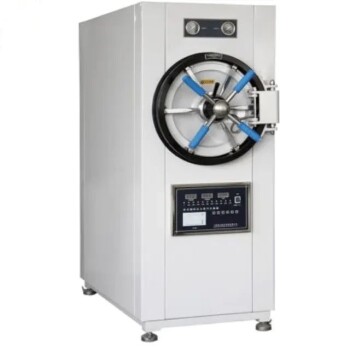
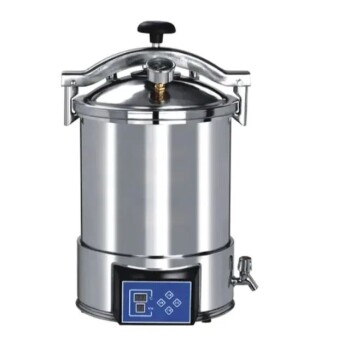
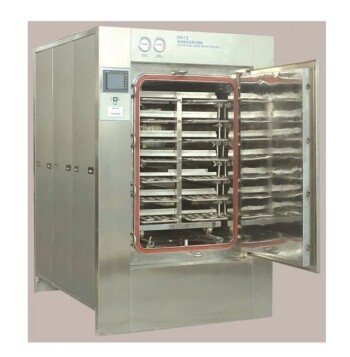
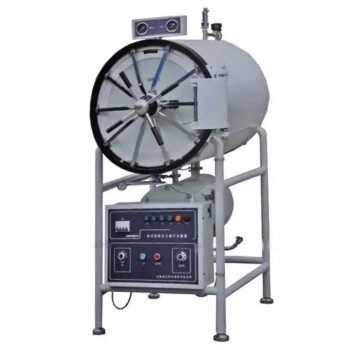
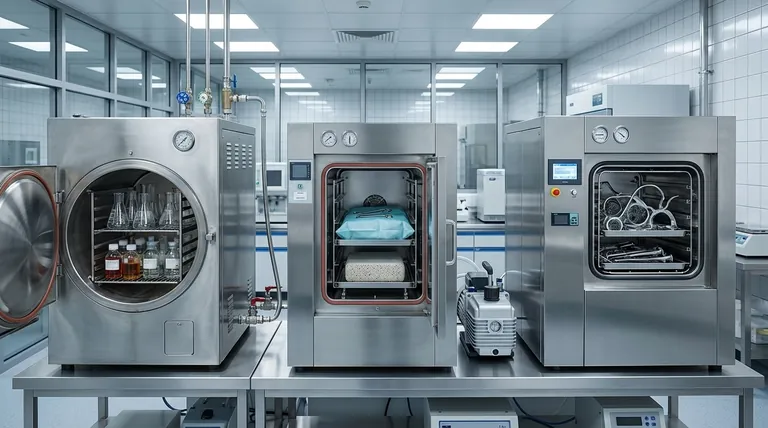
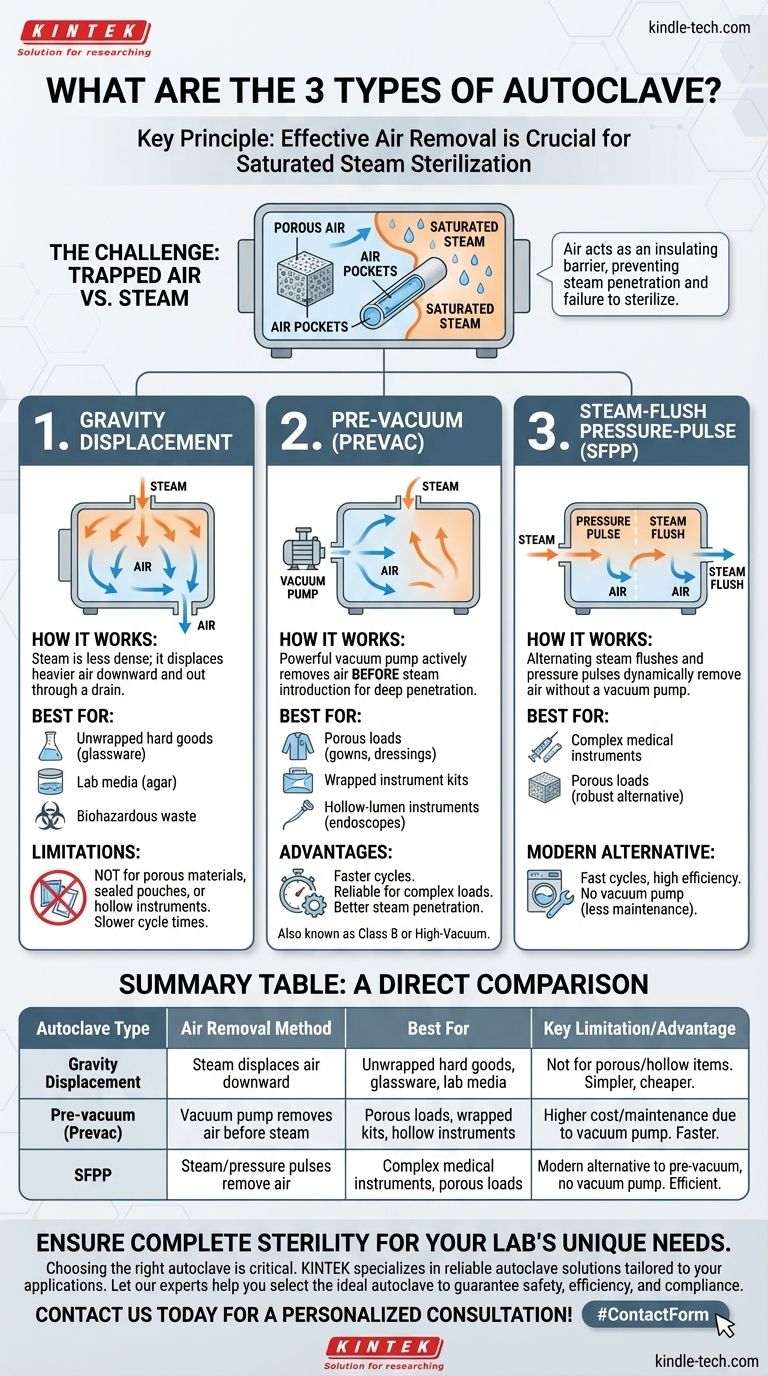
The three primary types of autoclaves are defined by the method they use to remove air from the sterilization chamber: Gravity Displacement, Pre-vacuum (Prevac), and Steam-Flush Pressure-Pulse (SFPP). The efficiency of air removal is the single most important factor determining an autoclave's ability to sterilize different types of loads, from simple glassware to complex surgical instruments.
The core challenge in steam sterilization is not just reaching a high temperature, but ensuring that saturated steam makes direct contact with every surface. The choice between autoclave types comes down to one critical question: how effectively can it remove trapped air from your specific load?
The Fundamental Principle: Why Air Removal is Critical
To understand the difference between autoclave types, you must first understand why removing ambient air is non-negotiable for effective sterilization.
The Role of Saturated Steam
Sterilization in an autoclave is achieved not by dry heat, but by the condensation of saturated steam. When steam condenses on a cooler object, it releases a massive amount of latent heat energy, which rapidly denatures the proteins in microorganisms, killing them.
The Problem with Trapped Air
Air acts as an insulating barrier, preventing steam from making direct contact with the items being sterilized. An air pocket trapped inside a piece of tubing or a fabric bundle will not reach the required sterilization temperature, creating a critical point of failure.
Type 1: Gravity Displacement Autoclaves
This is the most fundamental and common type of autoclave, relying on a simple physical principle.
How It Works
As steam is fed into the chamber, it fills the upper areas first because it is less dense than the cooler, heavier air. This incoming steam displaces the air, pushing it downward and out through a drain vent. The cycle only begins its sterilization timer once the sensor reaches the target temperature.
Common Applications
Gravity autoclaves are best suited for sterilizing unwrapped hard goods, glassware, and lab media (like agar). They are also used for sterilizing biohazardous waste.
Key Limitations
These units are not effective for sterilizing porous materials (like fabrics or gowns), items in sealed pouches, or hollow instruments like tubing. Air can easily become trapped in these loads, preventing proper sterilization. Cycle times are also generally longer.
Type 2: Pre-vacuum (Prevac) Autoclaves
Pre-vacuum systems, also known as high-vacuum or Class B autoclaves, take an active approach to air removal.
How It Works
Before introducing any steam, a powerful vacuum pump actively removes the air from the chamber and the load. This is often done in a series of vacuum and pressure pulses to ensure maximum air removal from even the most complex items. Only then is steam introduced into the near-vacuum, allowing for instantaneous and deep penetration.
Common Applications
Prevac systems are the standard in medical and dental settings. They are required for sterilizing porous loads (gowns, dressings), wrapped instrument kits, and hollow-lumen instruments (like endoscopes and dental handpieces).
Key Advantages
This method provides faster cycle times, more reliable sterilization of complex loads, and better steam penetration than gravity displacement.
Type 3: Steam-Flush Pressure-Pulse (SFPP) Autoclaves
SFPP is a more modern design that achieves the same goal as a pre-vacuum system but with a different mechanism.
How It Works
Instead of using a vacuum pump, this process uses a series of steam flushes and pressure pulses. The chamber is alternately pressurized with steam and then vented to atmospheric pressure. Each pulse dynamically removes air, achieving a level of air removal comparable to pre-vacuum systems.
Common Applications
These are used for the same applications as pre-vacuum autoclaves, serving as a robust alternative for sterilizing complex medical instruments and porous loads.
A Modern Alternative
SFPP systems can achieve faster cycles and are sometimes considered more reliable because they do not depend on a vacuum pump, which can be a point of mechanical failure and require regular maintenance.
Understanding the Trade-offs: A Direct Comparison
Choosing the right technology involves balancing capability, speed, and cost.
Sterilization Speed
Pre-vacuum and SFPP autoclaves are significantly faster than gravity models. By actively removing air, they reduce the overall cycle time needed to heat and penetrate the load.
Load Complexity
This is the most critical distinction. A gravity autoclave is only suitable for simple, non-porous loads. For porous or hollow items, a Prevac or SFPP system is mandatory to guarantee sterility.
Cost and Maintenance
Gravity displacement units are simpler mechanically, making them less expensive to purchase and maintain. Pre-vacuum systems require a vacuum pump, adding to the initial cost and introducing a component that needs regular service. SFPP systems can be a middle ground, offering high performance without a vacuum pump.
Making the Right Choice for Your Application
Your decision should be dictated entirely by the type of materials you need to sterilize.
- If your primary focus is sterilizing simple lab media, glassware, or unwrapped solid instruments: A Gravity Displacement autoclave is a cost-effective and reliable choice.
- If your primary focus is sterilizing complex loads like surgical kits, fabrics, or tubing: A Pre-vacuum (often called a Class B) autoclave is essential for ensuring complete air removal and sterility.
- If your primary focus is rapid processing in a high-throughput hospital or clinical environment: A Steam-Flush Pressure-Pulse (SFPP) system offers a modern, highly efficient alternative to traditional pre-vacuum cycles.
Understanding the mechanism of air removal is the key to selecting the autoclave that guarantees sterility for your specific needs.
Summary Table:
| Autoclave Type | Air Removal Method | Best For | Key Limitation |
|---|---|---|---|
| Gravity Displacement | Steam displaces air downward | Unwrapped hard goods, glassware, lab media | Not suitable for porous or hollow items |
| Pre-vacuum (Prevac) | Vacuum pump removes air before steam | Porous loads, wrapped kits, hollow instruments | Higher cost and maintenance due to vacuum pump |
| Steam-Flush Pressure-Pulse (SFPP) | Steam/pressure pulses remove air | Complex medical instruments, porous loads | Modern alternative to pre-vacuum, no vacuum pump |
Ensure complete sterility for your lab's unique needs. Choosing the right autoclave is critical for effective sterilization, whether you're processing simple glassware or complex surgical kits. KINTEK specializes in lab equipment and consumables, serving laboratory needs with reliable autoclave solutions tailored to your applications. Let our experts help you select the ideal autoclave to guarantee safety, efficiency, and compliance. Contact us today for a personalized consultation!
Visual Guide
Related Products
- Portable High Pressure Laboratory Autoclave Steam Sterilizer for Lab Use
- Laboratory Horizontal Autoclave Steam Sterilizer Lab Microcomputer Sterilizer
- Desktop Fast High Pressure Laboratory Autoclave Sterilizer 16L 24L for Lab Use
- Portable Digital Display Automatic Laboratory Sterilizer Lab Autoclave for Sterilization Pressure
- Desktop Fast Laboratory Autoclave Sterilizer 35L 50L 90L for Lab Use
People Also Ask
- What precautions should be taken during autoclave in laboratory? A Complete Safety Guide to Prevent Burns and Explosions
- What is the importance of using a laboratory autoclave in ZSM-5 synthesis? Achieve Perfect Zeolite Crystallization
- Why is a laboratory autoclave necessary for Postgate Medium B (PMB)? Ensure Pure SRB Cultures & Accurate MIC Research
- What is the primary function of a laboratory autoclave in the pre-treatment of medical plastic waste for liquid fuel?
- What extreme conditions does a laboratory autoclave simulate? Testing Wear Resistance of Nuclear Fuel Cladding