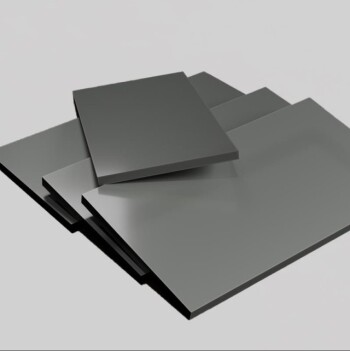
Graphite bipolar plates and polytetrafluoroethylene (PTFE) gaskets function as the structural and operational foundation of a fuel cell stack. Graphite bipolar plates act as the primary conductive backbone, distributing reactant gases through machined flow fields while collecting electrical current. PTFE gaskets provide the critical gas-tight seal and electrical insulation required to maintain internal pressure and prevent short circuits between the cell layers.
Core Takeaway: The structural integrity of a fuel cell depends on the synergy between the conductive, gas-distributing graphite plates and the insulating, chemically resistant PTFE gaskets, which together ensure efficient reactant delivery and leak-free operation.
The Structural Role of Graphite Bipolar Plates
Graphite plates serve as the physical housing for the electrochemical reactions, providing both mechanical stability and electrical pathways.
Current Collection and Electrical Conductivity
High-purity graphite is selected for its exceptional electrical conductivity, allowing it to collect electrons generated at the anode and transport them through the stack. This minimizes internal ohmic resistance, which is vital for maintaining high voltage efficiency during operation.
Uniform Gas Distribution
The surface of these plates features machined flow fields designed to distribute hydrogen and oxidants evenly across the electrode surface. This uniform distribution ensures that the entire area of the catalyst layer is utilized, preventing "dead zones" that could lead to localized overheating or performance degradation.
Mechanical Rigidity and Stack Support
As the "bones" of the fuel cell stack, graphite plates must withstand the compressive forces applied by assembly bolts. They provide a rigid structure that maintains the alignment of the Membrane Electrode Assembly (MEA) and ensures consistent contact between all internal components.
The Multidimensional Functions of PTFE Gaskets
While often viewed simply as seals, PTFE (Teflon) gaskets perform several mechanical and chemical roles essential to the stack's longevity.
Gas-Tight Sealing and Leak Prevention
PTFE gaskets create a hermetic seal under pneumatic or bolt fastening pressures, typically ranging from 2 to 5 bar. This prevents cross-membrane leakage (internal mixing of fuel and oxidant) and external leaks, which is fundamental for maintaining a stable Open Circuit Voltage (OCV).
Mechanical Support for Thin Membranes
In many Proton Exchange Membrane (PEM) cells, PTFE structures act as a hydrophobic skeletal backing for ultra-thin electrolyte layers. This reinforcement provides the necessary physical strength for Perfluorosulfonic Acid (PFSA) membranes, ensuring they do not rupture or deform under the complex pressures of a functioning stack.
Electrical and Chemical Insulation
PTFE is a superior electrical insulator, which is critical for preventing short circuits between the anode and cathode plates. Furthermore, its alkali and acid resistance allows it to maintain structural integrity even when exposed to harsh electrochemical environments and high-temperature electrolytes.
Hydrophobic Management
In specific applications like Zinc-Air fuel cells, porous PTFE sheets regulate the triple-phase interface. Their strong hydrophobicity prevents liquid electrolytes from flooding the electrode pores while allowing atmospheric oxygen to reach the catalyst sites.
Understanding the Trade-offs
Achieving the perfect balance in fuel cell assembly requires navigating several technical compromises.
Compression vs. Contact Resistance
Increased bolt pressure improves the contact resistance between the graphite plate and the MEA, enhancing efficiency. However, excessive pressure can over-compress the PTFE gaskets or damage the brittle graphite plates, leading to structural failure or restricted gas flow.
Seal Integrity vs. Component Creep
While PTFE offers excellent chemical stability, it is susceptible to mechanical creep (deformation over time under constant pressure). Engineers must carefully calibrate the initial pre-tightening force to ensure a long-term seal without causing the gasket to thin out and lose its effectiveness.
How to Optimize Your Assembly Strategy
The choice and configuration of these components should be driven by the specific operational requirements of your project.
- If your primary focus is maximize electrical efficiency: Prioritize high-purity graphite with precision-machined flow fields to minimize ohmic losses and ensure even reactant distribution.
- If your primary focus is long-term durability in harsh environments: Utilize reinforced PTFE gaskets to provide superior chemical resistance and mechanical backing for the electrolyte membrane.
- If your primary focus is high-pressure operation: Implement a controlled compression protocol that balances the sealing requirements of the PTFE with the structural limits of the graphite plates.
The precise integration of conductive graphite and insulating PTFE determines not only the initial performance of a fuel cell but its ultimate operational lifespan.
Summary Table:
| Component | Primary Function | Key Material Property |
|---|---|---|
| Graphite Bipolar Plate | Current collection, gas distribution, and mechanical stack support | High electrical conductivity and physical rigidity |
| PTFE Gasket | Gas-tight sealing, electrical insulation, and membrane reinforcement | Chemical resistance and superior hydrophobicity |
Elevate Your Fuel Cell Research with KINTEK
Precision and reliability are the cornerstones of high-performance energy systems. KINTEK specializes in providing the laboratory equipment and high-purity consumables essential for advanced fuel cell and battery research. Whether you need electrolytic cells and electrodes, high-temperature high-pressure reactors, or precision-engineered assembly tools, our solutions ensure optimal stack integrity and efficiency.
Why partner with KINTEK?
- Comprehensive Portfolio: We offer everything from high-pressure autoclaves and furnaces to specialized PTFE products, ceramics, and crucibles.
- Research Excellence: Our tools are designed to facilitate uniform gas distribution and leak-free operation in demanding electrochemical environments.
- Tailored Solutions: Supporting your team with durable, chemically resistant components for long-term operational stability.
Ready to optimize your assembly strategy and maximize electrical efficiency? Contact KINTEK today to discover how our high-quality materials can power your next breakthrough.
References
- John C. Douglin, Dario R. Dekel. Hydrogenated TiO<sub>2</sub> Carbon Support for PtRu Anode Catalyst in High‐Performance Anion‐Exchange Membrane Fuel Cells. DOI: 10.1002/smll.202307497
This article is also based on technical information from Kintek Solution Knowledge Base .
Related Products
- Carbon Graphite Plate Manufactured by Isostatic Pressing Method
- Graphite Disc Rod and Sheet Electrode Electrochemical Graphite Electrode
- High Purity Pure Graphite Crucible for Electron Beam Evaporation
People Also Ask
- What is the process of isostatic graphite manufacturing? Achieve Unmatched Material Uniformity and Performance
- What is isostatic graphite? The Ultimate Material for High-Tech and High-Temperature Applications
- What is the density of isostatic graphite? Unlock Superior Performance for Demanding Applications
- How big is the isostatic pressing market? A Deep Dive into the $1.2B+ Advanced Manufacturing Enabler
- Why Use an Isostatic or High-Precision Hydraulic Press for Li/LLZO/Li Batteries? Master Solid-State Interfaces