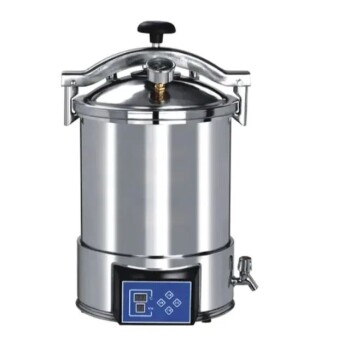
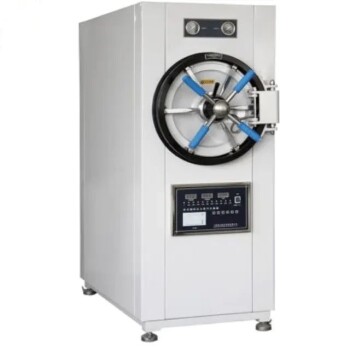
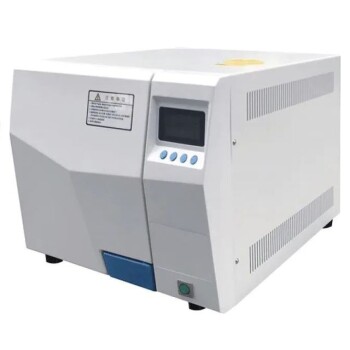
To evaluate the corrosion resistance of nanocrystalline silicon carbide coatings, a laboratory high-pressure autoclave is used to replicate the extreme hydrothermal environment of a nuclear reactor. Specifically, the system subjects the material to high-temperature water at 360 °C and high pressure at 15.4 MPa, mimicking the primary circuit of a Pressurized Water Reactor (PWR).
By maintaining these aggressive thermodynamic parameters over extended cycles, the autoclave isolates the environmental factors necessary to determine the coating's viability as an Accident Tolerant Fuel (ATF) material.
Simulating the Primary Circuit
To understand how nanocrystalline silicon carbide (SiC) will perform in a nuclear setting, researchers must move beyond standard laboratory conditions. The autoclave provides a controlled, hostile environment that targets the specific operational stresses of a PWR.
Exact Thermodynamic Parameters
The core function of the autoclave is to achieve and sustain 360 °C (680 °F) and 15.4 MPa (approx. 2233 psi).
These figures are not arbitrary; they represent the precise operating window of a pressurized water reactor's primary coolant loop.
The Role of Water Chemistry
The testing medium is strictly controlled water.
Unlike other corrosion tests that might employ acid gases or molten salts for different industries, the evaluation of SiC for nuclear applications focuses on hydrothermal stability. The water acts as both the heat transfer medium and the corrosive agent under these supercritical-like conditions.
Duration and Stability
Creating the environment is only the first step; maintaining it without fluctuation is critical for accurate data.
Extended Exposure Cycles
A standard evaluation cycle often runs for 200 hours.
This duration is sufficient to initiate active oxidation or degradation mechanisms that might be missed in shorter, transient tests.
Parameter Consistency
The equipment is designed to keep temperature and pressure constant throughout the cycle.
Fluctuations in pressure or temperature could skew the data, making it impossible to distinguish between material failure and experimental error.
Evaluating Material Performance
The purpose of subjecting the SiC coating to this environment is to quantify physical degradation.
Measuring Mass Change
The primary metric for corrosion resistance in this context is mass change.
By weighing the sample before and after the 200-hour exposure, researchers can calculate the rate of material loss (erosion/corrosion) or gain (oxide formation).
Predicting Service Life
These precise measurements allow engineers to extrapolate the service life of the coating.
If the nanocrystalline silicon carbide shows minimal mass change under these simulated ATF conditions, it validates the material's potential to withstand real-world reactor operations.
Understanding the Trade-offs
While high-pressure autoclaves are essential for initial materials testing, it is important to understand the scope of the data they provide.
Isolation of Variables
The autoclave excels at isolating hydrothermal corrosion.
However, it typically tests the material in a static or controlled flow environment, which may not fully replicate the complex flow dynamics, radiation damage, or mechanical vibrations present in an active reactor core.
Proxy vs. Reality
The 200-hour cycle is an accelerated or representative test.
While it effectively screens for Accident Tolerant Fuel (ATF) suitability, it serves as a predictive model rather than a full lifecycle guarantee.
Making the Right Choice for Your Goal
When interpreting data from high-pressure autoclave tests on SiC coatings, consider your specific engineering objectives:
- If your primary focus is determining chemical stability: Look for low mass change values after the full 200-hour cycle at 360 °C.
- If your primary focus is Accident Tolerant Fuel (ATF) certification: Ensure the test conditions strictly matched the 15.4 MPa PWR simulation parameters to validate relevance.
The high-pressure autoclave provides the critical baseline evidence needed to qualify nanocrystalline silicon carbide as a robust barrier against extreme nuclear environments.
Summary Table:
| Parameter | Testing Value | Significance in Nuclear Application |
|---|---|---|
| Temperature | 360 °C (680 °F) | Mimics the primary circuit of a PWR |
| Pressure | 15.4 MPa (2233 psi) | Replicates the reactor's primary coolant loop |
| Medium | Deionized/Controlled Water | Simulates hydrothermal corrosive agents |
| Test Duration | 200 Hours | Evaluates long-term active oxidation and stability |
| Primary Metric | Mass Change | Quantifies material loss or oxide formation rates |
Elevate Your Material Research with KINTEK Precision
Validation of Accident Tolerant Fuel (ATF) materials requires equipment that never wavers under pressure. KINTEK specializes in high-performance laboratory solutions, offering a comprehensive range of high-temperature high-pressure reactors and autoclaves designed specifically for demanding corrosion and hydrothermal stability studies.
Whether you are testing nanocrystalline silicon carbide coatings or advanced alloys, our portfolio includes:
- Specialized Reactors: CVD, PECVD, and MPCVD systems for advanced coating applications.
- Thermal Processing: Muffle, tube, and vacuum furnaces for precise heat treatment.
- Sample Preparation: Crushing, milling, and hydraulic pellet presses for consistent material testing.
- Lab Essentials: High-purity ceramics, crucibles, and PTFE consumables.
Ready to simulate the extreme? Contact our technical experts today to find the perfect high-pressure autoclave solution for your nuclear or materials science research.
References
- Guiliang Liu, Guang Ran. Investigation of Microstructure and Nanoindentation Hardness of C+ & He+ Irradiated Nanocrystal SiC Coatings during Annealing and Corrosion. DOI: 10.3390/ma13235567
This article is also based on technical information from Kintek Solution Knowledge Base .
Related Products
- Mini SS High Pressure Autoclave Reactor for Laboratory Use
- High Pressure Laboratory Autoclave Reactor for Hydrothermal Synthesis
- Stainless High Pressure Autoclave Reactor Laboratory Pressure Reactor
- Desktop Fast High Pressure Laboratory Autoclave Sterilizer 16L 24L for Lab Use
- Portable High Pressure Laboratory Autoclave Steam Sterilizer for Lab Use
People Also Ask
- Why use high-pressure reactors for molecular sieve synthesis? Unlock Superior Crystallinity and Framework Control
- What is the function of a high-pressure reactor autoclave? Enhancing Cu/N Co-Doped Carbon Catalyst Synthesis
- Why are high-pressure reactors or autoclaves necessary for the synthesis of new functional materials? Unlock Precision.
- What are the advantages of using a high-pressure reactor like an autoclave? Maximize Liquefaction Speed & Yield
- How are high-pressure reactors used to prepare metaphosphate electrocatalysts? Master In-Situ Precursor Growth