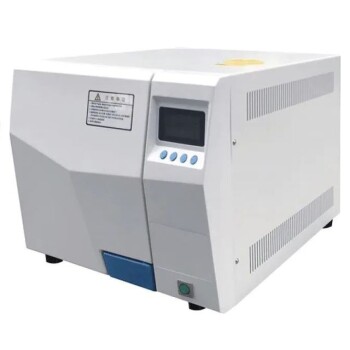
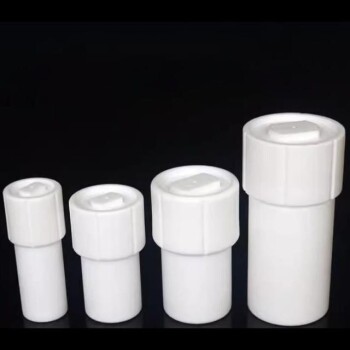
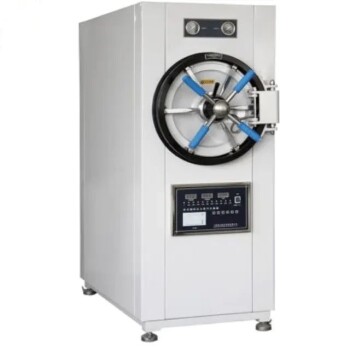
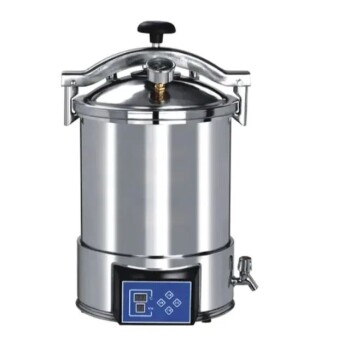
The Teflon-lined stainless steel autoclave serves as a specialized high-pressure reactor designed to facilitate hydrothermal synthesis under controlled thermodynamic conditions. In the specific synthesis of CuO@Cu2O/PNrGO hybrid materials, this equipment maintains a constant temperature of 120°C to drive the decomposition and in-situ reduction of copper acetate precursors. This sealed environment is essential for forcing the stable growth of copper oxide heterostructures onto the graphene scaffold while simultaneously completing the material's final chemical modifications.
The core utility of the autoclave lies in its ability to combine autogenous pressure with sustained heat to accelerate chemical reactions that are impossible at atmospheric pressure. This environment is the primary driver for achieving the structural integration and phase stability required for high-performance hybrid nanomaterials.
The Physical Environment of Hydrothermal Synthesis
Maintaining Autogenous High Pressure
The sealed nature of the stainless steel vessel allows the internal pressure to rise naturally as the liquid solvent is heated beyond its boiling point. This autogenous pressure increases the solubility of precursors and promotes thorough contact between metal ions and the graphene reactants.
Constant Temperature Control
For these specific hybrids, the reactor typically operates at a sustained 120°C. This steady thermal energy provides the necessary activation energy for complex chemical transformations, ensuring the reaction proceeds at a predictable and uniform rate.
Corrosion Resistance and Inertness
The Teflon (PTFE) liner provides a chemically inert barrier that protects the stainless steel walls from corrosive precursors or alkaline conditions. This ensures that the synthesized material remains pure and the structural integrity of the heavy-duty outer vessel is maintained over multiple cycles.
Chemical Facilitation and Material Growth
Accelerated Precursor Decomposition
The high-temperature, high-pressure environment facilitates the rapid breakdown of copper acetate precursors. This ensures a consistent supply of copper ions in the solution, which is a prerequisite for forming the desired oxide phases.
In-Situ Reduction and Structural Integration
The autoclave conditions promote the in-situ reduction of precursors directly onto the nitrogen-doped reduced graphene oxide (PNrGO) scaffold. This localized reaction is what allows for the formation of complex core-shell or heterostructures, such as CuO and Cu2O, with strong interfacial bonding.
Homogeneous Crystallization
By maintaining a sealed environment, the autoclave prevents the evaporation of solvents, keeping the concentration of reactants stable throughout the process. This stability is critical for the oriented growth of uniform nanostructures across the entire surface of the graphene substrate.
Understanding the Trade-offs
Thermal and Pressure Limitations
While Teflon is highly resistant to chemicals, it has a strict thermal ceiling (typically around 220°C-250°C). Operating too close to these limits can cause the liner to soften or deform, which may lead to pressure leaks or contamination of the sample.
Cooling and Precipitation Dynamics
The transition from high pressure back to ambient conditions must be managed carefully through controlled cooling. Rapid cooling can sometimes lead to thermal shock or uneven precipitation, potentially disrupting the delicate core-shell morphology of the CuO@Cu2O particles.
Maintenance and Cross-Contamination
Teflon liners can become slightly porous after repeated use at high pressures. If the liner is not deep-cleaned or replaced periodically, residual ions from previous experiments can leach into new batches, altering the electrochemical properties of the hybrid material.
How to Apply This to Your Project
Making the Right Choice for Your Goal
- If your primary focus is phase purity: Ensure the heating duration is strictly optimized, as prolonged exposure to 120°C may lead to the over-reduction of cuprous oxide (Cu2O) into metallic copper.
- If your primary focus is structural uniformity: Use a consistent filling ratio (typically 60-80% of the liner volume) to ensure reproducible autogenous pressure across different batches.
- If your primary focus is scaffold adhesion: Prioritize the chemical pre-treatment of the graphene oxide to ensure maximum functional sites are available for the copper oxides to anchor during the high-pressure phase.
By precisely controlling the internal thermodynamics of the autoclave, you can transform simple precursors into highly sophisticated, multi-functional hybrid architectures.
Summary Table:
| Core Condition | Role in Synthesis | Key Technical Impact |
|---|---|---|
| Autogenous Pressure | Increases precursor solubility | Enhances contact between metal ions and graphene scaffold. |
| Sustained Heat (120°C) | Provides activation energy | Drives decomposition and in-situ reduction of copper precursors. |
| Teflon (PTFE) Liner | Chemical inertness | Protects vessel from corrosion and prevents sample contamination. |
| Sealed Environment | Prevents solvent evaporation | Maintains stable reactant concentration for uniform crystal growth. |
Elevate Your Nanomaterial Research with KINTEK
Achieving precise phase stability and structural integration in hybrid materials like CuO@Cu2O/PNrGO requires equipment you can trust. KINTEK specializes in high-performance laboratory solutions, offering a robust range of high-temperature high-pressure reactors and autoclaves designed for demanding hydrothermal synthesis.
Beyond reactors, our comprehensive portfolio includes:
- Thermal Processing: Muffle, tube, and vacuum furnaces for precise heat treatment.
- Material Preparation: Crushing, milling systems, and hydraulic presses for pelletizing.
- Lab Essentials: Cooling solutions, electrolytic cells, and high-purity ceramic crucibles.
Whether you are a researcher aiming for homogeneous crystallization or a lab manager seeking durable consumables, KINTEK provides the reliability and technical support you need.
Ready to optimize your synthesis workflow? Contact our experts today to find the perfect equipment for your lab!
References
- Qing Wei, Mingxi Wang. Porous nitrogen-doped reduced graphene oxide-supported CuO@Cu2O hybrid electrodes for highly sensitive enzyme-free glucose biosensor. DOI: 10.1016/j.isci.2023.106155
This article is also based on technical information from Kintek Solution Knowledge Base .
Related Products
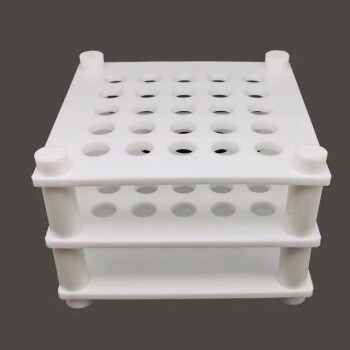
- Custom PTFE Teflon Parts Manufacturer for Centrifuge Tube Racks
- Custom PTFE Teflon Parts Manufacturer Corrosion Resistant Cleaning Rack Flower Basket
- High Pressure Laboratory Autoclave Reactor for Hydrothermal Synthesis
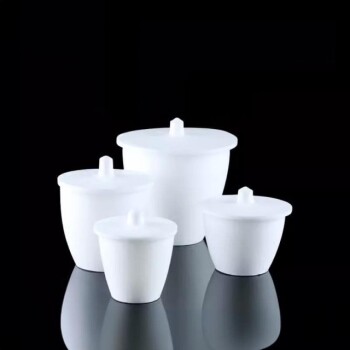
- Custom Machined and Molded PTFE Teflon Parts Manufacturer with PTFE Crucible and Lid
- Custom PTFE Teflon Parts Manufacturer for Hollow Etching Flower Basket ITO FTO Developing Glue Removal
People Also Ask
- Why is slender PTFE tubing necessary for flow control in multi-channel catalyst aging? Ensure Equal Gas Distribution
- Why are PTFE containers required for PCT leaching tests? Ensure Chemical Inertness and Analytical Precision
- Why are PTFE containers necessary for selective HF etching of MAX phases? Ensure Safe & Pure MXene Synthesis
- What role do PTFE containers play in trace metal detection? Ensure Analytical Precision in Photocatalysis Studies
- Why is a PTFE container required for acid leaching of silicon nanosheets? Ensure High Purity and Safety