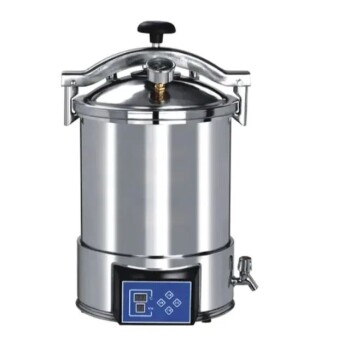
A supercritical carbon dioxide (S-CO2) autoclave is designed to replicate the extreme internal conditions of next-generation power generation systems. By utilizing precision heating and pressurization, it creates a circulating environment with temperatures up to 600 °C and pressures around 20 MPa. This allows for the realistic evaluation of materials exposed to high-temperature, high-pressure oxidizing gases.
Core Takeaway: This equipment moves beyond standard testing by maintaining the supercritical state of CO2 through precise thermal and pressure controls. It provides a stable platform to assess chemical stability, microstructural changes, and oxidation kinetics in materials destined for advanced energy sectors like Gen-IV nuclear reactors.
Recreating the "Real-World" Environment
The primary function of the S-CO2 autoclave is to bridge the gap between theoretical material properties and actual service performance. It achieves this by strictly controlling three fundamental physical parameters.
Precision Temperature Regulation
The system uses advanced heating mechanisms to reach and sustain extreme temperatures.
While the baseline requirement is often cited as 600 °C, advanced setups can maintain temperatures as high as 650 °C. This thermal intensity is necessary to simulate the operating environment of advanced reactor coolants.
Ultra-High Pressure Maintenance
To keep carbon dioxide in a supercritical state, the autoclave must maintain significant pressure.
The equipment typically targets pressures of 20 MPa (up to 20.7 MPa in some configurations). This requires a robust pressure-bearing structure capable of safely isolating these high-energy fluids from the external environment.
Flow and Stability Control
Static testing is often insufficient for simulating power cycles; circulation is key.
These autoclaves utilize high-precision fluid control systems to regulate CO2 flow rates. Additionally, components like back-pressure regulators (BPR) ensure that environmental parameters remain highly stable during long-term exposure tests, which can last up to 500 hours.
Material Evaluation Capabilities
Once the environment is established, the autoclave serves as a controlled platform for analyzing specific material behaviors.
Chemical Stability and Oxidation
The high-temperature, high-pressure oxidizing gas environment allows researchers to study oxidation kinetics.
This is critical for evaluating how protective coatings perform and how the bulk solution stability is maintained over time.
Microstructural Evolution
The equipment is specifically used to observe how materials change at a microscopic level under stress.
This includes evaluating the integrity of diffusion-bonded joints. Researchers track how these joints evolve when exposed to the corrosive S-CO2 environment.
Crack Initiation Analysis
Advanced simulations are used to study stress corrosion and mechanical failure.
The environment allows for the observation of crack initiation behavior in specialized alloys, such as Alumina-Forming Austenitic (AFA) stainless steel, which are candidates for Gen-IV nuclear reactors.
Understanding the Trade-offs
While S-CO2 autoclaves offer high-fidelity simulation, they come with inherent operational challenges that must be managed.
Sealing Integrity vs. Safety
The combination of high temperature (600+ °C) and high pressure (20 MPa) creates immense stress on seals.
The equipment requires exceptional sealing integrity to prevent leaks. Any failure in the pressure-bearing structure can lead to immediate depressurization, compromising the test and posing safety risks.
Complexity of Parameter Isolation
Simulating the exact "occluded zone" chemistry (such as at a crack tip) is difficult in a circulating loop.
While the bulk solution is controlled, ensuring that local environments (acidic or alkaline shifts) are perfectly reproduced requires sophisticated control over oxygen levels and chemical composition circulation.
Making the Right Choice for Your Goal
When designing an experiment using an S-CO2 autoclave, align the equipment's capabilities with your specific material data needs.
- If your primary focus is Joint Integrity: Prioritize systems that can sustain 600 °C and 20 MPa to strictly evaluate the microstructural evolution of diffusion-bonded connections.
- If your primary focus is Long-Term Durability: Ensure the autoclave features a high-precision back-pressure regulator (BPR) to guarantee stability over 500+ hour exposure cycles.
- If your primary focus is Nuclear Application: Verify the system's ability to handle flow rate regulation to accurately simulate the coolant dynamics of Gen-IV reactors.
Ultimately, the value of an S-CO2 autoclave lies in its ability to transform a theoretical material candidate into a proven solution for extreme energy environments.
Summary Table:
| Feature | Simulation Parameters | Material Evaluation Capabilities |
|---|---|---|
| Temperature | Up to 600°C - 650°C | Oxidation kinetics & chemical stability |
| Pressure | 20 MPa - 20.7 MPa | Microstructural evolution & sealing integrity |
| Flow Control | High-precision circulation | Coolant dynamics & crack initiation behavior |
| Test Duration | Up to 500+ hours | Long-term durability & joint integrity analysis |
Elevate Your Materials Research with KINTEK
Ready to push the boundaries of energy innovation? KINTEK specializes in high-performance laboratory equipment, including high-temperature high-pressure reactors and autoclaves designed specifically for the rigorous demands of S-CO2 simulation.
Whether you are analyzing Gen-IV reactor materials, testing diffusion-bonded joints, or evaluating specialized alloys like AFA stainless steel, our precision systems deliver the stability and safety your research requires. Beyond autoclaves, we offer a full suite of muffle furnaces, vacuum systems, and essential consumables like ceramics and crucibles to support your entire workflow.
Contact our technical experts today to find the perfect solution for your lab.
References
- Sunghwan Kim, Injin Sah. Microstructure and Tensile Properties of Diffusion Bonded Austenitic Fe-Base Alloys—Before and After Exposure to High Temperature Supercritical-CO2. DOI: 10.3390/met10040480
This article is also based on technical information from Kintek Solution Knowledge Base .
Related Products
- Laboratory Horizontal Autoclave Steam Sterilizer Lab Microcomputer Sterilizer
- Portable High Pressure Laboratory Autoclave Steam Sterilizer for Lab Use
- Laboratory High Pressure Steam Sterilizer Vertical Autoclave for Lab Department
- Laboratory Sterilizer Lab Autoclave Vertical Pressure Steam Sterilizer for Liquid Crystal Display Automatic Type
- Laboratory High Pressure Horizontal Autoclave Steam Sterilizer for Lab Use
People Also Ask
- What precautions should be taken during autoclave in laboratory? A Complete Safety Guide to Prevent Burns and Explosions
- What extreme conditions does a laboratory autoclave simulate? Testing Wear Resistance of Nuclear Fuel Cladding
- What role does a laboratory autoclave play in HEA corrosion research? Key to Validating Advanced Reactor Materials
- Why is a laboratory autoclave necessary for Postgate Medium B (PMB)? Ensure Pure SRB Cultures & Accurate MIC Research
- What is the importance of using a laboratory autoclave in ZSM-5 synthesis? Achieve Perfect Zeolite Crystallization