A constant temperature shaker is essential for Bisphenol A (BPA) adsorption tests because it simultaneously stabilizes the thermal environment and provides the mechanical energy required to overcome physical mass transfer barriers. This dual-action ensures that the resulting data accurately reflects the intrinsic adsorption capacity and kinetic behavior of the adsorbent rather than the limitations of the experimental setup.
The core advantage of a constant temperature shaker lies in its ability to eliminate external diffusion resistance while maintaining thermodynamic consistency. By providing uniform agitation and precise temperature control, it allows researchers to obtain reproducible data regarding equilibrium times and maximum adsorption capacities.
Overcoming Physical Barriers to Adsorption
Elimination of External Mass Transfer Resistance
During adsorption, a stagnant "liquid film" often forms around the adsorbent particles, hindering the movement of BPA molecules from the solution to the adsorbent surface. The mechanical oscillation of the shaker creates forced convection, which breaks down this diffusion layer and ensures maximum contact between the pollutant and the solid phase.
Maintaining Continuous Particle Suspension
For materials like modified biochar or carbonized composites, gravity can cause particles to settle at the bottom of the flask, reducing the available surface area. The shaker provides continuous kinetic energy to keep these particles suspended, ensuring that the entire surface of the adsorbent is actively involved in the reaction throughout the experiment.
Increasing Collision Frequency
The constant motion increases the collision frequency between BPA molecules and the surface or internal pores of the adsorbent. This acceleration helps the system reach kinetic equilibrium faster, which is critical for determining the reaction rate and the time required for a material to become fully saturated.
Thermal Precision for Scientific Accuracy
Stabilization of Kinetic Rates
Adsorption is a temperature-sensitive process; even minor fluctuations can significantly alter the speed of the reaction. A constant temperature shaker ensures a stable kinetic environment, allowing researchers to accurately measure how quickly BPA is removed without the interference of ambient temperature changes.
Accuracy in Thermodynamic Modeling
To determine whether the adsorption of BPA is endothermic or exothermic, experiments must be conducted at specific, unchanging temperatures (e.g., 298 K). The shaker’s thermal control allows for the precise calculation of thermodynamic parameters, such as enthalpy and Gibbs free energy, which are necessary to understand the nature of the molecular bond.
Simulating Environmental Conditions
By adjusting the shaker to specific temperatures, researchers can simulate different environmental scenarios, such as BPA removal in industrial wastewater versus cooler groundwater. This stability is vital for validating the predictive models used to scale up adsorption technologies for real-world applications.
Understanding the Trade-offs and Pitfalls
The Risk of Excessive Agitation Speed
While high rotation speeds (e.g., 160 rpm) eliminate mass transfer resistance, excessively high speeds can cause mechanical attrition of the adsorbent. This can break fragile composite beads or biochar into smaller fragments, artificially increasing surface area and skewing the final results.
Thermal Lag in Large Volumes
In experiments involving large volumes of solution, there may be a thermal lag between the shaker’s setting and the actual temperature inside the flask. Failure to verify the internal liquid temperature can lead to inaccuracies in thermodynamic data, particularly during the initial stages of the reaction.
Equilibrium Time Constraints
While the shaker accelerates the process, it does not bypass the need for adequate contact time. Even with optimal agitation, some adsorbents require a full 24 hours to reach thermodynamic equilibrium, and rushing this process will result in an underestimation of the maximum adsorption capacity.
Applying These Advantages to Your Research
How to Apply This to Your Project
- If your primary focus is determining maximum capacity: Set the shaker to a moderate speed (e.g., 110–150 rpm) and allow at least 24 hours of contact time to ensure the system reaches true thermodynamic equilibrium.
- If your primary focus is kinetic modeling: Use the shaker to maintain a strictly controlled temperature while taking samples at frequent intervals to accurately capture the initial rapid adsorption phase.
- If your primary focus is environmental simulation: Conduct multiple runs at different temperature settings (e.g., 15°C, 25°C, and 35°C) to evaluate how seasonal temperature shifts impact BPA removal efficiency.
By leveraging both the mechanical and thermal functions of the shaker, you ensure that your BPA adsorption data is technically sound, reproducible, and ready for peer-reviewed validation.
Summary Table:
| Feature | Advantage in BPA Adsorption Tests | Impact on Experimental Data |
|---|---|---|
| Mechanical Agitation | Eliminates external mass transfer (liquid film) resistance | Accurate kinetic modeling and faster equilibrium |
| Particle Suspension | Prevents adsorbent settling and maximizes surface contact | Reflects true maximum adsorption capacity |
| Thermal Precision | Maintains thermodynamic consistency (e.g., at 298 K) | Reliable calculation of enthalpy and Gibbs free energy |
| Environmental Simulation | Replicates real-world conditions (wastewater vs. groundwater) | Validates predictive models for industrial scaling |
Elevate Your Adsorption Research with KINTEK Precision
Achieving reproducible results in Bisphenol A (BPA) studies requires more than just a shaker—it requires laboratory equipment designed for scientific accuracy. KINTEK specializes in providing high-performance solutions, including advanced shakers and homogenizers, as well as a comprehensive range of thermal equipment like high-temperature furnaces and vacuum systems.
Whether you are performing kinetic modeling or simulating industrial wastewater scenarios, our tools—from constant temperature shakers to essential PTFE and ceramic consumables—ensure your data is technically sound and ready for peer-reviewed validation.
Ready to optimize your lab's efficiency and accuracy? Contact us today to find the perfect equipment for your research!
References
- Xian Zhang, Stijn Van Hulle. Synthesis, characterization, and comparison of N-modified biochar with different nitrogen sources for bisphenol A adsorption. DOI: 10.1007/s13399-023-05224-3
This article is also based on technical information from Kintek Solution Knowledge Base .
Related Products
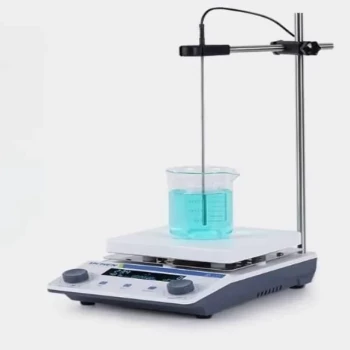
- Laboratory Small Constant Temperature Heated Magnetic Stirrer Heater and Stirrer
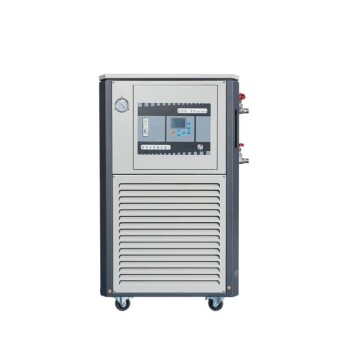
- High Temperature Constant Temperature Heating Circulator Water Bath Chiller Circulator for Reaction Bath
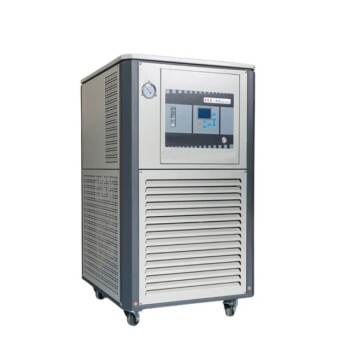
- 5L Heating Chilling Circulator Cooling Water Bath Circulator for High and Low Temperature Constant Temperature Reaction
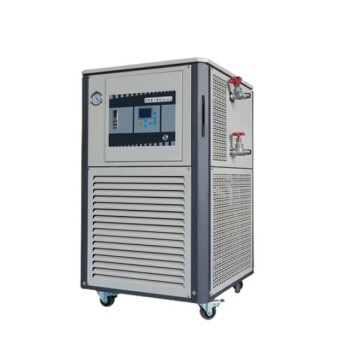
- 50L Chiller Water Bath Cooling Circulator Low Temperature Constant Temperature Reaction Bath
- 10L Heating Chilling Circulator Cooling Water Bath Circulator for High and Low Temperature Constant Temperature Reaction
People Also Ask
- What role does a magnetic stirrer with heating play in ZnO nanoparticle synthesis? Precision Control for Quality Results
- What role does a constant temperature heating magnetic stirrer play in MFC-HAp synthesis? Achieve Material Homogeneity
- What is the function of a laboratory magnetic stirrer in Ni–Cr–P electrodeposition? Optimize Ion Transport & Coating
- Why is a laboratory magnetic stirrer required for benzoic acid esters? Boost Reaction Speed & Yield with High RPM
- What role does a laboratory magnetic stirrer play in TiO2 and TiO2-Ag sol preparation? Master Chemical Kinetics