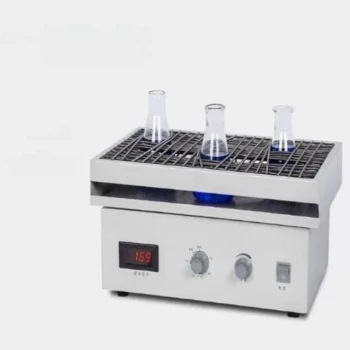
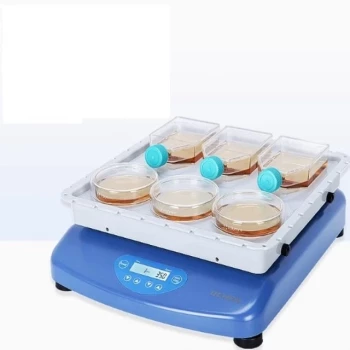
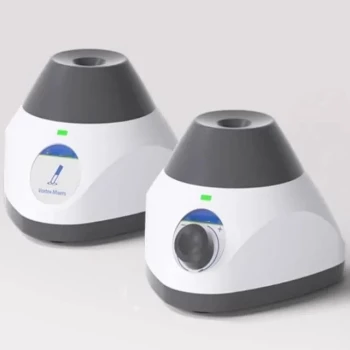
A constant temperature incubator shaker delivers a controlled environment characterized by stable mechanical oscillation and high-precision thermal management. In batch adsorption experiments, these devices maintain specific rotation speeds—typically ranging from 110 to 200 rpm—to ensure adsorbent particles remain fully suspended in the heavy metal solution. This setup effectively eliminates external mass transfer resistance and liquid film diffusion barriers, providing the stable kinetic conditions necessary to accurately measure intrinsic adsorption rates and thermodynamic behavior.
The primary role of an incubator shaker is to eliminate physical barriers to physical adsorption—specifically liquid film and external mass transfer resistance—while providing a consistent thermal baseline for reproducible kinetic and thermodynamic data.
Mechanical Agitation and Particle Suspension
Eliminating External Mass Transfer Resistance
The continuous mechanical oscillation of the shaker ensures that adsorbent particles do not settle at the bottom of the reaction vessel. By keeping the adsorbent in a completely suspended state, the shaker overcomes liquid film mass transfer resistance (also known as water film diffusion resistance). This allows the experiment to measure the true adsorption rate of the material rather than the speed at which ions move through the surrounding liquid.
Maximizing Solid-Liquid Interface Contact
Stable agitation increases the collision frequency between heavy metal ions (such as Pb(II) or copper ions) and the surface or internal pores of the adsorbent. This uniform distribution ensures that the entire available surface area of the adsorbent is utilized simultaneously. Such conditions are critical for determining the reaction equilibrium time and the maximum adsorption capacity of a material.
Enhancing Kinetic Reproducibility
By maintaining a consistent rotation speed, the shaker provides a uniform kinetic environment across multiple samples. This stability ensures that the resulting data is highly accurate and reproducible, which is essential for scientific validation. Without this mechanical force, the adsorbent would experience varying degrees of contact with the solute, leading to inconsistent and unrepresentative results.
Thermal Precision and Thermodynamic Control
Maintaining Kinetic Consistency
Precise temperature control eliminates the influence of ambient temperature fluctuations on the reaction rate. Because adsorption is a temperature-sensitive process, even minor shifts in the lab environment can skew kinetic data. A constant temperature (e.g., 23°C or 25°C) ensures that the energy levels within the system remain stable throughout the duration of the experiment.
Facilitating Thermodynamic Evaluation
A stable thermal environment allows researchers to conduct studies at multiple specific temperatures to determine if a process is endothermic or exothermic. By evaluating adsorption capacity at different set points, scientists can calculate essential thermodynamic parameters. This data is vital for simulating how an adsorbent will perform under various environmental or industrial conditions.
Supporting Long-Duration Equilibrium
Many adsorption experiments require extended periods, sometimes up to 24 hours or more, to reach thermodynamic equilibrium. The incubator shaker provides the necessary long-term stability to maintain both motion and temperature without interruption. This allows for the accurate determination of the maximum adsorption capacity of complex materials like carbonized composites or biochar.
Understanding the Trade-offs
Mechanical Stress and Particle Attrition
While high rotation speeds eliminate mass transfer resistance, excessive mechanical energy can cause particle attrition. Fragile adsorbents may break down into smaller fragments, artificially increasing the surface area and skewing the results. It is critical to balance the need for suspension with the physical integrity of the adsorbent material.
Temperature Gradients in Large Batches
In larger incubator chambers, there is a risk of temperature gradients if the air circulation is inefficient. If multiple flasks are processed simultaneously, those near the heating elements or fans may experience slightly different conditions. Users must ensure uniform heat distribution to maintain the integrity of comparative studies.
Evaporation Risks
Extended shaking at elevated temperatures can lead to solvent evaporation, which changes the concentration of the heavy metal solution. This can result in inaccurate calculations of adsorption capacity. Using sealed vessels or monitoring volume levels is a necessary precaution for long-term kinetic studies.
How to Apply This to Your Project
Making the Right Choice for Your Goal
- If your primary focus is measuring intrinsic reaction rates: Set the rotation speed high enough (e.g., 180–200 rpm) to fully eliminate liquid film resistance and ensure the adsorbent is completely suspended.
- If your primary focus is thermodynamic modeling: Conduct the experiment at three or more distinct, precisely controlled temperatures to accurately calculate enthalpy and entropy.
- If your primary focus is fragile or composite materials: Use the minimum rotation speed required for suspension (e.g., 110 rpm) to prevent the physical degradation of the adsorbent particles.
- If your primary focus is environmental simulation: Set the temperature and agitation levels to mimic the specific water conditions (e.g., groundwater vs. industrial wastewater) where the adsorbent will be deployed.
By precisely controlling both mechanical energy and thermal stability, you ensure your adsorption data is a true reflection of the material's chemical performance.
Summary Table:
| Experimental Condition | Mechanism | Research Benefit |
|---|---|---|
| Mechanical Agitation | 110–200 rpm oscillation | Eliminates liquid film resistance and ensures particle suspension. |
| Thermal Precision | High-precision temp control | Maintains kinetic consistency and enables thermodynamic evaluation. |
| Solid-Liquid Contact | Stable agitation | Maximizes interface contact to determine true reaction equilibrium. |
| Long-term Stability | Continuous 24h+ operation | Supports accurate measurement of maximum adsorption capacity over time. |
Elevate Your Adsorption Research with KINTEK Precision
Achieving reproducible kinetic and thermodynamic data requires equipment that never wavers. KINTEK specializes in high-performance laboratory solutions designed for rigorous research environments. Our precision shakers and homogenizers provide the stable agitation and thermal control necessary for accurate heavy metal adsorption studies, while our extensive range of high-temperature furnaces, hydraulic presses, and cooling solutions supports every stage of your material characterization.
Whether you are a researcher focused on environmental simulation or an industrial lab seeking high-throughput efficiency, KINTEK delivers the reliability you need to eliminate experimental variables and focus on results.
Ready to optimize your laboratory workflow? Contact KINTEK today for a consultation and custom quote!
References
- Sana Khalid, Muhammad Ibrar. Biochar supported metallo-inorganic nanocomposite: A green approach for decontamination of heavy metals from water. DOI: 10.1371/journal.pone.0289069
This article is also based on technical information from Kintek Solution Knowledge Base .
Related Products
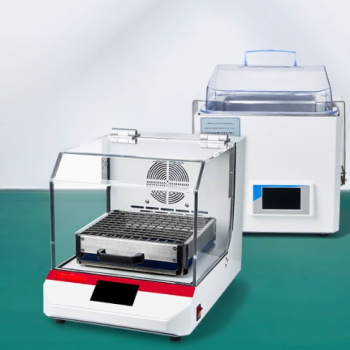
- Shaking Incubators for Diverse Laboratory Applications
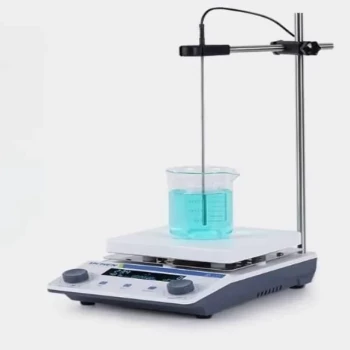
- Laboratory Small Constant Temperature Heated Magnetic Stirrer Heater and Stirrer
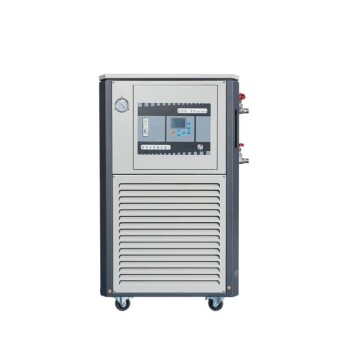
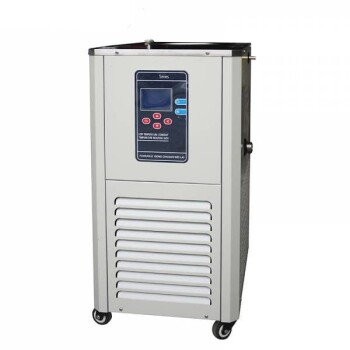
- High Temperature Constant Temperature Heating Circulator Water Bath Chiller Circulator for Reaction Bath
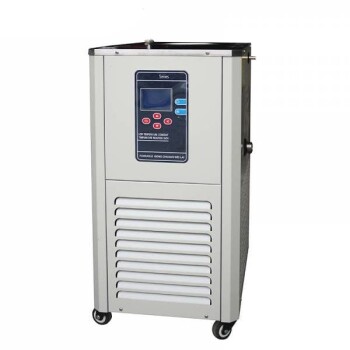
- 50L Chiller Water Bath Cooling Circulator Low Temperature Constant Temperature Reaction Bath
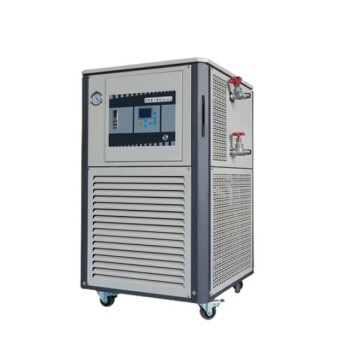
- 10L Heating Chilling Circulator Cooling Water Bath Circulator for High and Low Temperature Constant Temperature Reaction
People Also Ask
- What physical conditions does a shaking incubator provide for bioethanol fermentation? Optimize Yeast Productivity
- Why is the mechanical agitation provided by a shaking incubator necessary for the enzymatic hydrolysis of biomass?
- What critical reaction conditions does a shaking incubator provide? Optimize Cassava Cellulose Enzymatic Hydrolysis
- What are the primary functions of a shaking incubator? Optimize Biomass Fenton Pretreatment Efficiency
- What function does a laboratory shaking incubator serve for halophilic archaea? Optimize Your Seed Cultivation Today