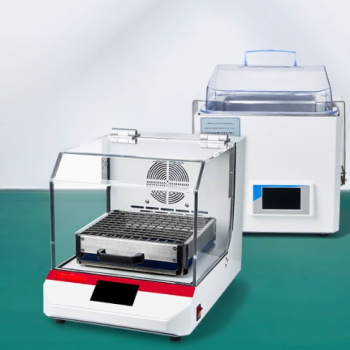
A shaking incubator creates a controlled physical environment defined primarily by constant thermal regulation and continuous mechanical agitation. Specifically, it maintains a precise temperature setpoint (such as 35 °C) to optimize biological activity while simultaneously rotating the culture (often at 150 rpm) to ensure mixture homogeneity.
By combining precise thermal regulation with mechanical agitation, shaking incubators maximize yeast enzyme activity and ensure efficient nutrient distribution. This dual control is critical for maintaining stable ethanol conversion rates over extended fermentation cycles.
The Role of Thermal Regulation
Optimizing Enzyme Activity
The incubator maintains a specific, constant temperature, typically around 35 °C for this application.
This precise thermal environment is necessary to ensure the maximum activity of metabolic enzymes within the yeast cells.
Sustaining Long-Duration Processes
Bioethanol fermentation is often a lengthy process, lasting up to 84 hours.
Consistent temperature control prevents thermal fluctuations that could otherwise slow down metabolic rates or degrade enzyme efficiency over this extended period.
The Function of Continuous Agitation
Ensuring Nutrient Homogeneity
The device employs continuous orbital shaking, commonly set at a rotation speed of 150 rpm.
This mechanical motion maintains a uniform distribution of nutrients throughout the culture medium. It ensures that yeast cells have consistent access to the fuel required for fermentation.
Enhancing Mass Transfer
Beyond simple mixing, the shaking action significantly improves gas-liquid mass transfer efficiency.
This physical interaction facilitates the exchange of gases necessary to maintain the biological health of the culture.
Understanding the Operational Impact
The Consequence of Stagnation
Without the physical agitation provided by the incubator, metabolites would not disperse effectively.
This would likely lead to uneven reaction rates and localized depletion of nutrients within the vessel.
Stability of Conversion Rates
The combination of heat and movement is designed to maintain stable ethanol conversion rates.
By controlling these physical conditions, the system ensures reliable performance throughout the entire fermentation cycle.
Making the Right Choice for Your Goal
To maximize bioethanol production, you must balance these physical parameters to support yeast physiology.
- If your primary focus is enzyme efficiency: Prioritize precise temperature regulation (e.g., 35 °C) to keep metabolic pathways active.
- If your primary focus is reaction consistency: Ensure continuous rotation (e.g., 150 rpm) to prevent nutrient gradients and maximize gas transfer.
Successful fermentation relies on the shaking incubator's ability to turn a variable biological process into a stable, controlled physical operation.
Summary Table:
| Parameter | Typical Setting | Function in Fermentation |
|---|---|---|
| Temperature | ~35 °C | Optimizes enzyme activity and metabolic rates |
| Agitation Speed | 150 rpm | Ensures nutrient homogeneity and prevents stagnation |
| Motion Type | Orbital Shaking | Enhances gas-liquid mass transfer efficiency |
| Process Duration | Up to 84 Hours | Maintains stability over extended fermentation cycles |
Maximize Your Bioethanol Yield with KINTEK Precision
Achieving consistent fermentation results requires the perfect balance of heat and motion. KINTEK specializes in high-performance laboratory equipment designed to stabilize your most sensitive biological processes. Whether you are optimizing yeast physiology or scaling up production, our advanced shaking incubators, homogenizers, and cooling solutions provide the reliability your research demands.
From high-temperature furnaces to precision crushing and milling systems, KINTEK offers a comprehensive suite of tools for the modern lab. Our expertise ensures your fermentation cycles remain efficient and your ethanol conversion rates stay stable.
Ready to elevate your laboratory efficiency? Contact us today to discover how KINTEK’s innovative equipment can streamline your workflow!
References
- Nurfahmi, S.M. Ashrafur Rahman. Production Process and Optimization of Solid Bioethanol from Empty Fruit Bunches of Palm Oil Using Response Surface Methodology. DOI: 10.3390/pr7100715
This article is also based on technical information from Kintek Solution Knowledge Base .
Related Products
- Shaking Incubators for Diverse Laboratory Applications
- Laboratory Vibratory Sieve Shaker Machine for Dry and Wet Three-Dimensional Sieving
- Laboratory Test Sieves and Vibratory Sieve Shaker Machine
- Laboratory Vibratory Sieve Shaker Machine Slap Vibrating Sieve
- Laboratory Wet Three-Dimensional Vibratory Sieve Shaker Machine
People Also Ask
- Why is the mechanical agitation provided by a shaking incubator necessary for the enzymatic hydrolysis of biomass?
- What critical reaction conditions does a shaking incubator provide? Optimize Cassava Cellulose Enzymatic Hydrolysis
- What are the primary functions of a shaking incubator? Optimize Biomass Fenton Pretreatment Efficiency
- What function does a laboratory shaking incubator serve for halophilic archaea? Optimize Your Seed Cultivation Today
- How does an incubator shaker affect the yield of reducing sugars? Optimize Pennisetum alopecuroides Hydrolysis