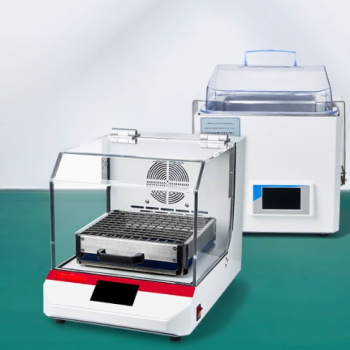
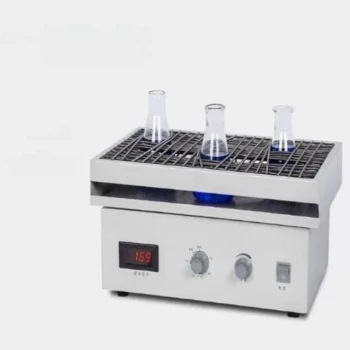
Mechanical agitation is the critical driver of efficiency in biomass conversion. It provides the necessary mass transfer power to ensure that cellulase enzymes are uniformly distributed throughout viscous biomass slurries. Without this continuous motion, typically set at rotational speeds like 160 rpm, enzymes are unable to overcome diffusion limitations to reach the cellulose substrate effectively.
In thick biomass mixtures, natural diffusion is insufficient to facilitate the necessary chemical reactions. The shaking incubator provides the mechanical force required to overcome viscosity and diffusion barriers, ensuring the close enzyme-substrate contact needed for efficient hydrolysis at 50°C.
The Physics of Biomass Interaction
Overcoming High Viscosity
Biomass slurries are inherently thick, creating a fluid environment that resists flow. In a static environment, solid particles would settle, and liquid layers would stagnate. The shaking incubator applies continuous mechanical force to keep the mixture in motion, preventing component separation.
Bridging the Diffusion Gap
Enzymes are macromolecules that cannot migrate quickly through dense, viscous fluids on their own. Relying solely on natural diffusion would result in extremely slow reaction rates. Mechanical agitation physically transports the enzymes across the fluid, bypassing these inherent diffusion limitations.
The Role of Mass Transfer
Ensuring Uniform Distribution
For hydrolysis to be effective, the cellulase enzymes must be evenly dispersed throughout the entire volume of the slurry. Continuous rotational power creates a homogenous environment. This ensures that pockets of untreated biomass do not form and that enzyme concentration is consistent globally.
Promoting Substrate Contact
The ultimate goal of the process is biochemical conversion at a controlled temperature of 50°C. However, thermal control is ineffective if the reactants never meet. The mechanical action promotes close, physical contact between the enzyme and the cellulose, which is the prerequisite for the chemical breakdown to occur.
Operational Considerations and Trade-offs
The Necessity of Energy Input
The "mass transfer power" provided by the incubator represents a constant energy requirement. This is an essential cost of operation; you cannot achieve high conversion yields in viscous media without investing energy into physical mixing.
Sensitivity to Rotational Speed
The specific speed mentioned, such as 160 rpm, is not arbitrary. If the speed is too low, the mass transfer power will be insufficient to move the heavy slurry. This leads to poor mixing and creates a distinct "limit" to the efficiency of the reaction based on mechanical settings.
Optimizing Your Hydrolysis Protocol
To maximize the efficiency of your enzymatic hydrolysis, align your mechanical settings with your specific objectives:
- If your primary focus is maximizing reaction yield: Ensure your rotational speed (e.g., 160 rpm) is sufficient to maintain a fully suspended, homogenous slurry to maximize enzyme-substrate contact.
- If your primary focus is experimental reproducibility: Treat agitation speed as a critical variable alongside temperature (50°C); slight deviations in RPM can significantly alter mass transfer rates and skew results.
Consistent mechanical power is the bridge that connects thermal energy and biological catalysts to the raw biomass substrate.
Summary Table:
| Key Factor | Role in Enzymatic Hydrolysis | Impact on Efficiency |
|---|---|---|
| Mass Transfer | Facilitates enzyme transport through viscous slurries | Overcomes diffusion barriers to accelerate reactions |
| Agitation Speed | Typically 160 rpm to maintain suspension | Prevents settling and ensures global homogeneity |
| Viscosity Control | Provides mechanical force to overcome fluid resistance | Maintains consistent flow and prevents stagnation |
| Uniformity | Distributes cellulase enzymes evenly | Eliminates untreated biomass pockets and ensures yield |
| Substrate Contact | Promotes physical collision of enzyme and cellulose | Essential prerequisite for chemical breakdown at 50°C |
Maximize Your Biomass Conversion Yields with KINTEK
Precise control over mechanical agitation and temperature is non-negotiable for successful enzymatic hydrolysis. At KINTEK, we specialize in high-performance laboratory equipment designed to handle the rigorous demands of biomass research and industrial processing.
From our robust shakers and homogenizers that ensure perfect mass transfer to our specialized high-temperature high-pressure reactors and autoclaves, we provide the tools you need to overcome viscosity and diffusion limits. Whether you are scaling up biofuel production or conducting precise battery research, our comprehensive range of equipment—including crushing systems, milling solutions, and ceramic consumables—is engineered for reliability and scientific accuracy.
Ready to optimize your lab's efficiency and reproducibility? Contact our technical experts today to find the perfect shaking incubator and processing equipment for your specific biomass application.
References
- Nicola Di Fidio, Claudia Antonetti. Multi-Step Exploitation of Raw Arundo donax L. for the Selective Synthesis of Second-Generation Sugars by Chemical and Biological Route. DOI: 10.3390/catal10010079
This article is also based on technical information from Kintek Solution Knowledge Base .
Related Products
- Shaking Incubators for Diverse Laboratory Applications
- Laboratory Vibratory Sieve Shaker Machine for Dry and Wet Three-Dimensional Sieving
- Laboratory Test Sieves and Vibratory Sieve Shaker Machine
- Laboratory Vibratory Sieve Shaker Machine Slap Vibrating Sieve
- Laboratory Wet Three-Dimensional Vibratory Sieve Shaker Machine
People Also Ask
- What physical conditions does a shaking incubator provide for bioethanol fermentation? Optimize Yeast Productivity
- What critical reaction conditions does a shaking incubator provide? Optimize Cassava Cellulose Enzymatic Hydrolysis
- What are the primary functions of a shaking incubator? Optimize Biomass Fenton Pretreatment Efficiency
- What function does a laboratory shaking incubator serve for halophilic archaea? Optimize Your Seed Cultivation Today
- How does an incubator shaker affect the yield of reducing sugars? Optimize Pennisetum alopecuroides Hydrolysis