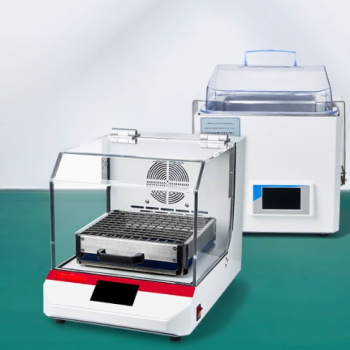
The primary function of a laboratory shaking incubator in this context is to create an optimized environment that maximizes cell growth during the early stages of development. It specifically controls temperature and provides mechanical agitation to ensure adequate oxygen availability. This apparatus is essential for transforming a small sample into a robust, high-density culture ready for larger applications.
Success in cultivating halophilic archaea relies on balancing precise temperature control with mechanical agitation. The shaking incubator optimizes dissolved oxygen levels to generate high-density seed cultures capable of supporting larger-scale fermentation.
The Mechanics of Growth Optimization
Facilitating Oxygen Mass Transfer
Halophilic archaea typically require complex media to thrive, which can present challenges for gas exchange. The incubator uses physical rotation, specifically utilizing speeds such as 170 rpm, to agitate the culture.
This mechanical shaking serves a critical physiological purpose: it promotes oxygen mass transfer. By constantly mixing the medium, the incubator increases dissolved oxygen levels, ensuring the aerobic organisms have the fuel necessary for rapid metabolism.
Precise Temperature Regulation
Beyond agitation, the incubator serves as a thermal stabilizer. It maintains the specific temperature required for the enzymatic and metabolic activities of the archaea.
Consistent thermal conditions are vital during the seed stage. They prevent thermal shock and ensure that the cellular expansion proceeds at a predictable and efficient rate.
The Role in Process Scale-Up
Generating High-Density Cultures
The goal of the seed cultivation stage is to produce a large volume of biomass quickly. The shaking incubator facilitates the rapid generation of cells, resulting in high-density cultures.
Without this density, the subsequent inoculation step would be weak, leading to long lag phases or process failure in larger vessels.
Ensuring Physiological Readiness
It is not enough to simply have living cells; they must be metabolically active. The controlled environment of the incubator ensures the cells reach the necessary physiological state.
This preparation is crucial for "seeding" larger-scale bioreactors. A robust seed culture acts as a strong starter, allowing the bioprocess to scale up effectively.
Critical Factors and Trade-offs
The Risk of Static Cultivation
The trade-off in using a shaking incubator lies in the absolute necessity of the "shaking" component. Static incubation in complex media will likely lead to oxygen starvation.
Without the specific rotation speeds (e.g., 170 rpm), oxygen transfer becomes the limiting factor. This results in poor cell density and a culture that is unfit for inoculation.
Balancing Variables
While the incubator provides control, it requires precise calibration. The specific rotation speed must be maintained to balance oxygen demand against the physical properties of the fluid.
Optimizing Your Seed Strategy
To ensure your seed cultivation effectively prepares your archaea for scale-up, consider these priorities:
- If your primary focus is rapid cell expansion: Prioritize optimizing rotation speeds (aiming for standards like 170 rpm) to maximize dissolved oxygen availability within the complex media.
- If your primary focus is process consistency: rigorous maintenance of the temperature setpoint is essential to ensure the physiological state of the seed culture is identical across batches.
By mastering the variables of your shaking incubator, you turn a standard piece of equipment into the engine of your bioprocess reliability.
Summary Table:
| Key Feature | Functional Role in Seed Cultivation | Primary Benefit |
|---|---|---|
| Mechanical Agitation | Facilitates oxygen mass transfer at ~170 rpm | Prevents oxygen starvation and boosts metabolism |
| Temperature Control | Maintains thermal stability for enzymatic activity | Prevents thermal shock and ensures uniform growth |
| Environment Optimization | Creates ideal conditions for aerobic organisms | Rapidly generates high-density biomass |
| Scalability Support | Prepares cells for physiological readiness | Ensures successful inoculation of larger bioreactors |
Elevate Your Bioprocessing Precision with KINTEK
At KINTEK, we understand that the success of your scale-up depends on the robustness of your seed culture. Our advanced laboratory shaking incubators provide the precise temperature regulation and optimized agitation speeds required for the most demanding halophilic archaea research.
Beyond incubators, KINTEK offers a comprehensive ecosystem for your lab, including:
- High-Temperature & Specialty Furnaces (Muffle, Tube, Vacuum, CVD/PECVD)
- Sample Preparation Tools (Crushing, Milling, and Hydraulic Presses)
- Bioprocess Solutions (ULT Freezers, Freeze Dryers, and Homogenizers)
- Specialized Consumables (PTFE products, Ceramics, and Crucibles)
Ready to transform your laboratory efficiency? Contact our technical experts today to find the perfect equipment tailored to your research goals. Let KINTEK be your partner in scientific excellence.
References
- Bettina Lorántfy, Christoph Herwig. Dynamic Experiments for Bioprocess Parameter Optimization with Extreme Halophilic Archaea. DOI: 10.3390/bioengineering1010001
This article is also based on technical information from Kintek Solution Knowledge Base .
Related Products
- Shaking Incubators for Diverse Laboratory Applications
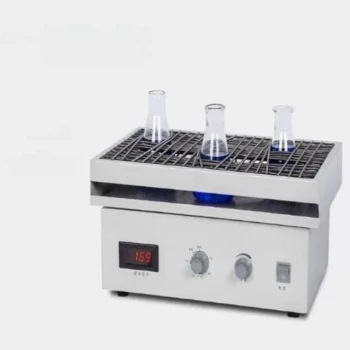
- Laboratory Multifunctional Small Speed-Adjustable Horizontal Mechanical Shaker for Lab
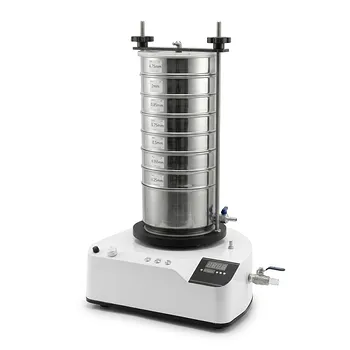
- Laboratory Vibratory Sieve Shaker Machine for Dry and Wet Three-Dimensional Sieving
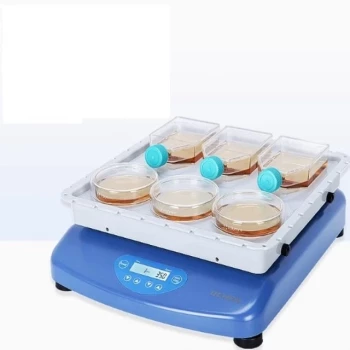
- Laboratory Oscillating Orbital Shaker
- Laboratory Vibratory Sieve Shaker Machine Slap Vibrating Sieve
People Also Ask
- What physical conditions does a shaking incubator provide for bioethanol fermentation? Optimize Yeast Productivity
- Why is the mechanical agitation provided by a shaking incubator necessary for the enzymatic hydrolysis of biomass?
- What critical reaction conditions does a shaking incubator provide? Optimize Cassava Cellulose Enzymatic Hydrolysis
- What are the primary functions of a shaking incubator? Optimize Biomass Fenton Pretreatment Efficiency
- How does an incubator shaker affect the yield of reducing sugars? Optimize Pennisetum alopecuroides Hydrolysis