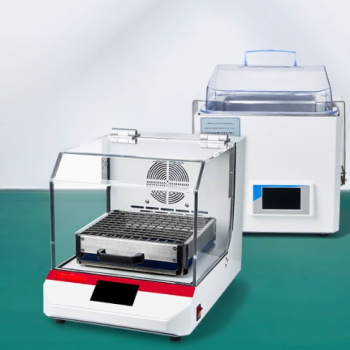
The primary functions of a shaking incubator during Fenton pretreatment are to provide precise thermal regulation and consistent mechanical agitation. Specifically, the device maintains the reaction environment at 25 °C while oscillating at 180 rpm. This continuous motion forces the solid biomass powder into full, constant contact with the liquid reagents—FeCl3, H2O2, and citric acid—to ensure an effective chemical reaction.
The core purpose of this equipment is to prevent particle sedimentation and create a homogeneous mixture, allowing hydroxyl radicals to uniformly degrade the lignin structure across the entire biomass sample.
Achieving Homogeneity Through Agitation
Preventing Sedimentation
Biomass powder is naturally prone to settling at the bottom of a reaction vessel. If left static, the solids separate from the liquid reagents, halting the reaction for the buried particles.
The shaking incubator operates at 180 rpm to counteract gravity. This specific speed ensures the solid particles remain suspended in the solution, preventing stratification.
Maximizing Surface Contact
Fenton pretreatment relies on the interaction between a solid (biomass) and a liquid (the reagent solution).
Continuous oscillation ensures that every grain of biomass powder makes full contact with the reaction solution. This physical mixing is the prerequisite for the chemical breakdown to occur efficiently.
Optimizing the Chemical Reaction
Uniform Radical Distribution
The Fenton reaction generates hydroxyl radicals, which are the active agents responsible for attacking the biomass structure.
The shaking incubator ensures these radicals act uniformly on the lignin structure. By maintaining a homogeneous system, the device prevents "hot spots" where reactions might be too intense and "dead zones" where no pretreatment occurs.
Thermal Stability
Chemical reaction rates are highly sensitive to temperature fluctuations.
The incubator provides precise control at 25 °C. This stability ensures that the reaction proceeds at a predictable rate, making experimental results reproducible and reliable.
Understanding the Trade-offs
The Cost of Static Reactions
It is a common pitfall to underestimate the importance of mechanical agitation in chemical pretreatments.
Without the continuous motion provided by the incubator, the reaction system loses its homogeneity. This leads to uneven pretreatment, where some biomass is over-processed and other portions remain virtually untouched, resulting in poor downstream efficiency.
Ensuring Experimental Success
To maximize the effectiveness of your Fenton pretreatment, align your equipment settings with your specific experimental goals:
- If your primary focus is Reaction Consistency: Ensure the oscillation speed is maintained at 180 rpm to keep all solids fully suspended and prevent sedimentation.
- If your primary focus is Reproducibility: rigorous adherence to the 25 °C temperature setpoint is required to standardize the rate of radical generation.
By synchronizing mechanical agitation with thermal control, you guarantee that the chemical agents can access and degrade the lignin structure effectively.
Summary Table:
| Parameter | Setting | Primary Function |
|---|---|---|
| Temperature | 25 °C | Ensures thermal stability and predictable chemical reaction rates |
| Agitation Speed | 180 rpm | Prevents sedimentation and maintains solid-liquid suspension |
| Contact Method | Oscillating | Maximizes surface contact between biomass and liquid reagents |
| Chemical Goal | Homogeneity | Uniform distribution of hydroxyl radicals to degrade lignin |
Elevate Your Biomass Research with KINTEK Precision
Maximize the efficiency of your pretreatment protocols with KINTEK’s premium shaking incubators and laboratory solutions. Whether you are performing Fenton reactions, battery research, or complex chemical syntheses, our equipment is engineered for the rigorous demands of modern science.
Why partner with KINTEK?
- Unmatched Precision: Precise thermal and mechanical control for reproducible results.
- Comprehensive Portfolio: From high-temperature furnaces and autoclaves to homogenizers and essential ceramics/PTFE consumables.
- Tailored for Innovation: We specialize in supporting target customers in energy, materials science, and biotechnology.
Don't let inconsistent agitation or temperature fluctuations compromise your data. Contact KINTEK today to find the perfect equipment for your lab!
References
- Tao Sheng, Aijie Wang. Fenton pre-treatment of rice straw with citric acid as an iron chelate reagent for enhancing saccharification. DOI: 10.1039/c7ra04329e
This article is also based on technical information from Kintek Solution Knowledge Base .
Related Products
- Shaking Incubators for Diverse Laboratory Applications
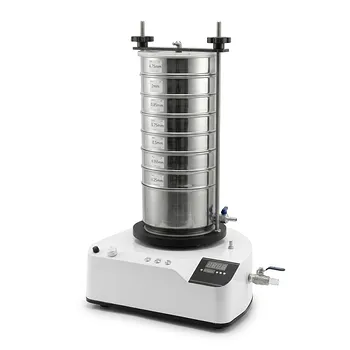
- Laboratory Vibratory Sieve Shaker Machine for Dry and Wet Three-Dimensional Sieving
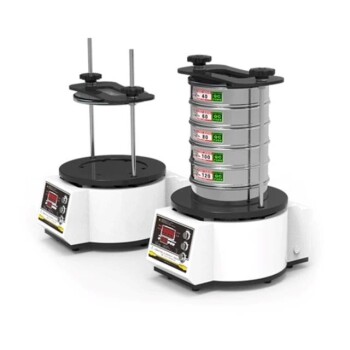
- Laboratory Test Sieves and Vibratory Sieve Shaker Machine
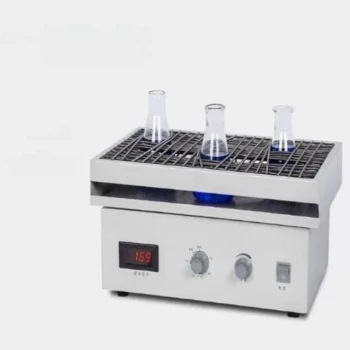
- Laboratory Vibratory Sieve Shaker Machine Slap Vibrating Sieve
- Laboratory Wet Three-Dimensional Vibratory Sieve Shaker Machine
People Also Ask
- What physical conditions does a shaking incubator provide for bioethanol fermentation? Optimize Yeast Productivity
- Why is the mechanical agitation provided by a shaking incubator necessary for the enzymatic hydrolysis of biomass?
- What critical reaction conditions does a shaking incubator provide? Optimize Cassava Cellulose Enzymatic Hydrolysis
- What function does a laboratory shaking incubator serve for halophilic archaea? Optimize Your Seed Cultivation Today
- How does an incubator shaker affect the yield of reducing sugars? Optimize Pennisetum alopecuroides Hydrolysis