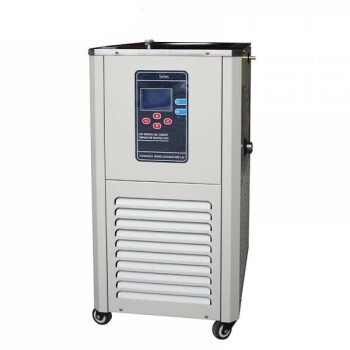
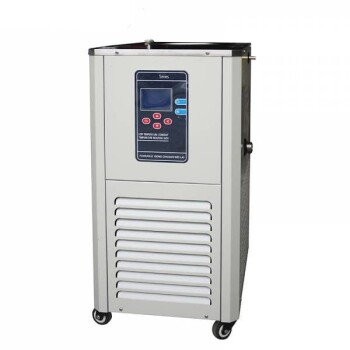
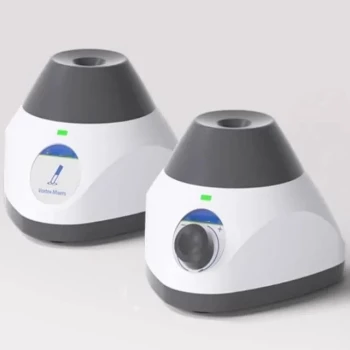
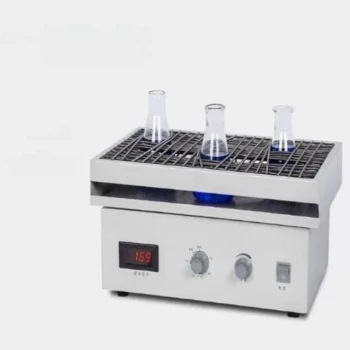
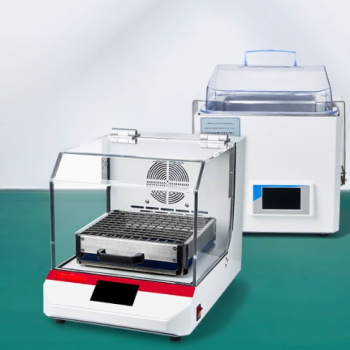
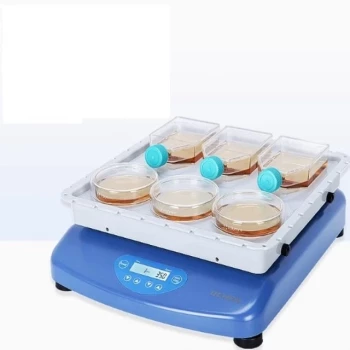
The primary function of a constant temperature shaker is to provide a regulated thermal environment and mechanical agitation to ensure thorough contact between the adsorbent and adsorbate. This dual-action process accelerates the diffusion of methylene blue molecules toward the porous carbon surface by overcoming liquid film mass transfer resistance, which is essential for calculating accurate kinetic and thermodynamic data.
A constant temperature shaker acts as the engine of an adsorption experiment, eliminating external mass transfer limitations through mechanical kinetic energy while maintaining a precise thermal state. This ensures that the resulting data accurately reflects the material's true adsorption capacity and chemical behavior.
The Role of Mechanical Agitation
Overcoming Liquid Film Mass Transfer Resistance
In a stagnant solution, a thin boundary layer of liquid forms around the porous carbon particles, hindering the movement of methylene blue. The shaker provides continuous mechanical oscillation (typically between 150 and 200 rpm) that breaks down this resistance. This process allows methylene blue molecules to migrate more freely from the bulk solution to the active sites on the carbon surface.
Maintaining Uniform Suspension
Porous carbon particles, especially biochars or activated carbons, have varying densities and may settle at the bottom of a flask. Continuous shaking keeps these particles highly suspended, ensuring that the entire surface area of the adsorbent is available for reaction. Without this uniform distribution, the measured adsorption equilibrium would be significantly lower than the material's actual potential.
Accelerating Kinetic Equilibrium
By providing constant kinetic input, the shaker shortens the time required for the system to reach thermodynamic equilibrium. This is critical for experiments aimed at fitting pseudo-second-order kinetic models, as it ensures the rate-limiting step is the adsorption itself rather than the transport of molecules. Rapid, consistent mixing ensures that the concentration of the dye remains uniform throughout the liquid phase during the entire process.
The Importance of Thermal Stability
Regulating Adsorption Thermodynamics
Adsorption is inherently sensitive to temperature, as the process can be either endothermic or exothermic. A constant temperature environment (e.g., 25°C or 30°C) allows researchers to determine whether the bond between methylene blue and the carbon is physical or chemical. Precise control is necessary to calculate Gibbs free energy, enthalpy, and entropy, which define the spontaneity of the reaction.
Influencing Molecular Collision Frequency
Temperature directly affects the kinetic energy of the methylene blue molecules in the solution. Maintaining a stable temperature ensures that the frequency of collisions between the dye molecules and the porous carbon pores remains constant. Even minor fluctuations in temperature can lead to inconsistent data, making it difficult to achieve reproducible saturated adsorption capacity.
Understanding the Trade-offs and Pitfalls
Speed Selection and Particle Integrity
While high speeds (e.g., 200 rpm) eliminate mass transfer resistance, excessive agitation can cause mechanical attrition of the porous carbon. If the carbon particles break into smaller fragments during the shaker's operation, the surface area increases artificially, leading to overestimated adsorption capacity. Conversely, a speed that is too low will fail to overcome the boundary layer, resulting in sluggish kinetics and inaccurate equilibrium times.
Temperature Gradients and Evaporation
If the shaker's incubator is not properly calibrated, thermal gradients can develop within the flasks, leading to non-uniform reaction rates. Long-duration experiments (such as 24-hour equilibrium studies) at elevated temperatures run the risk of solvent evaporation. Evaporation increases the concentration of the methylene blue solution, which can skew the final calculation of the maximum adsorption capacity.
Optimizing Your Adsorption Experiment
To ensure the accuracy of your porous carbon characterization, consider your primary experimental goal when configuring the shaker settings.
- If your primary focus is determining maximum capacity (Isotherms): Prioritize a long residence time (e.g., 24 hours) at a moderate speed to ensure every internal pore of the carbon has reached its saturation limit.
- If your primary focus is reaction speed (Kinetics): Use a higher agitation speed (e.g., 200 rpm) to ensure that external diffusion is not the bottleneck, allowing you to measure the true chemical adsorption rate.
- If your primary focus is environmental impact (Thermodynamics): Conduct the experiment at three distinct, strictly controlled temperatures to accurately calculate the energy changes associated with the process.
By precisely controlling the kinetic and thermal energy within the system, you transform a simple mixture into a rigorous scientific environment capable of revealing the deep structural properties of your porous carbon.
Summary Table:
| Feature | Primary Function | Impact on Adsorption Experiment |
|---|---|---|
| Mechanical Agitation | Overcomes liquid film mass transfer resistance | Ensures dye reaches active sites; accelerates kinetics |
| Uniform Suspension | Prevents settling of porous carbon particles | Maximizes available surface area for adsorption |
| Thermal Regulation | Maintains stable reaction environment | Allows accurate calculation of thermodynamics (Gibbs energy) |
| Kinetic Input | Shortens time to equilibrium | Facilitates accurate fitting of kinetic models |
| Speed Control | Prevents mechanical attrition | Protects particle integrity for reliable capacity data |
Elevate Your Research Precision with KINTEK
Achieve uncompromising accuracy in your adsorption studies and material characterization with KINTEK’s high-performance laboratory equipment. Whether you are analyzing porous carbon or developing advanced catalysts, we provide the reliable tools your lab needs to succeed.
Our comprehensive portfolio includes:
- Advanced Thermal Solutions: High-temperature furnaces (muffle, tube, vacuum, CVD) and precise cooling solutions like ULT freezers and freeze dryers.
- Reaction & Preparation: High-temperature high-pressure reactors, autoclaves, and electrolytic cells.
- Material Processing: Hydraulic presses (pellet, isostatic), crushing/milling systems, and sieving equipment.
- Lab Essentials: Shakers, homogenizers, and high-quality consumables like PTFE products, ceramics, and crucibles.
Ready to optimize your experimental workflow? Contact our experts today to find the perfect equipment solutions tailored to your specific research requirements and benefit from our industry-leading technical support.
References
- Wenlin Zhang, Jianmin Tang. Sweet-Potato-Vine-Based High-Performance Porous Carbon for Methylene Blue Adsorption. DOI: 10.3390/molecules28020819
This article is also based on technical information from Kintek Solution Knowledge Base .
Related Products
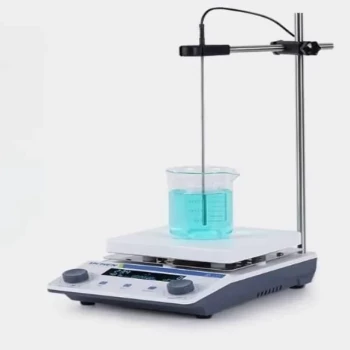
- Laboratory Small Constant Temperature Heated Magnetic Stirrer Heater and Stirrer
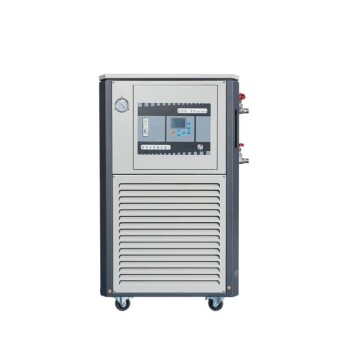
- High Temperature Constant Temperature Heating Circulator Water Bath Chiller Circulator for Reaction Bath
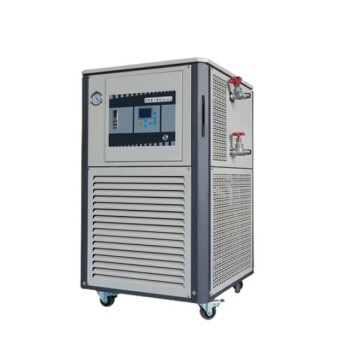
- 10L Heating Chilling Circulator Cooling Water Bath Circulator for High and Low Temperature Constant Temperature Reaction
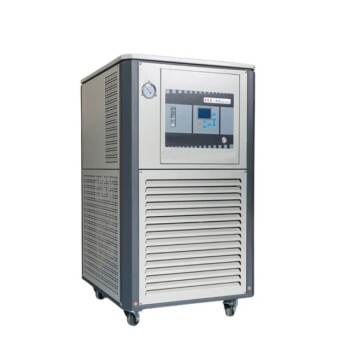
- 50L Chiller Water Bath Cooling Circulator Low Temperature Constant Temperature Reaction Bath
- 5L Heating Chilling Circulator Cooling Water Bath Circulator for High and Low Temperature Constant Temperature Reaction
People Also Ask
- What role does a magnetic stirrer with heating play in ZnO nanoparticle synthesis? Precision Control for Quality Results
- What role does a constant temperature heating magnetic stirrer play in MFC-HAp synthesis? Achieve Material Homogeneity
- What is the function of a laboratory magnetic stirrer in Ni–Cr–P electrodeposition? Optimize Ion Transport & Coating
- Why is a laboratory magnetic stirrer required for benzoic acid esters? Boost Reaction Speed & Yield with High RPM
- What role does a laboratory magnetic stirrer play in TiO2 and TiO2-Ag sol preparation? Master Chemical Kinetics