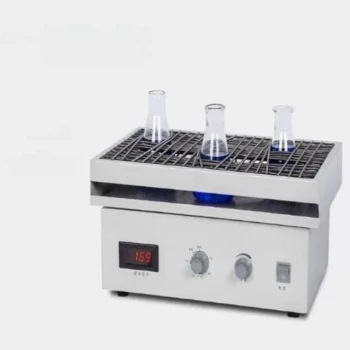
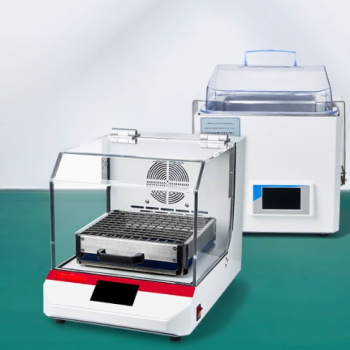
In the sequential extraction of sodium from coal, a constant temperature shaker acts as the primary engine for mass transfer and chemical equilibrium.
It provides the continuous mechanical power necessary to keep coal particles fully suspended and uniformly dispersed within chemical reagents such as deionized water, ammonium chloride, or hydrochloric acid. This active environment ensures that ion exchange and chemical reactions occur efficiently at the liquid-solid interface, directly impacting the accuracy of extraction kinetics and the final recovery rate of specific sodium forms.
The constant temperature shaker eliminates mass transfer resistance and provides a stable thermodynamic environment, ensuring that different chemical forms of sodium are fully released into solution for precise quantitative analysis.
Optimizing the Liquid-Solid Interface
Ensuring Uniform Particle Dispersion
Mechanical agitation prevents coal particles from settling at the bottom of the reaction vessel. By maintaining a high state of suspension, the shaker maximizes the effective surface area available for chemical interaction between the coal and the extractant.
Overcoming Mass Transfer Resistance
The shaker provides fluid shear that overcomes "film diffusion resistance" surrounding the solid coal particles. This allows the chemical reagents to penetrate the coal matrix more effectively, facilitating the release of trapped sodium ions.
Accelerating Reaction Kinetics
Continuous mixing increases the collision frequency between the liquid phase and the solid interface. This acceleration helps the extraction process reach chemical equilibrium more quickly, providing more accurate data regarding reaction rates.
Thermal and Kinetic Stability
Precise Temperature Control
Maintaining a constant temperature—often specified at 60 °C—provides the necessary thermal energy to overcome energy barriers in ion exchange. This stability ensures that the reaction environment remains consistent across different batches and extraction steps.
Consistent Rotation Speeds
Stable rotation speeds, such as 150 rpm, provide uniform mechanical power to the mixture. This consistency is vital for obtaining reproducible results and ensuring that the sodium occurrence modes are quantified accurately.
Sustained Thermal Perturbation
Sustained heating and movement help release sodium ions that are tightly bound within the coal's molecular structure. This thermal perturbation ensures that even complex combined states of sodium are liberated for analysis.
Understanding the Trade-offs
Mechanical Shear vs. Particle Integrity
Excessive rotation speeds can lead to mechanical attrition, breaking coal particles into finer fragments than the experimental design intended. While increased speed improves mass transfer, it may complicate the subsequent filtration stages if the coal fines become too small to easily separate.
Thermal Degradation Risks
Setting the temperature too high can trigger unintended side reactions or the degradation of organic structures within the coal. Precision in temperature control is required to target specific sodium forms without altering the coal’s fundamental chemistry or the extractant's stability.
Achieving Precision in Sodium Extraction
To ensure the reliability of your sequential extraction data, the agitation process must be carefully calibrated to the specific goals of your analysis.
- If your primary focus is kinetic accuracy: Ensure the shaker maintains a strictly constant rotation speed to eliminate external diffusion as a variable in your rate equations.
- If your primary focus is maximum recovery rate: Prioritize precise temperature control to provide sufficient thermal energy for the release of sodium from complex mineral or organic bonds.
By bridging the gap between physical suspension and chemical reaction, the constant temperature shaker ensures that the resulting data reflects the true chemical composition of the coal sample.
Summary Table:
| Key Function | Role in Sodium Extraction | Impact on Results |
|---|---|---|
| Mass Transfer | Overcomes film diffusion resistance via fluid shear | Accelerates ion release from coal matrix |
| Particle Suspension | Prevents settling and maximizes surface area | Ensures uniform chemical interaction |
| Thermal Stability | Provides consistent energy (e.g., 60 °C) | Overcomes energy barriers for ion exchange |
| Kinetic Control | Maintains stable rotation speeds (e.g., 150 rpm) | Ensures reproducibility and kinetic accuracy |
Enhance Your Extraction Precision with KINTEK
Achieving accurate data in sequential sodium extraction depends on the reliability of your agitation and thermal equipment. KINTEK specializes in high-performance laboratory equipment and consumables, providing the precise tools you need for complex chemical analysis.
Our comprehensive portfolio includes:
- Agitation & Mixing: High-precision shakers, shakers, and homogenizers for optimal mass transfer.
- Thermal Processing: Muffle, tube, vacuum, and CVD furnaces, plus cooling solutions like ULT freezers and freeze dryers.
- Sample Preparation: Crushing and milling systems, sieving equipment, and hydraulic pellet presses.
- Specialized Research Tools: High-temperature high-pressure reactors, autoclaves, electrolytic cells, and battery research consumables.
Ready to improve your lab's efficiency and recovery rates? Contact KINTEK today to discover how our high-quality equipment—from PTFE products and ceramics to advanced induction melting systems—can support your research goals.
References
- Xin He, Wenfeng Wang. Occurrence Mode of Sodium in Zhundong Coal, China: Relationship to Maceral Groups. DOI: 10.3390/min13091155
This article is also based on technical information from Kintek Solution Knowledge Base .
Related Products
- Laboratory Small Constant Temperature Heated Magnetic Stirrer Heater and Stirrer
- High Temperature Constant Temperature Heating Circulator Water Bath Chiller Circulator for Reaction Bath
- 5L Heating Chilling Circulator Cooling Water Bath Circulator for High and Low Temperature Constant Temperature Reaction
- 50L Chiller Water Bath Cooling Circulator Low Temperature Constant Temperature Reaction Bath
- 10L Heating Chilling Circulator Cooling Water Bath Circulator for High and Low Temperature Constant Temperature Reaction
People Also Ask
- What role does a magnetic stirrer with heating play in ZnO nanoparticle synthesis? Precision Control for Quality Results
- What role does a constant temperature heating magnetic stirrer play in MFC-HAp synthesis? Achieve Material Homogeneity
- What is the function of a laboratory magnetic stirrer in Ni–Cr–P electrodeposition? Optimize Ion Transport & Coating
- Why is a laboratory magnetic stirrer required for benzoic acid esters? Boost Reaction Speed & Yield with High RPM
- What role does a laboratory magnetic stirrer play in TiO2 and TiO2-Ag sol preparation? Master Chemical Kinetics