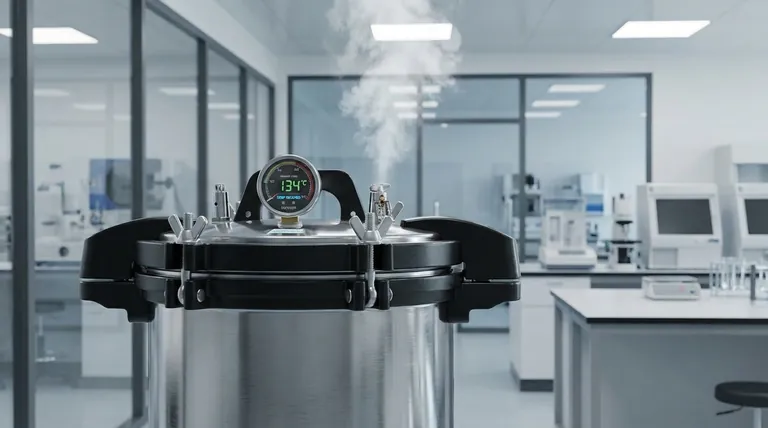
While 121°C is the most common operating temperature, the absolute maximum temperature an autoclave can reach is not a single value but is dictated by its certified pressure limit. Standard laboratory and medical autoclaves are typically designed to operate up to around 134°C (273°F), but their true maximum is a function of their engineering and safety specifications.
An autoclave's temperature is a direct result of its internal steam pressure. While common sterilization cycles are set to 121°C or 134°C for specific biological reasons, the machine's physical construction and pressure rating determine its ultimate temperature ceiling.
The Physics of an Autoclave: Why Pressure Dictates Temperature
To understand an autoclave's limits, you must first understand its core principle: it does not simply use dry heat. It uses high-pressure saturated steam, which is far more effective at transferring thermal energy and achieving sterilization.
The Role of Saturated Steam
An autoclave works by boiling water to create steam inside a sealed chamber. As more steam is generated, the pressure inside the vessel increases far beyond normal atmospheric pressure.
This pressurized environment forces the steam to remain in a "saturated" state at temperatures well above the normal boiling point of water (100°C or 212°F).
The Pressure-Temperature Relationship
The temperature of saturated steam is directly and predictably linked to its pressure. This is the fundamental concept governing all autoclaves.
Think of it like a pressure cooker. By sealing the lid, you allow pressure to build, which in turn raises the boiling point of the water inside, cooking food much faster. An autoclave is simply a more precise and robust version of this.
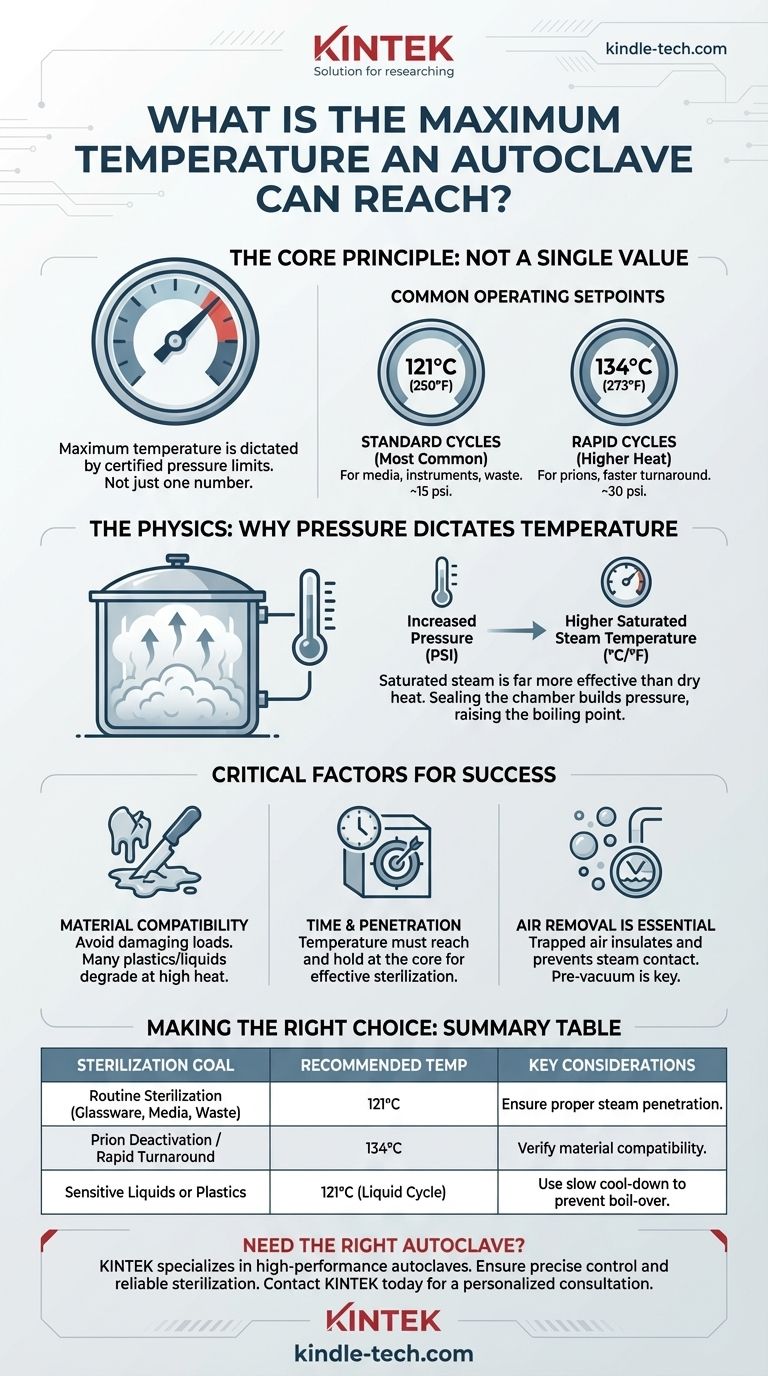
To reach the standard sterilization temperature of 121°C (250°F), an autoclave must achieve and maintain a pressure of approximately 15 pounds per square inch (psi) above atmospheric pressure.
Common Operating Setpoints
While an autoclave can be set to various temperatures, cycles are standardized around temperatures proven to be effective for killing microorganisms.
- 121°C: This is the universal standard for sterilizing most laboratory media, instruments, and waste. At this temperature, it effectively kills nearly all bacteria, viruses, fungi, and spores.
- 134°C: This higher temperature, requiring roughly 30 psi, is used for more rapid sterilization cycles and is the standard for inactivating prions—the highly resilient infectious proteins responsible for diseases like Creutzfeldt-Jakob.
Understanding the Trade-offs and Limitations
Simply aiming for the maximum possible temperature is often incorrect and can be counterproductive. Effective sterilization is a balance of temperature, time, and steam quality.
Risk of Higher Temperatures: Damaging Your Load
Many materials cannot withstand excessive heat. Plastics can melt, surgical instruments can be damaged, and liquids or media can degrade or boil over if the temperature is too high or the pressure is released too quickly.
The 121°C standard was chosen not just for its effectiveness, but also because many common laboratory and medical materials (like polypropylene plastics and agar media) can safely tolerate it.
The Importance of Time and Penetration
Temperature alone is meaningless if the steam cannot penetrate the entire load. A dense or improperly packaged load will have cold spots that are not sterilized.
This is why cycle times vary. A small, simple load might be sterilized in 20 minutes, while a large, dense waste bag may require 60 minutes or more to ensure the steam reaches and holds the core at the target temperature.
The Critical Factor: Air Removal
Trapped air is the enemy of sterilization. If pockets of air are not removed from the chamber and the load, they create an insulating barrier that prevents steam from making direct contact.
This is a common cause of cycle failure. Even if the autoclave's display reads 121°C, an air pocket within a container may be at a much lower, non-sterilizing temperature. Proper loading and, in many autoclaves, a pre-vacuum cycle are essential to prevent this.
Making the Right Choice for Your Goal
Selecting the correct autoclave cycle is not about choosing the highest temperature, but the right validated program for your specific materials and objective.
- If your primary focus is routine sterilization of glassware, media, or biohazardous waste: Use a standard 121°C cycle, ensuring your load is packaged to allow for steam penetration.
- If your primary focus is prion deactivation or faster instrument turnaround: Use a 134°C cycle, but verify that your instruments and materials are rated to withstand this higher temperature.
- If your primary focus is sterilizing sensitive liquids or plastics: Always start with 121°C and consider a "liquid cycle" that cools down slowly to prevent boil-over.
Ultimately, successful sterilization depends on using a validated cycle where the correct temperature is achieved and held for the necessary time throughout the entire load.
Summary Table:
| Sterilization Goal | Recommended Temperature | Key Considerations |
|---|---|---|
| Routine Sterilization (Glassware, Media, Waste) | 121°C | Standard cycle; ensure proper steam penetration. |
| Prion Deactivation / Rapid Turnaround | 134°C | Verify material compatibility with higher heat. |
| Sensitive Liquids or Plastics | 121°C (Liquid Cycle) | Prevents boil-over with a slow cool-down phase. |
Need the right autoclave for your specific lab requirements?
KINTEK specializes in high-performance laboratory autoclaves and consumables, ensuring precise temperature control, reliable sterilization cycles, and equipment built to meet the demanding needs of research and medical facilities. Our experts can help you select the perfect autoclave to achieve effective, validated sterilization for your materials—from routine glassware to sensitive liquids.
Contact KINTEL today for a personalized consultation and ensure your lab's sterilization protocols are a success!
Visual Guide
Related Products
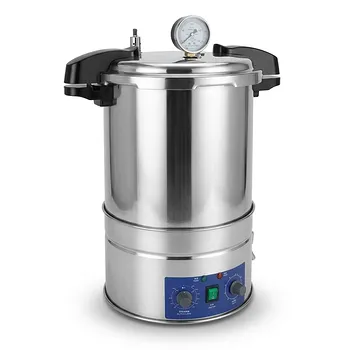
- Portable High Pressure Laboratory Autoclave Steam Sterilizer for Lab Use
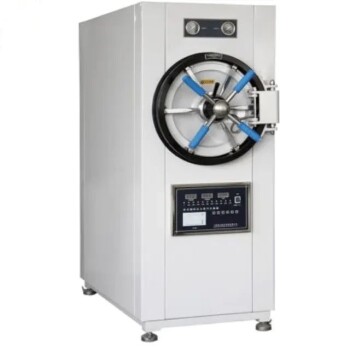
- Laboratory Horizontal Autoclave Steam Sterilizer Lab Microcomputer Sterilizer
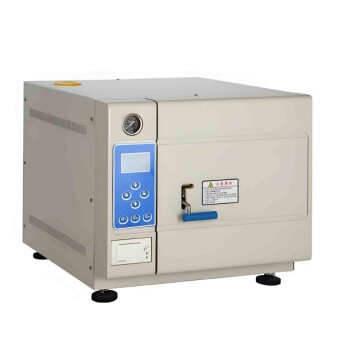
- Desktop Fast High Pressure Laboratory Autoclave Sterilizer 16L 24L for Lab Use
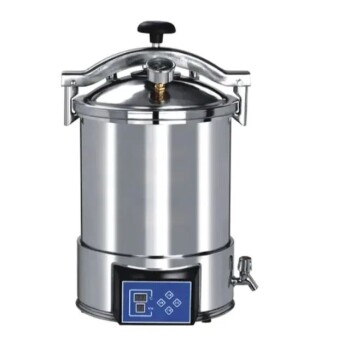
- Portable Digital Display Automatic Laboratory Sterilizer Lab Autoclave for Sterilization Pressure
- Desktop Fast Laboratory Autoclave Sterilizer 35L 50L 90L for Lab Use
People Also Ask
- What is an autoclave laboratory equipment? The Ultimate Guide to Steam Sterilization
- Why is a laboratory high-pressure autoclave sterilizer necessary? Ensure Accuracy in Antibacterial Research
- What extreme conditions does a laboratory autoclave simulate? Testing Wear Resistance of Nuclear Fuel Cladding
- What is a laboratory autoclave? A Guide to Sterilization with Pressurized Steam
- What is the primary function of a laboratory autoclave in the pre-treatment of medical plastic waste for liquid fuel?