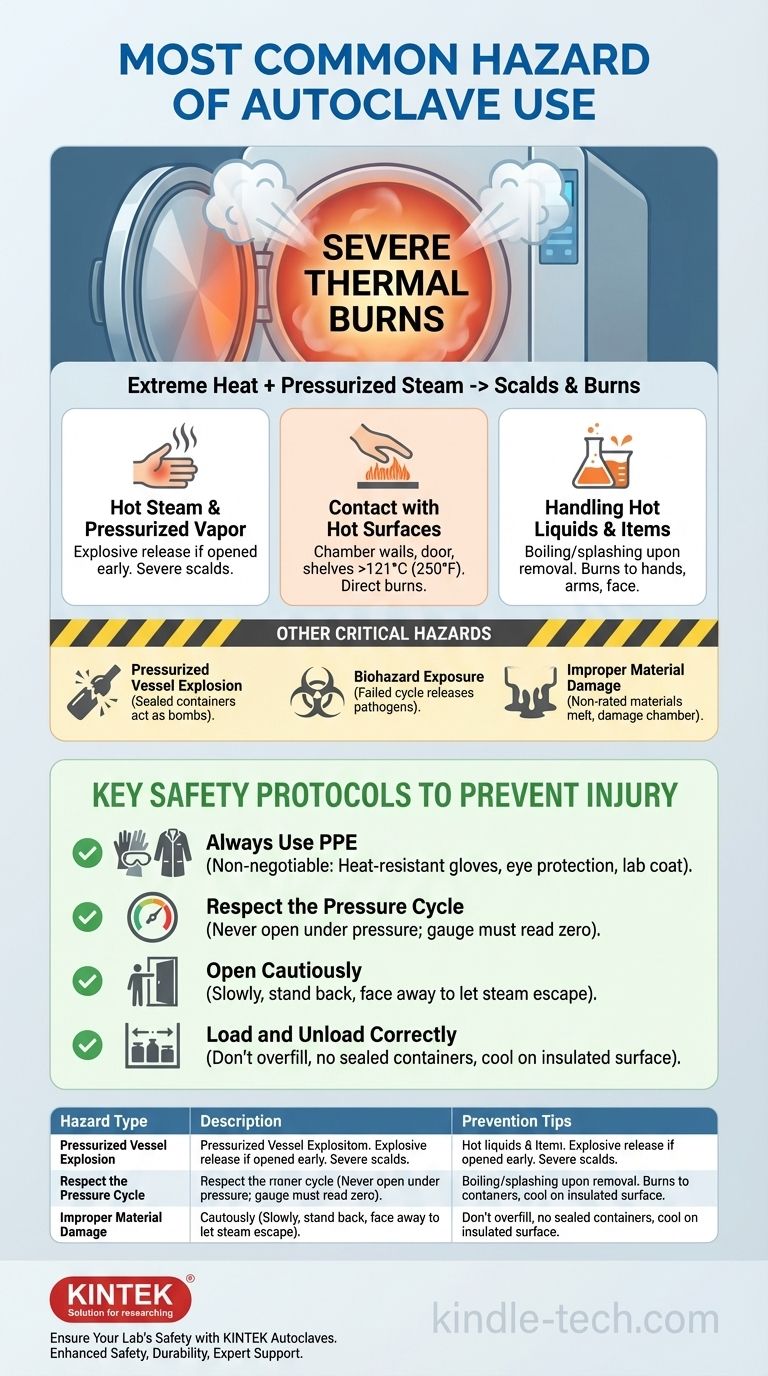
The single most common hazard of using an autoclave is severe thermal burns. These injuries result from the extreme heat and pressurized steam fundamental to the autoclave's operation. Burns can occur from contact with escaping steam, hot liquids, the inner chamber surfaces, or the sterilized items themselves upon removal.
An autoclave is a high-pressure, high-temperature sterilizer. While incredibly effective, its core function creates inherent risks of severe burns, scalding, and even explosions if safety protocols are not rigorously followed.
The Primary Hazard: Severe Burns and Scalds
The combination of heat and pressure makes burns the most immediate and frequent danger for any autoclave operator. These injuries manifest in several ways.
Hot Steam and Pressurized Vapor
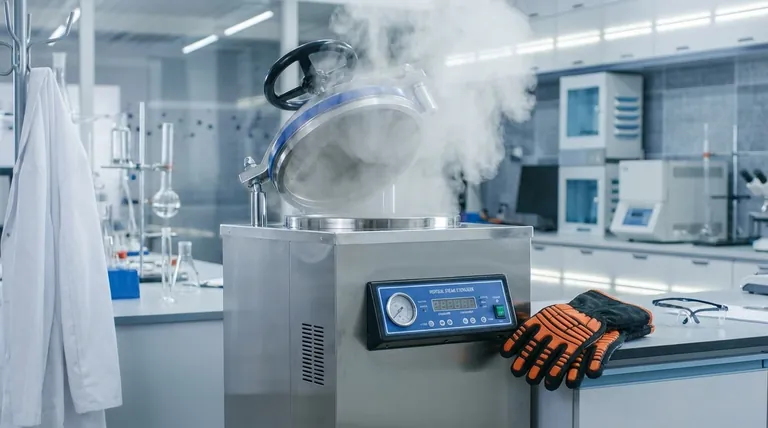
When an autoclave cycle finishes, the chamber is still filled with superheated, pressurized steam. Opening the door before the pressure has fully returned to zero can cause a violent and explosive release of this steam, leading to severe scalds.
Contact with Hot Surfaces
The internal chamber walls, door, and shelving of an autoclave reach temperatures well over 121°C (250°F). Any direct skin contact, even momentary, will cause a serious burn. This risk is highest during the unloading process.
Handling Hot Liquids and Items
Items removed from the autoclave are dangerously hot and can remain so for a significant time. Glassware and especially liquids pose a high risk, as they can boil over or splash when moved, causing severe burns to the hands, arms, and face.
Other Critical Hazards to Understand
While burns are the most common risk, operators must be aware of other potential dangers that can lead to serious injury or equipment failure.
Pressurized Vessel Explosions
This is a less common but catastrophic failure. Placing liquids in a completely sealed container and autoclaving it effectively creates a bomb. As the liquid heats, it expands and builds immense pressure with no means of escape, which can cause the container to explode and shatter the autoclave door.
Biohazard Exposure
Autoclaves are often used to decontaminate biological waste. If a sterilization cycle fails due to improper loading or a machine malfunction, operators may be exposed to live, infectious pathogens when they open the chamber.
Improper Material Damage
Using materials not rated for an autoclave can cause significant problems. Common plastics like polyethylene will melt, creating fumes and damaging the autoclave's chamber and drain. Carbon steel instruments can be damaged by the high moisture content.
Key Safety Protocols to Prevent Injury
Adhering to strict operational procedures is the only way to mitigate the inherent risks of an autoclave. Ignoring these steps is the primary cause of accidents.
Always Use Personal Protective Equipment (PPE)
This is non-negotiable. When loading and especially unloading an autoclave, you must wear a lab coat, eye protection, and heat-resistant gloves that provide full coverage of the hands and forearms.
Respect the Pressure Cycle
Never attempt to open an autoclave door while it is under pressure. Modern autoclaves have safety locks, but you must always verify that the chamber pressure gauge reads zero before unlatching the door.
Open the Door Cautiously
Once the pressure is at zero, open the door slowly and only a small amount at first. Stand back and to the side of the door, keeping your face and body away from the opening. This allows residual steam and heat to escape safely before you fully open it.
Load and Unload Correctly
Never overfill the chamber; this ensures proper steam penetration. Arrange items so they are not touching, and never place items in sealed containers. When unloading, remove items slowly and carefully, placing them on an insulated surface to cool.
Making the Right Choice for Your Task
Your specific application dictates which safety precautions are most critical.
- If your primary focus is routine equipment sterilization: Prioritize wearing full PPE during unloading and allowing a sufficient cool-down period before handling any items.
- If your primary focus is sterilizing liquids: Ensure you are using vented caps or covering flasks with aluminum foil, never sealing them, and using a slow-exhaust liquid cycle to prevent boil-over.
- If your primary focus is decontaminating biohazardous waste: In addition to all personal safety measures, you must validate your cycles with biological indicators to confirm complete sterilization and prevent exposure to pathogens.
Ultimately, safety in autoclave use is an active process, not a passive one; your diligence is the most critical safety feature.
Summary Table:
| Hazard Type | Description | Prevention Tips |
|---|---|---|
| Severe Thermal Burns | Contact with hot steam, surfaces, or items post-sterilization. | Always wear full PPE (heat-resistant gloves, lab coat, eye protection). |
| Pressurized Vessel Explosion | Sealed containers can explode due to pressure buildup. | Never autoclave liquids in sealed containers; use vented caps or foil. |
| Biohazard Exposure | Risk of pathogen exposure from failed sterilization cycles. | Validate cycles with biological indicators; ensure proper loading. |
| Improper Material Damage | Melting plastics or damaged instruments from incorrect use. | Use only autoclave-safe materials; avoid carbon steel in moist cycles. |
Ensure Your Lab's Safety with KINTEK Autoclaves
Protect your team from the most common autoclave hazards with reliable, safety-focused equipment from KINTEK. We specialize in high-performance lab autoclaves designed with advanced safety features to prevent thermal burns, pressure explosions, and biohazard risks. Our products are ideal for laboratories sterilizing equipment, liquids, or biohazardous waste.
Why Choose KINTEK?
- Enhanced Safety: Built-in pressure locks, clear cycle indicators, and robust construction minimize risks.
- Durability: Engineered for long-term, dependable operation in demanding lab environments.
- Expert Support: Get guidance on proper usage, maintenance, and safety protocols from our specialists.
Don’t compromise on safety—contact KINTEK today to find the perfect autoclave solution for your laboratory’s needs!
Visual Guide
Related Products
- Portable High Pressure Laboratory Autoclave Steam Sterilizer for Lab Use
- Laboratory Horizontal Autoclave Steam Sterilizer Lab Microcomputer Sterilizer
- Desktop Fast High Pressure Laboratory Autoclave Sterilizer 16L 24L for Lab Use
- Portable Digital Display Automatic Laboratory Sterilizer Lab Autoclave for Sterilization Pressure
- Desktop Fast Laboratory Autoclave Sterilizer 35L 50L 90L for Lab Use
People Also Ask
- Why is a laboratory high-pressure autoclave sterilizer necessary? Ensure Accuracy in Antibacterial Research
- What are the two types of autoclave used in the laboratory? Gravity vs. Pre-Vacuum Explained
- What is the importance of using a laboratory autoclave in ZSM-5 synthesis? Achieve Perfect Zeolite Crystallization
- What precautions should be taken during autoclave in laboratory? A Complete Safety Guide to Prevent Burns and Explosions
- What is an autoclave laboratory equipment? The Ultimate Guide to Steam Sterilization