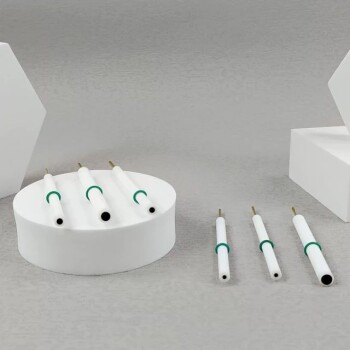
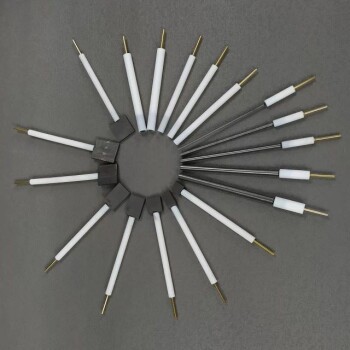
A Glassy Carbon (GC) electrode serves as a chemically inert, highly conductive substrate that provides the physical foundation for the working electrode in a three-electrode system. Its primary function is to act as a stable carrier for the Fe-doped CoP catalyst ink, ensuring that all measured electrochemical signals—such as current density and overpotential—originate solely from the catalyst rather than the underlying substrate.
The Glassy Carbon electrode provides a "blank canvas" for electrochemical testing, offering high electrical conductivity with minimal background activity. This allows researchers to isolate and accurately evaluate the intrinsic catalytic performance of Fe-doped CoP during hydrogen and oxygen evolution reactions.
Providing a High-Precision Substrate for Catalyst Loading
Support for Catalyst Slurry
The GC electrode is the physical platform where the Fe-doped CoP catalyst ink is drop-coated. Once the ink dries, it forms a thin, uniform film that is in direct electrical contact with the testing circuit.
Defining Geometric Surface Area
Because GC electrodes are manufactured with precise, standardized diameters, they provide a clear geometric surface area. This precision is vital for calculating kinetic parameters like Tafel slopes and current density, which are standard metrics for comparing catalyst efficiency.
High Electrical Conductivity
To accurately measure the performance of iron-doped cobalt phosphide, the substrate must facilitate rapid electron transfer. The high conductivity of glassy carbon ensures that the measured overpotential reflects the catalyst's resistance, not the substrate's limitations.
Eliminating Substrate Interference
The Wide Electrochemical Window
Glassy carbon remains stable across a very broad range of voltages without undergoing oxidation or reduction itself. This wide electrochemical window is critical for studying both the Hydrogen Evolution Reaction (HER) and the Oxygen Evolution Reaction (OER) without substrate degradation.
High Overpotential for Background Reactions
In acidic or alkaline electrolytes, GC has a high overpotential for hydrogen evolution, meaning it is naturally poor at producing hydrogen on its own. This ensures that the detected gas evolution and current flow are the result of the Fe-doped CoP catalyst activity.
Low Background Current and Capacitance
GC exhibits extremely low electrochemical noise and background capacitance. This "clean" signal environment allows for the accurate derivation of the flat-band potential and other semiconductor properties when performing specialized tests like Mott-Schottky analysis.
Understanding the Trade-offs
Surface Adhesion Challenges
While the smooth, non-porous nature of GC is excellent for signal clarity, it can make it difficult for the catalyst film to stick. During vigorous oxygen evolution, bubbles can physically detach the Fe-doped CoP from the electrode, leading to an artificial drop in measured stability.
Sensitivity to Surface Preparation
The accuracy of the data is highly dependent on the manual polishing of the GC surface. Any residual contaminants or scratches from improper polishing can create uneven catalyst loading, which may lead to inconsistent results across different testing cycles.
How to Apply This to Your Testing
To get the most accurate results when evaluating iron-doped cobalt phosphide, consider these strategic approaches:
- If your primary focus is measuring intrinsic activity: Prioritize a multi-step mirror-polishing routine for the GC electrode to minimize background noise and ensure a uniform electric field.
- If your primary focus is long-term stability testing: Incorporate a robust polymer binder, such as Nafion, into your catalyst ink to prevent the Fe-doped CoP from delaminating during high-current gas evolution.
- If your primary focus is kinetic mechanism analysis: Use the GC substrate to perform Linear Sweep Voltammetry (LSV) at varying scan rates to accurately determine the Tafel slope without interference from substrate reactions.
By utilizing the inert and conductive properties of Glassy Carbon, you ensure that every milliampere recorded is a true reflection of your catalyst's chemical potential.
Summary Table:
| Key Feature | Functional Benefit | Impact on Catalyst Testing |
|---|---|---|
| Chemical Inertness | Wide electrochemical window | Prevents substrate interference during OER and HER |
| High Conductivity | Rapid electron transfer | Ensures measured resistance originates from the catalyst |
| Precise Geometry | Standardized surface area | Vital for accurate current density and Tafel slope data |
| Low Background | Minimal noise/capacitance | Isolates the intrinsic catalytic activity of Fe-doped CoP |
Elevate Your Electrochemical Research with KINTEK
Precision is the backbone of groundbreaking material science. KINTEK specializes in providing high-performance laboratory equipment designed for accuracy and reliability. Whether you are evaluating Fe-doped CoP catalysts or developing next-generation energy solutions, our premium electrolytic cells, electrodes (including Glassy Carbon), and battery research consumables provide the "blank canvas" your data deserves.
Beyond electrochemistry, KINTEK offers a comprehensive range of:
- High-Temperature Furnaces: Muffle, tube, vacuum, and CVD systems for advanced material synthesis.
- Sample Preparation: Precision crushing, milling, and hydraulic presses (pellet, isostatic).
- Lab Essentials: High-pressure reactors, autoclaves, and specialized ceramics/crucibles.
Ready to optimize your testing accuracy and lab efficiency? Contact our experts today to find the perfect equipment tailored to your specific research requirements.
References
- Rin Na, Sung‐Hyeon Baeck. Enhancing Electrocatalytic Performance for Overall Water Splitting using Hollow Structured Fe‐doped CoP with Phosphorus Vacancies. DOI: 10.1002/adsu.202300130
This article is also based on technical information from Kintek Solution Knowledge Base .
Related Products
- Glassy Carbon Electrochemical Electrode
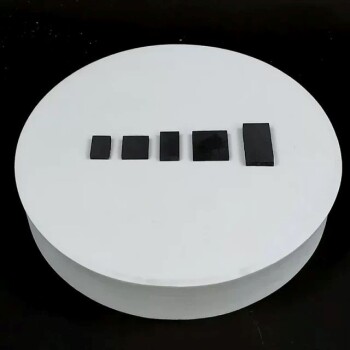
- Glassy Carbon Sheet RVC for Electrochemical Experiments
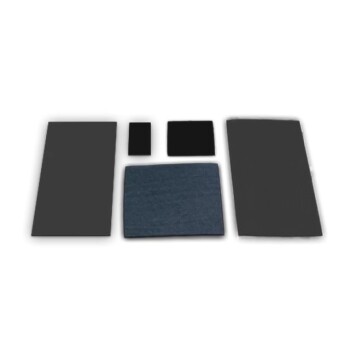
- Conductive Carbon Cloth Carbon Paper Carbon Felt for Electrodes and Batteries
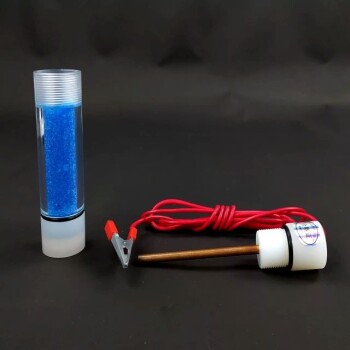
- Copper Sulfate Reference Electrode for Laboratory Use
- Graphite Disc Rod and Sheet Electrode Electrochemical Graphite Electrode
People Also Ask
- How do the glassy carbon electrode, SCE, and graphite rod work together in an enzymatic fuel cell? Optimize EFC Testing
- Why is glassy carbon selected for mediator-assisted indirect oxidation of glycerol? The Key to Unbiased Research
- What are the functions of a glassy carbon electrode in CV testing of antioxidants? Enhance Your Redox Analysis Accuracy
- What characteristics make glassy carbon electrodes suitable as anodes? Ideal for Pure Molten Salt Electrolysis
- What are the primary physicochemical reasons for selecting a carbon electrode as the anode in aluminum recovery? 5 Keys