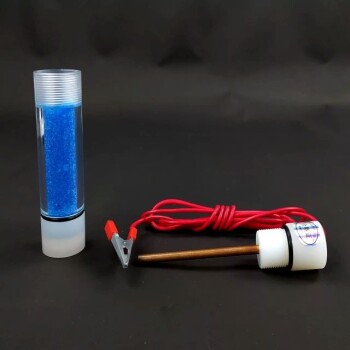
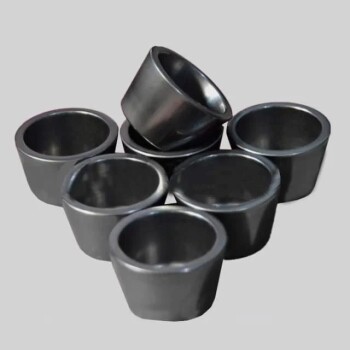
Glassy carbon electrodes are uniquely suited as anodes in molten salt electrolysis primarily due to their exceptional chemical inertness and wide electrochemical window. These properties allow them to withstand aggressive environments—specifically melts containing carbonates or halides—without degrading or interfering with the reaction.
The defining advantage of glassy carbon is its ability to resist anodic oxidation in harsh chemical environments. By maintaining its structural integrity, it prevents anode material from contaminating the electrolyte, ensuring the synthesis of high-purity nanocoatings.
The Challenge of Aggressive Melts
The Corrosive Environment
Molten salt synthesis involves extreme conditions that degrade most standard electrode materials.
The Failure of Standard Anodes
In electrolytes containing carbonates or halides, typical anodes often succumb to rapid chemical corrosion. This breakdown releases impurities into the melt, compromising the quality of the final product.
Key Characteristics of Glassy Carbon
Exceptional Chemical Inertness
Glassy carbon is chemically distinct from other carbon forms like graphite.
It demonstrates a remarkable resistance to chemical attack, even when submerged in aggressive molten baths. This inertness is the first line of defense against the harsh operating environment.
Resistance to Anodic Oxidation
During electrolysis, the anode is subjected to oxidation potentials that encourage material degradation.
Glassy carbon resists this anodic oxidation better than most alternatives. It maintains a stable surface interface, ensuring that the electrical current drives the intended reaction rather than destroying the electrode.
Wide Electrochemical Window
An ideal electrode must remain stable across a broad range of voltages.
Glassy carbon possesses a wide electrochemical window. This allows researchers to apply the necessary potentials to drive specific synthesis reactions without triggering unwanted side reactions or electrode breakdown.
Ensuring Synthesis Integrity
Eliminating Electrolyte Contamination
The stability of the anode is directly linked to the purity of the synthesized coating.
Because glassy carbon does not dissolve or corrode into the melt, the electrolyte remains free of foreign contaminants.
Enabling High-Purity Nanocoatings
This lack of contamination is critical for precision applications.
For example, when synthesizing nanocoatings such as molybdenum carbide, glassy carbon ensures the final structure is chemically pure and performs as designed.
Understanding the Trade-offs
Mechanical Fragility
While chemically robust, glassy carbon is mechanically distinct from metals or graphite.
It has a ceramic-like brittle nature. It must be handled with care to avoid chipping or fracturing, as it lacks the mechanical ductility of metallic electrodes.
Surface Preparation Requirements
To maintain its wide electrochemical window, the surface condition is vital.
Users must ensure the electrode surface is properly polished and cleaned. A damaged or fouled surface can compromise its inert properties and reduce performance.
Making the Right Choice for Your Goal
If your primary focus is High Purity Synthesis: Choose glassy carbon to prevent anode degradation and ensure zero contamination of sensitive nanocoatings like molybdenum carbide.
If your primary focus is Durability in Aggressive Melts: Rely on glassy carbon for its resistance to anodic oxidation in carbonate or halide-based electrolytes.
If your primary focus is Mechanical Robustness: Exercise caution during setup and handling, acknowledging that while glassy carbon is chemically strong, it is physically brittle.
By leveraging the inertness of glassy carbon, you convert the volatility of molten salt synthesis into a controlled, high-precision process.
Summary Table:
| Characteristic | Advantage in Molten Salt Synthesis | Benefit for Research |
|---|---|---|
| Chemical Inertness | Resists aggressive carbonates and halides | Prevents electrolyte contamination |
| Oxidation Resistance | Maintains structural integrity under high potential | Ensures stable surface interface |
| Wide Electrochemical Window | Supports broad voltage ranges without breakdown | Enables specific synthesis reactions |
| Surface Quality | High purity carbon structure | Produces clean, precise nanocoatings |
Elevate Your Electrochemical Synthesis with KINTEK Precision
Maximize the purity of your nanocoatings and the reliability of your molten salt electrolysis with premium glassy carbon electrodes and electrolytic cells from KINTEK. Whether you are developing molybdenum carbide coatings or researching advanced battery materials, our high-performance laboratory equipment—from high-temperature furnaces to specialized crushers and milling systems—is designed to meet the most rigorous scientific standards.
Don't let anode degradation compromise your results. Contact KINTEK today to discover how our expert solutions and high-quality consumables can optimize your laboratory's efficiency and ensure high-purity outcomes for your next breakthrough.
References
- Yu. V. Stulov, С. А. Кузнецов. Electrochemical Synthesis of Functional Coatings and Nanomaterials in Molten Salts and Their Application. DOI: 10.3390/coatings13020352
This article is also based on technical information from Kintek Solution Knowledge Base .
Related Products
- Glassy Carbon Electrochemical Electrode
- Glassy Carbon Sheet RVC for Electrochemical Experiments
- Conductive Carbon Cloth Carbon Paper Carbon Felt for Electrodes and Batteries
- Graphite Disc Rod and Sheet Electrode Electrochemical Graphite Electrode
- Rotating Platinum Disk Electrode for Electrochemical Applications
People Also Ask
- How do the glassy carbon electrode, SCE, and graphite rod work together in an enzymatic fuel cell? Optimize EFC Testing
- Why is glassy carbon selected for mediator-assisted indirect oxidation of glycerol? The Key to Unbiased Research
- What are the functions of a glassy carbon electrode in CV testing of antioxidants? Enhance Your Redox Analysis Accuracy
- What are the primary physicochemical reasons for selecting a carbon electrode as the anode in aluminum recovery? 5 Keys
- Why is a glassy carbon electrode (GCE) considered an ideal substrate for HER? Key Benefits for Catalyst Research