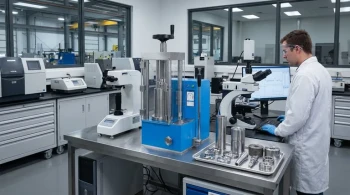
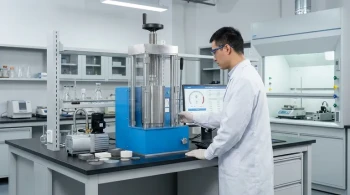
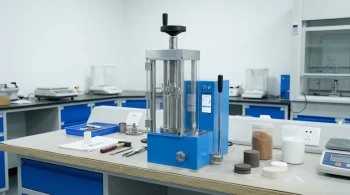
FTIR presses are essential tools for preparing high-quality samples for Fourier-transform infrared spectroscopy (FTIR) and X-ray fluorescence (XRF) analysis. Our product range includes handheld hydraulic presses for entry-level users, such as the KBR pellet press 2T, as well as advanced automatic lab presses like the 30T, 40T, and 60T models. Additionally, we offer steel and plastic ring powder pellet pressing molds, ensuring fast tableting speeds and customizable sizes for accurate molding every time.
Toggle Categories
Get Instant Support
Choose your preferred way to connect with our team
Response Time
Within 8 hours on working days, 24 hours on holidays
ftir press

Laboratory Hydraulic Pellet Press for XRF KBR FTIR Lab Applications
Item Number: PCPE

kbr pellet press 2t
Item Number: PCKBR
Discover the Precision of FTIR Presses
FTIR presses are indispensable in laboratories for preparing samples with consistent quality, which is crucial for accurate spectroscopic analysis. Our FTIR press category features a variety of models tailored to meet diverse laboratory needs, from entry-level to advanced applications.
Handheld Hydraulic Presses
Our KBR pellet press 2T is a compact, handheld hydraulic press designed for ease of use, making it ideal for entry-level users. It ensures precise pellet formation for FTIR and XRF analysis, with a simple operation that requires minimal training.
Automatic Lab Presses
For high-throughput laboratories, our Automatic Lab XRF & KBR Pellet Press models (30T, 40T, and 60T) offer unparalleled efficiency and accuracy. These presses are designed for fast and easy sample preparation, delivering consistent results for X-ray fluorescence analysis. Their versatility makes them suitable for a wide range of applications, from research to quality control.
Powder Pellet Pressing Molds
We provide both steel ring and plastic ring powder pellet pressing molds, designed to produce perfect XRF samples. These molds feature fast tableting speeds and customizable sizes, ensuring precise molding every time. The steel ring molds are robust and durable, while the plastic ring molds are lightweight and cost-effective, catering to different laboratory requirements.
Key Features and Benefits
- Precision and Consistency: Our FTIR presses and molds are engineered to deliver precise and consistent sample preparation, ensuring reliable analytical results.
- Ease of Use: With user-friendly designs, our products are accessible to both novice and experienced users.
- Customizability: Our powder pellet pressing molds come in various sizes, allowing you to tailor the sample preparation process to your specific needs.
- Durability: Built with high-quality materials, our products are designed to withstand the rigors of daily laboratory use.
Why Choose Our FTIR Presses?
Our FTIR presses are trusted by laboratories worldwide for their reliability, precision, and ease of use. Whether you're preparing samples for FTIR or XRF analysis, our products ensure that you achieve accurate and reproducible results every time. Our team of experts is also available to provide guidance and support, ensuring that you get the most out of your equipment.
Customizable Solutions
We understand that every laboratory has unique needs. That's why we offer customizable solutions to meet your specific requirements. From selecting the right press model to choosing the appropriate mold size, we work closely with you to ensure that our products align with your laboratory's goals.
Get Started Today
Ready to enhance your sample preparation process? Contact us to learn more about our FTIR presses and how they can benefit your laboratory. Our team is here to answer your questions and provide expert advice to help you make the best choice for your needs. Let us help you achieve precision and efficiency in your analytical workflows!
FAQ
What Is An FTIR Press Used For?
An FTIR press is primarily used for preparing samples for Fourier Transform Infrared Spectroscopy (FTIR). It compresses powdered materials into pellets, which are then analyzed to determine their chemical composition and structure.
What Types Of FTIR Presses Are Available?
There are several types of FTIR presses available, including handheld hydraulic presses for entry-level users, automatic lab pellet presses with varying tonnage capacities (e.g., 30T, 40T, 60T), and specialized molds for creating pellets with steel or plastic rings.
How Does An FTIR Press Work?
An FTIR press works by applying high pressure to powdered materials, compressing them into dense, uniform pellets. This process ensures that the pellets are suitable for FTIR analysis, providing accurate and consistent results.
What Are The Advantages Of Using An FTIR Press?
The advantages of using an FTIR press include the ability to produce uniform and high-quality pellets, fast tableting speed, customizable sizes for precise molding, and versatility in preparing samples for various analytical techniques like X-ray fluorescence (XRF) and FTIR spectroscopy.
What Materials Can Be Used With An FTIR Press?
An FTIR press can be used with a variety of powdered materials, including chemicals, pharmaceuticals, and other substances that need to be analyzed using FTIR or XRF techniques. The press can accommodate different types of molds, such as those with steel or plastic rings, to suit specific sample requirements.
REQUEST A QUOTE
Our professional team will reply to you within one business day. Please feel free to contact us!
Related Articles
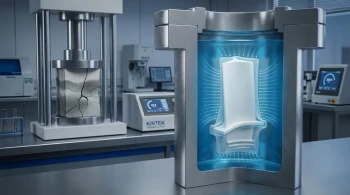
Beyond Brute Force: The Physics of Perfect Density in Cold Isostatic Pressing
Discover how Cold Isostatic Pressing leverages Pascal's Law to achieve uniform density in ceramics and metals, preventing defects in high-stress components.
Read more
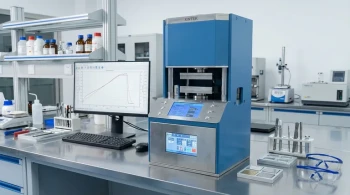
The Physics of Flawless Materials: Deconstructing the Hydraulic Hot Press
Discover how the synergy of Pascal's Law and thermal energy in a hydraulic hot press enables precise, repeatable material bonding and forming.
Read more

From Powder to Part: The Strategic Choice Between Wet-Bag and Dry-Bag CIP
A deep dive into wet-bag vs. dry-bag Cold Isostatic Pressing, framing the choice not as technical, but as a strategic manufacturing decision.
Read more
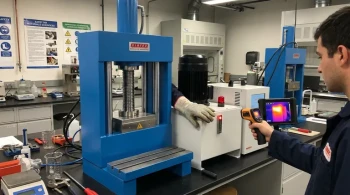
Why Your Hydraulic Press Runs Hot and How to Prevent a Meltdown
Learn why your hydraulic press overheats and how it leads to costly failure. Discover the root cause and the tools you need to fix it for good.
Read more
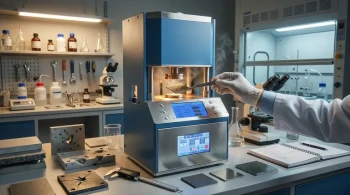
Why Your Molded Parts Fail: The Hidden Truth About Heat and Pressure
Struggling with warped or inconsistent parts? Learn why pressure isn't the problem and how precise thermal control in a hydraulic press is the key.
Read more
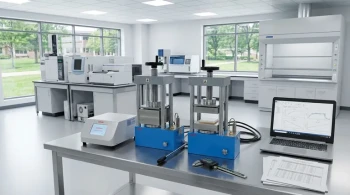
Force Without Fluid: Why Your Hydraulic Press Is a Hidden Bottleneck (And What to Do About It)
Tired of leaks, safety risks, and high energy bills from your hydraulic press? Uncover the core reason and discover modern alternatives for a safer, more efficient lab.
Read more
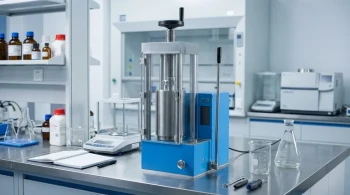
The Architecture of Pressure: How Cold Isostatic Pressing Builds Flawless Materials
Discover how Cold Isostatic Pressing (CIP) uses uniform pressure, not brute force, to create high-density material preforms with perfect consistency.
Read more
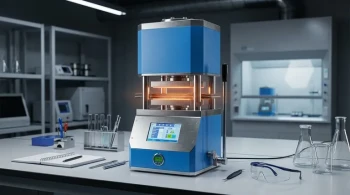
Precision Under Pressure: The Physics and Psychology of the Hydraulic Hot Press
Discover how the synergy of heat and pressure in a hydraulic hot press transforms materials, guided by the elegant physics of Pascal's Law.
Read more
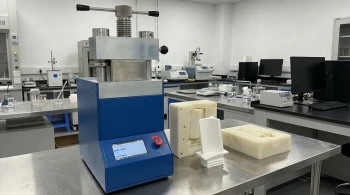
The Tyranny of Unidirectional Force: Why Perfect Parts Begin with Uniform Pressure
Explore how Cold Isostatic Pressing (CIP) leverages Pascal's Law to eliminate hidden flaws in parts, ensuring uniform density and superior results.
Read more
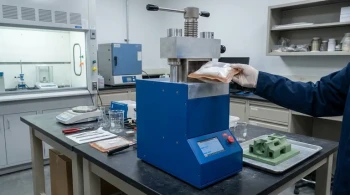
Beyond the Piston: How Isostatic Pressing Solves the Hidden Flaws in Material Science
Cold Isostatic Pressing (CIP) overcomes the hidden density flaws of traditional methods by applying uniform pressure, creating superior material integrity.
Read more
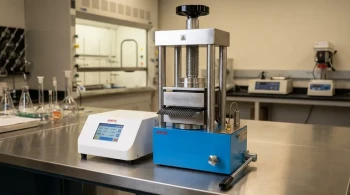
More Than a Squeeze: The Physics and Psychology of the Hydraulic Hot Press
An insight into the hydraulic hot press, where Pascal's Law meets thermodynamics to reshape materials. A story of force, heat, and control.
Read more
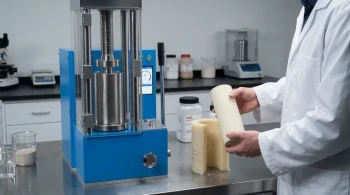
The Unseen Flaw: Why Uniform Density Is Everything in Powder Metallurgy
Traditional pressing creates hidden flaws. Cold Isostatic Pressing (CIP) uses uniform pressure to achieve perfect density, ensuring component integrity.
Read more
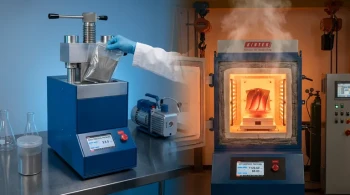
Shaping Potential vs. Forging Perfection: A Guide to Isostatic Pressing
Explore the critical difference between Cold Isostatic Pressing (CIP) for forming parts and Hot Isostatic Pressing (HIP) for perfecting them.
Read more
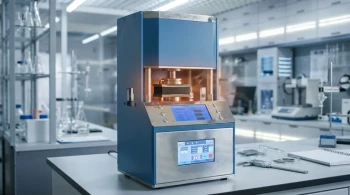
Why Your Composite and Polymer Parts Keep Failing: The Secret Is Simultaneous Heat and Pressure
Struggling with inconsistent composite or polymer bonding? Discover why separate heating and pressing fails and how a hot hydraulic press ensures repeatable, high-quality results.
Read more
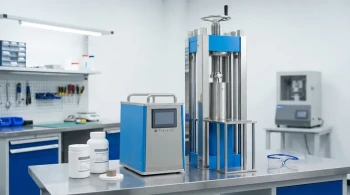
Beyond Brute Force: The Quiet Power of Cold Isostatic Pressing
Learn how Cold Isostatic Pressing overcomes the hidden defects of traditional methods by using uniform fluid pressure to ensure material reliability.
Read more
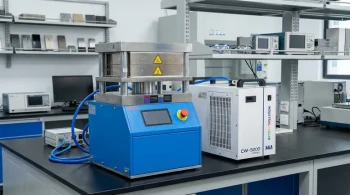
Why Your Compression Tests Are Failing (And It’s Not Your Sample’s Fault)
Discover the hidden reason your material compression tests fail and damage equipment. Learn why the press platen, not the sample, is often the culprit.
Read more
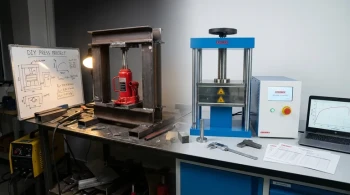
Build vs. Buy: The True Cost of a Hydraulic Press Isn't What You Think
Discover the hidden costs & safety risks of DIY hydraulic presses. Learn why an engineered solution is the smarter investment for professional results.
Read more
Why Your High-Strength Metal Parts Are Failing—And Why 'More Force' Is the Wrong Answer
Struggling with inconsistent quality in forged parts? Discover why brute force fails and how a controlled squeeze is the key to superior strength.
Read more
Beyond Brute Force: The Physics of Uniform Density in Cold Isostatic Pressing
Discover how Cold Isostatic Pressing (CIP) uses isostatic pressure to eliminate hidden voids and create components with superior uniform density.
Read more
The Price of Uniformity: A Strategic Guide to Cold Isostatic Press Costs
A Cold Isostatic Press's cost reflects its capabilities. Learn how pressure, size, and automation dictate its price to find the right investment.
Read more