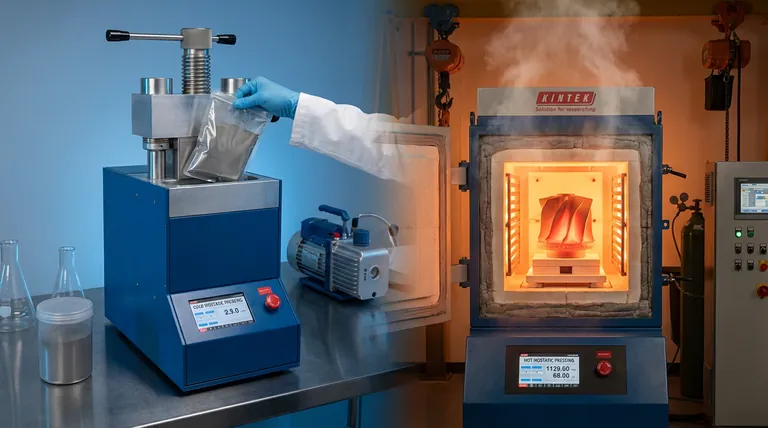
The Hidden Flaw
Imagine a turbine blade in a jet engine, spinning thousands of times per minute at temperatures that would melt steel. Or a surgical implant designed to support a human joint for decades.
In these worlds, failure isn't an option. The greatest enemy is not a visible crack, but a microscopic void—an invisible pocket of nothingness buried deep within the material, waiting for stress to find it.
The pursuit of material perfection is a story of fighting these invisible flaws. This battle is often fought with immense pressure, and the two primary strategies are Cold Isostatic Pressing (CIP) and Hot Isostatic Pressing (HIP). They are not interchangeable; they represent two fundamentally different philosophies. One is about shaping potential, the other about forging perfection.
The Promise of Uniformity: Cold Isostatic Pressing (CIP)
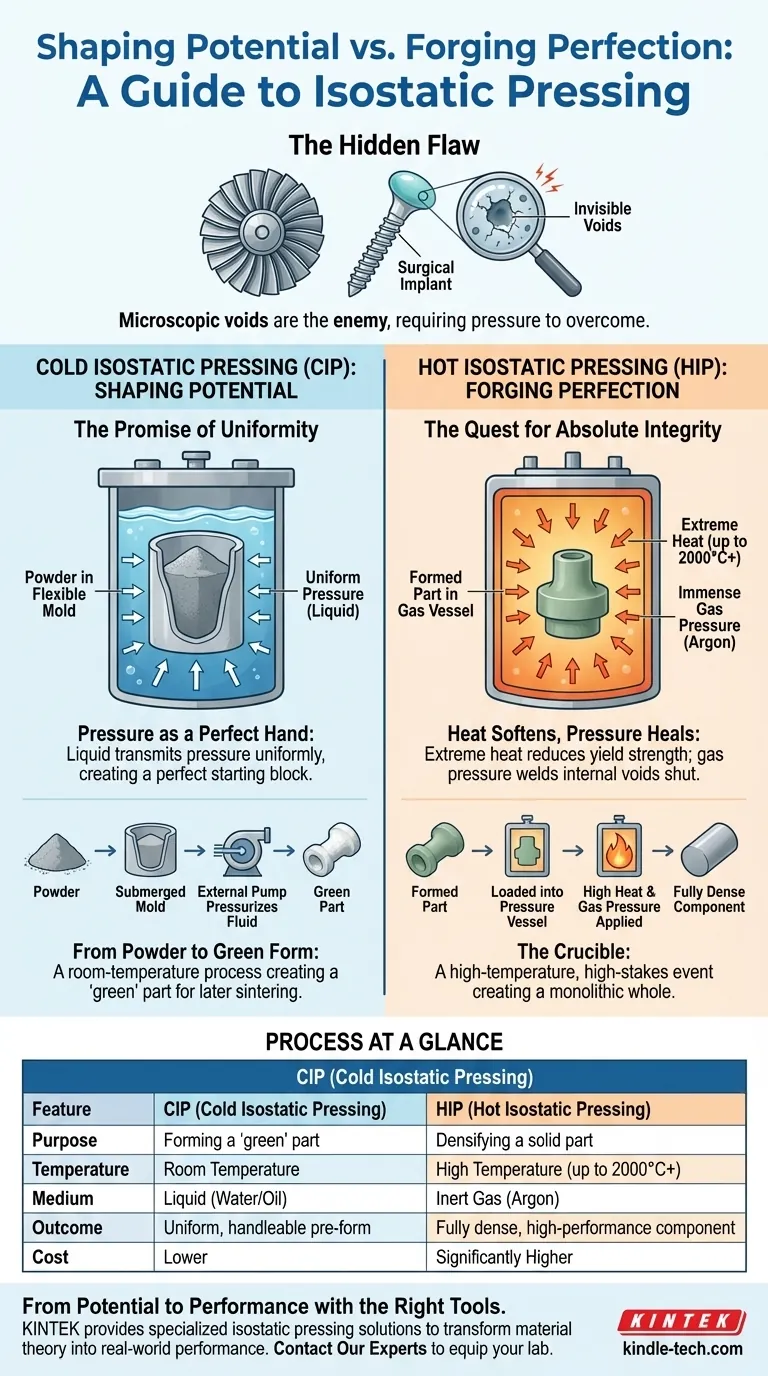
Cold Isostatic Pressing is an act of creation. Its goal is not to produce a finished part, but to create the perfect starting block—a "green" part where every particle is compacted with democratic equality.
The Principle: Pressure as a Perfect Hand
CIP works because of a simple, elegant law of physics: a liquid transmits pressure uniformly in all directions.
When a flexible mold filled with powder is submerged in a fluid, the pressure gently and evenly squeezes it from every conceivable angle. There are no dies, no punches, no directional forces that create weak spots. It is the most uniform way to compact a powder into a solid shape.
The Ritual: From Powder to "Green" Form
The process is a clean, room-temperature affair.
- A powder is sealed in a flexible, watertight mold.
- The mold is submerged in a pressure vessel filled with water or oil.
- An external pump pressurizes the fluid, compressing the powder into a solid.
The outcome is a "green" part. It has the consistency of chalk—solid enough to handle and even machine, but its particles are only mechanically interlocked. It holds the promise of strength, but this promise must be fulfilled by a later, high-temperature process like sintering.
The Quest for Absolute Integrity: Hot Isostatic Pressing (HIP)
Hot Isostatic Pressing is not about creation, but about refinement. It takes an already-formed part and subjects it to conditions that mimic those deep within a planet's core, closing the final gaps in its atomic structure.
The Principle: Heat Softens, Pressure Heals
HIP combines two powerful forces. Extreme heat reduces the material's yield strength, making it momentarily soft and malleable on a microscopic level.
Simultaneously, immense gas pressure (using an inert gas like argon to prevent chemical reactions) is applied. This pressure finds every internal void, pore, or micro-crack and squeezes it shut, permanently welding the material together into a single, monolithic whole.
The Crucible: Forging in Fire and Force
The HIP process is a high-stakes thermal event. Parts are loaded into a specialized pressure vessel, which is then heated to temperatures that can exceed 2,000°C. As the heat soaks in, the gas pressure is raised to levels hundreds of times greater than our atmosphere.
The part is held at this peak temperature and pressure for a precise duration, allowing its internal structure to be reformed and perfected. The result is a component with a density that is as close to 100% of theoretical as physically possible.
The Engineer's Dilemma: Choosing the Right Philosophy
The decision between CIP and HIP is not about which is "better," but about understanding what you are trying to achieve. It is a strategic choice between forming a beginning and perfecting an end.
Purpose Defines the Process
The fundamental difference lies in the manufacturing stage.
- CIP is a forming process. Its purpose is to create a complex, uniformly dense pre-form from powder, setting the stage for sintering.
- HIP is a densification process. Its purpose is to take a solid part (like a casting or a sintered component) and eliminate its internal porosity to maximize its mechanical properties.
Sometimes, these processes even work in sequence: a part is formed with CIP, strengthened with sintering, and then perfected with HIP to meet the most demanding specifications.
The Economics of Perfection
The simplicity of CIP—using liquid at room temperature—makes the equipment and process relatively inexpensive and fast. It is the workhorse of powder metallurgy.
HIP, requiring a vessel that can withstand both extreme heat and gas pressure, is a far more complex and costly endeavor. It is reserved for applications where the cost of failure is astronomically high, and absolute material integrity is the only acceptable standard.
Process at a Glance
| Feature | Cold Isostatic Pressing (CIP) | Hot Isostatic Pressing (HIP) |
|---|---|---|
| Purpose | Forming a "green" part from powder | Densifying a solid part to eliminate flaws |
| Temperature | Room Temperature | High Temperature (up to 2000°C+) |
| Medium | Liquid (Water/Oil) | Inert Gas (Argon) |
| Outcome | Uniform, handleable pre-form for sintering | Fully dense, high-performance final component |
| Cost | Lower | Significantly Higher |
From Potential to Performance with the Right Tools
Understanding whether your goal is to shape potential or to forge perfection is the key to material science success. The choice between CIP and HIP dictates not only your process but also the ultimate reliability of your final component.
Whether you are creating complex ceramic pre-forms or eliminating the final microscopic voids in a critical aerospace alloy, this journey requires precision equipment. KINTEK provides the specialized isostatic pressing solutions that transform material theory into real-world performance. To equip your lab with the tools to shape or perfect your materials, Contact Our Experts.
Visual Guide
Related Products
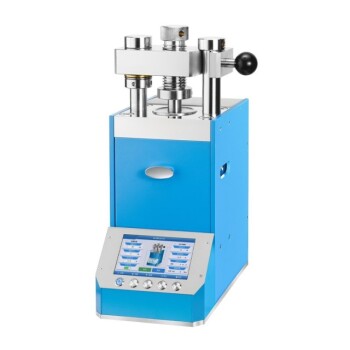
- Warm Isostatic Press for Solid State Battery Research
- Automatic Lab Cold Isostatic Press CIP Machine Cold Isostatic Pressing
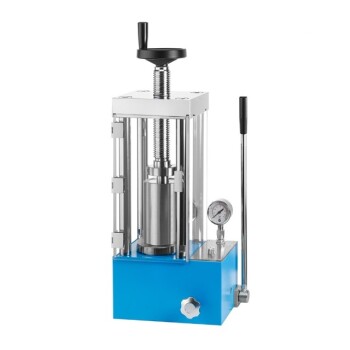
- Manual Cold Isostatic Pressing Machine CIP Pellet Press
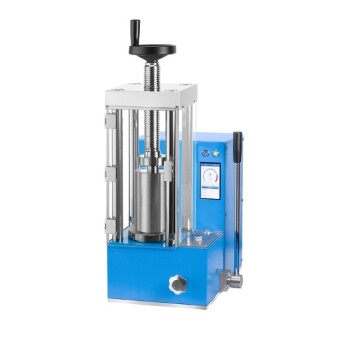
- Electric Lab Cold Isostatic Press CIP Machine for Cold Isostatic Pressing
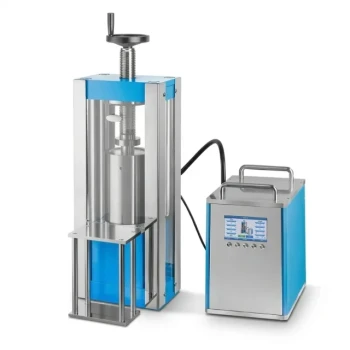
- Electric Split Lab Cold Isostatic Press CIP Machine for Cold Isostatic Pressing
Related Articles
- WIP – Warm Isostatic Press Equipment: Design, Features, and Benefits
- Beyond the Spec Sheet: Mastering the Thermal Dynamics of Warm Isostatic Pressing
- Warm Isostatic Pressing An Overview of the Process and Equipment
- Warm Isostatic Pressing: An Advanced Manufacturing Technology
- Choosing the Right Warm Isostatic Press: Key Factors to Consider