The Allure of Capability
When engineers evaluate a new piece of equipment, they often gravitate toward the specifications sheet. A Warm Isostatic Press (WIP) might boast a maximum temperature of 240°C or higher, and the immediate psychological impulse is to see this as a measure of power or capability.
This is a subtle cognitive trap.
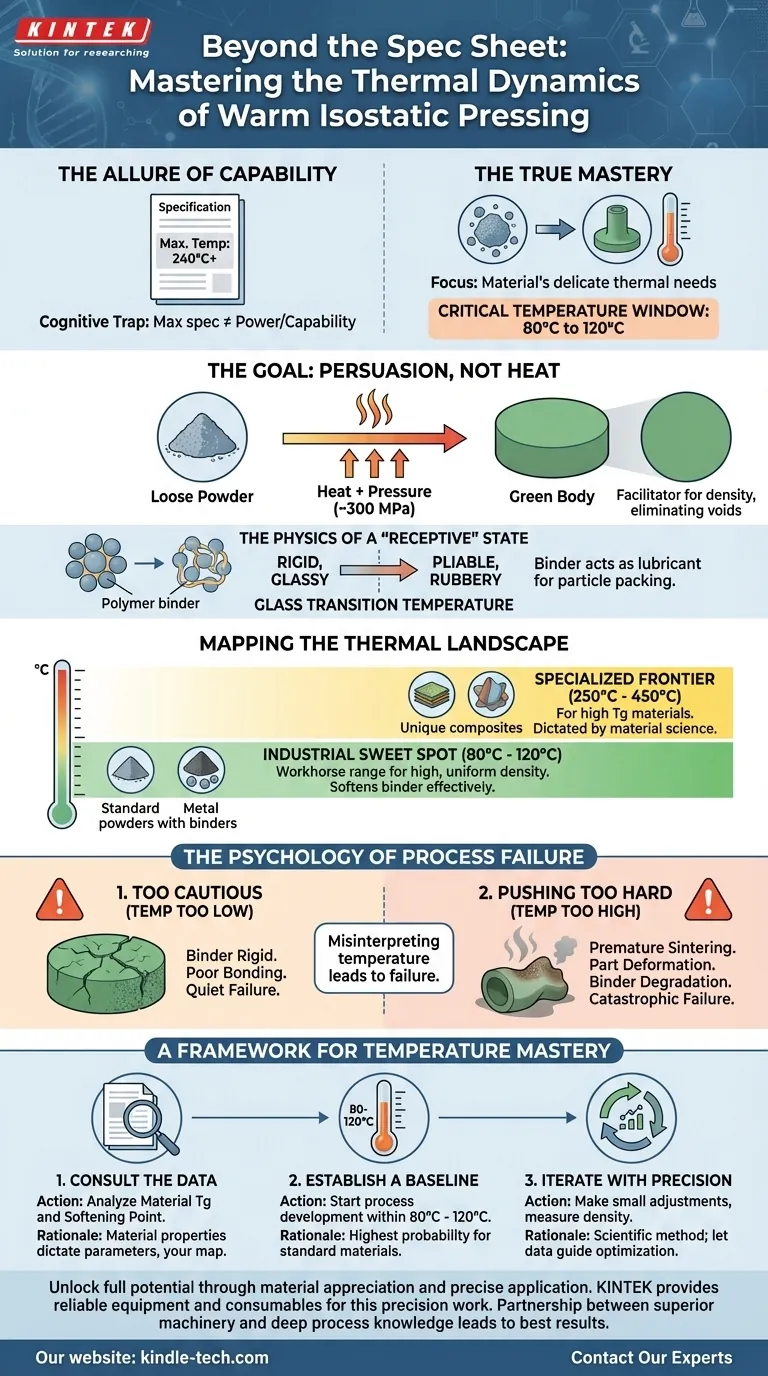
The true mastery of warm isostatic pressing lies not in using the machine's full range, but in understanding the delicate thermal needs of the powder you are forming. The most critical temperature window is often a narrow, unassuming band: 80°C to 120°C.
The Goal Is Not Heat, But Persuasion
The purpose of temperature in a WIP isn't to cook or melt anything. It's to persuade.
The primary objective is to create a "green body"—a dense, uniform, unfired part—from a loose powder. Pressure alone can only do so much. Heat is the crucial facilitator, making the powder particles more plastic and receptive to the immense, uniform pressure (often around 300 MPa).
Think of it as convincing the particles to find their most efficient arrangement, eliminating the voids between them.
The Physics of a "Receptive" State
For most materials, especially ceramics or metal powders mixed with a polymer binder, this state of receptiveness is achieved just above their glass transition temperature.
This is the point where the material, particularly the binder, transitions from a rigid, glassy state to a softer, rubbery one. It doesn't melt; it just becomes pliable enough to flow and deform, acting as a lubricant that allows the primary powder particles to slide past one another and pack into an incredibly dense configuration.
This process is the foundation for a stronger, more consistent part after the final sintering stage.
Mapping the Thermal Landscape
The correct temperature is not a setting; it's a destination determined entirely by your material. Understanding the thermal map is key to navigating the process successfully.
The Industrial Sweet Spot: 80°C - 120°C
This range is the workhorse of the industry. It’s the ideal climate for the vast majority of ceramic and metal powders that rely on polymer binders. It provides enough thermal energy to soften the binder effectively without risking material degradation. Operating within this window is the shortest path to achieving high, uniform density for most standard applications.
The Specialized Frontier: 250°C - 450°C
Higher temperatures are not an "upgrade"; they are a different territory for specific materials. Certain specialized polymers or unique composites have a much higher glass transition temperature and require more thermal energy to become pliable. Venturing into this range is a deliberate choice dictated by material science, not a desire to "turn up the power."
The Psychology of Process Failure
The two most common failure modes in warm isostatic pressing are direct consequences of misinterpreting the role of temperature.
1. The Cost of Being Too Cautious (Temperature Too Low)
If the temperature is insufficient, the binder remains too rigid. The particles resist densification. The result is a green body with low or non-uniform density, poor particle bonding, and inherent weaknesses. It’s a quiet failure—the part may look fine, but it will not perform. This often stems from a fear of "overheating," leading to an ineffective and wasteful process.
2. The Peril of Pushing Too Hard (Temperature Too High)
Conversely, excessive heat is a catastrophic failure. If the temperature gets too high, you cross the line from persuasion to coercion.
- Premature Sintering: The powder particles begin fusing, which is a process that should only happen in a dedicated sintering furnace.
- Part Deformation: The material becomes too soft and can deform under pressure.
- Binder Degradation: Organic binders can burn off or degrade, compromising the structural integrity of the entire part.
This is a classic case of "more is not better." It’s an attempt to solve a precision problem with brute force, and it almost always ends in failure.
A Framework for Temperature Mastery
Achieving consistent, high-quality results from your WIP is a matter of systematic discipline, not guesswork. It requires treating temperature as the critical control variable it is.
| Step | Action | Rationale |
|---|---|---|
| 1. Consult the Data | Analyze the material datasheet for its glass transition temperature (Tg) and softening point. | This is your map. Without it, you are navigating blind. The material's properties dictate the process parameters, not the other way around. |
| 2. Establish a Baseline | For standard ceramics or metals with binders, begin process development within the 80°C to 120°C range. | This is the highest probability starting point for success, grounded in decades of industrial practice. |
| 3. Iterate with Precision | Make small, incremental temperature adjustments and meticulously measure the density and integrity of each resulting part. | This is the scientific method applied to manufacturing. Document everything. Let the data guide you to the optimal setting for your specific powder blend. |
Ultimately, unlocking the full potential of warm isostatic pressing comes from an engineer's appreciation for the material itself. The equipment is a powerful tool, but true expertise lies in knowing precisely how to apply it. At KINTEK, we provide the reliable laboratory equipment and consumables that form the foundation of this precision work. We believe that the best results come from a partnership between superior machinery and deep process knowledge.
If you're ready to move beyond the spec sheet and achieve true mastery over your densification process, Contact Our Experts.
Visual Guide
Related Products
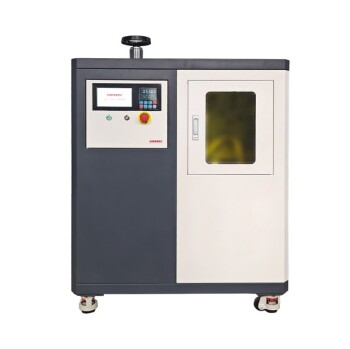
- Warm Isostatic Press for Solid State Battery Research
- Electric Lab Cold Isostatic Press CIP Machine for Cold Isostatic Pressing
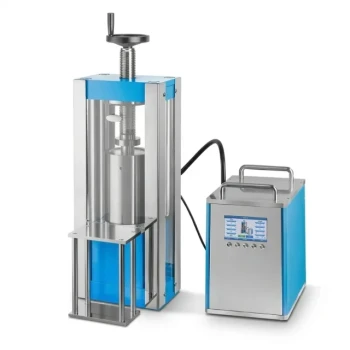
- Electric Split Lab Cold Isostatic Press CIP Machine for Cold Isostatic Pressing
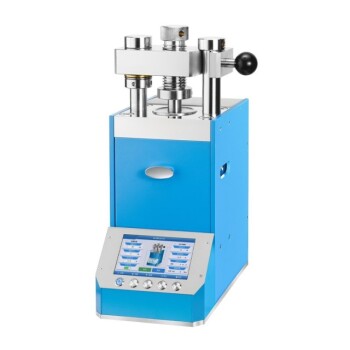
- Automatic Lab Cold Isostatic Press CIP Machine Cold Isostatic Pressing
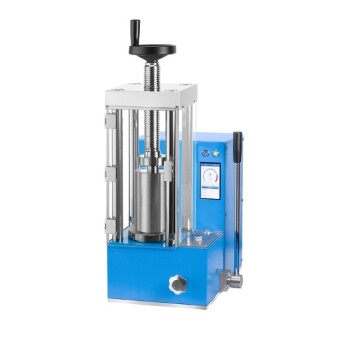
- Manual Cold Isostatic Pressing Machine CIP Pellet Press
Related Articles
- WIP – Warm Isostatic Press Equipment: Design, Features, and Benefits
- Warm Isostatic Pressing An Overview of the Process and Equipment
- Warm Isostatic Pressing: An Advanced Manufacturing Technology
- Choosing the Right Warm Isostatic Press: Key Factors to Consider
- Comprehensive Overview of Warm Isostatic Press and Its Applications