The Anxiety of the Unseen Flaw
Imagine designing a critical component—a ceramic bearing for a jet engine or a medical implant. The material is advanced, the shape is complex, and the performance requirements are absolute. Your calculations are perfect, the powder is pure, but a nagging anxiety remains.
The problem isn't the design; it's the ghost in the machine. A hidden flaw, a microscopic void, an invisible gradient of density buried deep within the part. This is the fundamental challenge of powder metallurgy. You can’t see the weakest point, but you know it’s there, a product of the very process used to create the component.
This isn't just a materials science problem; it's a psychological one. It's about trust. How can you trust a part when you know its internal structure is inherently inconsistent?
The Physics of Brute Force
For decades, the standard answer has been uniaxial pressing. The logic is simple: fill a die with powder and compress it with a powerful punch from one direction. It’s fast, efficient, and cost-effective.
But it has a fatal flaw: friction.
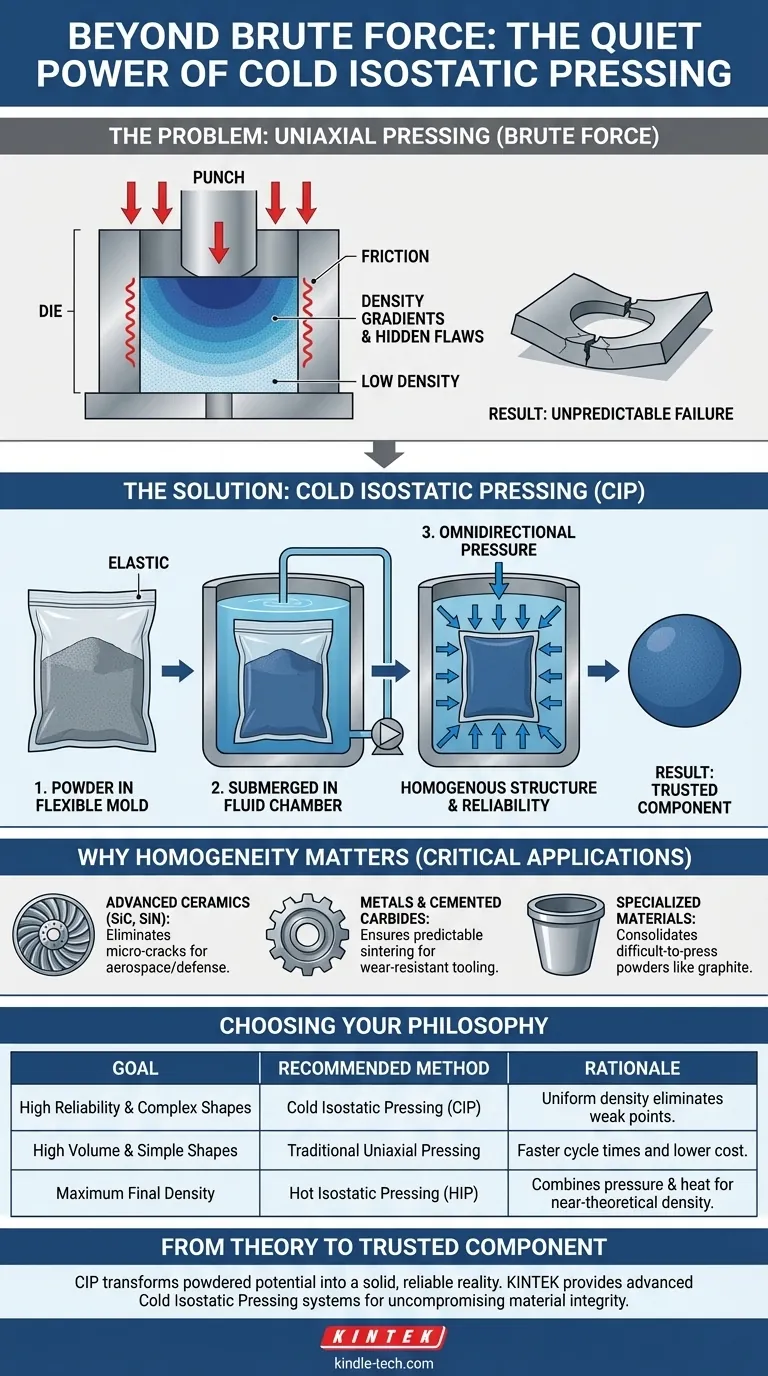
As the punch descends, the powder particles rub against the rigid die walls. This friction resists the compacting force, causing the pressure to dissipate. The powder directly under the punch becomes densely packed, while the powder at the bottom and sides remains looser.
The result is a part with built-in density gradients. These are not just minor variations; they are fault lines—latent weaknesses that cause warping during sintering, unpredictable shrinkage, and catastrophic failure under stress.
A More Elegant Solution: Pressure from Everywhere
Cold Isostatic Pressing (CIP) offers a fundamentally different philosophy. Instead of applying overwhelming force from a single direction, it applies uniform pressure from all directions simultaneously.
The process is deceptively simple:
- The powder is placed in a flexible, sealed mold.
- This mold is submerged in a chamber of high-pressure fluid.
- The fluid is pressurized, transmitting that force equally to every point on the mold's surface.
Think of squeezing a ball of clay in your fist versus pressing it on a table. The fist compacts it evenly into a sphere; the table leaves one side flat and uncompressed. The omnidirectional pressure of CIP eliminates the friction against die walls, erasing the root cause of density gradients.
The result is a "green" part that is homogenous. Its internal structure is consistent, predictable, and free from the hidden stresses that plague uniaxially pressed components. It is a more honest material.
Where Homogeneity is Not a Luxury
This uniformity is not an academic concern. In high-performance applications, it is the bedrock of reliability. CIP is indispensable for manufacturing components where internal defects are not an option.
- Advanced Ceramics (SiC, SiN): For aerospace, defense, and electrical insulation, where a single micro-crack can lead to complete system failure, the uniform density from CIP is critical.
- Metals & Cemented Carbides: For large, wear-resistant tooling and high-melting-point metals, CIP creates preforms that sinter predictably without warping, ensuring the final part meets exacting specifications.
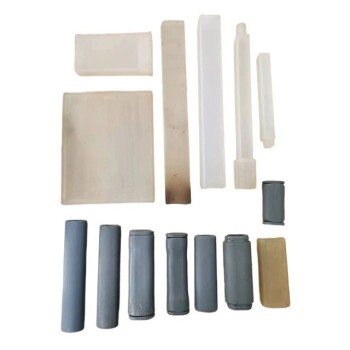
- Specialized Materials: From consolidating graphite for industrial furnaces to forming specialized polymers, CIP provides a path to creating solid forms from difficult-to-press powders.
Choosing Your Philosophy, Not Just Your Tool
The choice between pressing methods is a choice of manufacturing philosophy. It hinges on one question: what is your primary goal?
| Goal | Recommended Method | Rationale |
|---|---|---|
| High Reliability & Complex Shapes | Cold Isostatic Pressing (CIP) | Uniform density eliminates weak points, essential for critical components. |
| High Volume & Simple Shapes | Traditional Uniaxial Pressing | Faster cycle times and lower cost make it ideal for mass production. |
| Maximum Final Density | Hot Isostatic Pressing (HIP) | Combines pressure and heat to achieve near-theoretical density in a single step. |
While CIP produces a near-net-shape part, its flexible mold means secondary machining is often required for tight tolerances. It is a foundational step designed for quality, not a final step designed for speed.
From Theory to Trusted Component
Ultimately, the pursuit of better materials is the pursuit of predictability. Cold Isostatic Pressing replaces the uncertainty of hidden flaws with the confidence of uniform density. It transforms powdered potential into a solid, reliable reality.
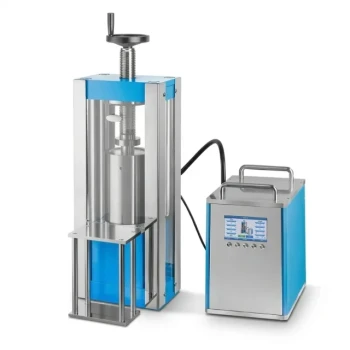
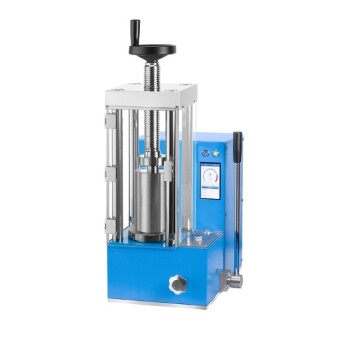
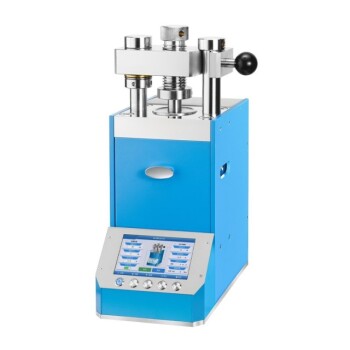
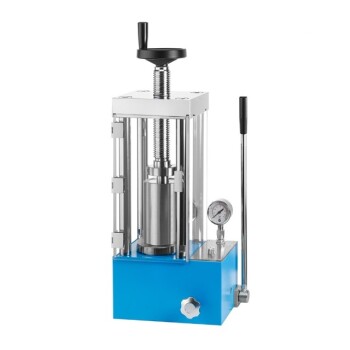
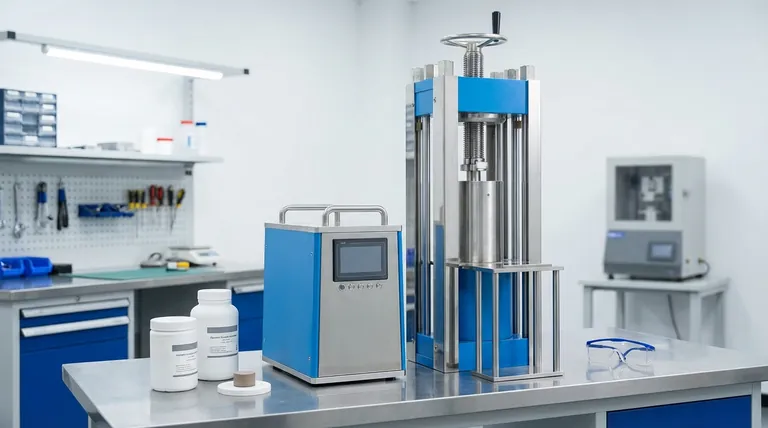
At KINTEK, we provide the advanced laboratory equipment that makes this transformation possible. Our Cold Isostatic Pressing systems are engineered to give researchers and manufacturers the control they need to create homogenous, defect-free components from the most advanced materials. We bridge the gap between material theory and trusted application.
If your work demands uncompromising material integrity, let's build components you can trust. Contact Our Experts
Visual Guide
Related Products
- Electric Split Lab Cold Isostatic Press CIP Machine for Cold Isostatic Pressing
- Electric Lab Cold Isostatic Press CIP Machine for Cold Isostatic Pressing
- Automatic Lab Cold Isostatic Press CIP Machine Cold Isostatic Pressing
- Manual Cold Isostatic Pressing Machine CIP Pellet Press
- Warm Isostatic Press for Solid State Battery Research