Blog Beyond the Die: The Unseen Advantage of Cold Isostatic Pressing
Beyond the Die: The Unseen Advantage of Cold Isostatic Pressing

Beyond the Die: The Unseen Advantage of Cold Isostatic Pressing

1 day ago

The Hidden Flaw in Almost Everything

Most things fail at their weakest point.

This isn't a profound statement. It's a simple truth. But in materials science, the weakest point is often invisible. It’s a subtle variation in density, a hidden void left by uneven pressure during manufacturing.

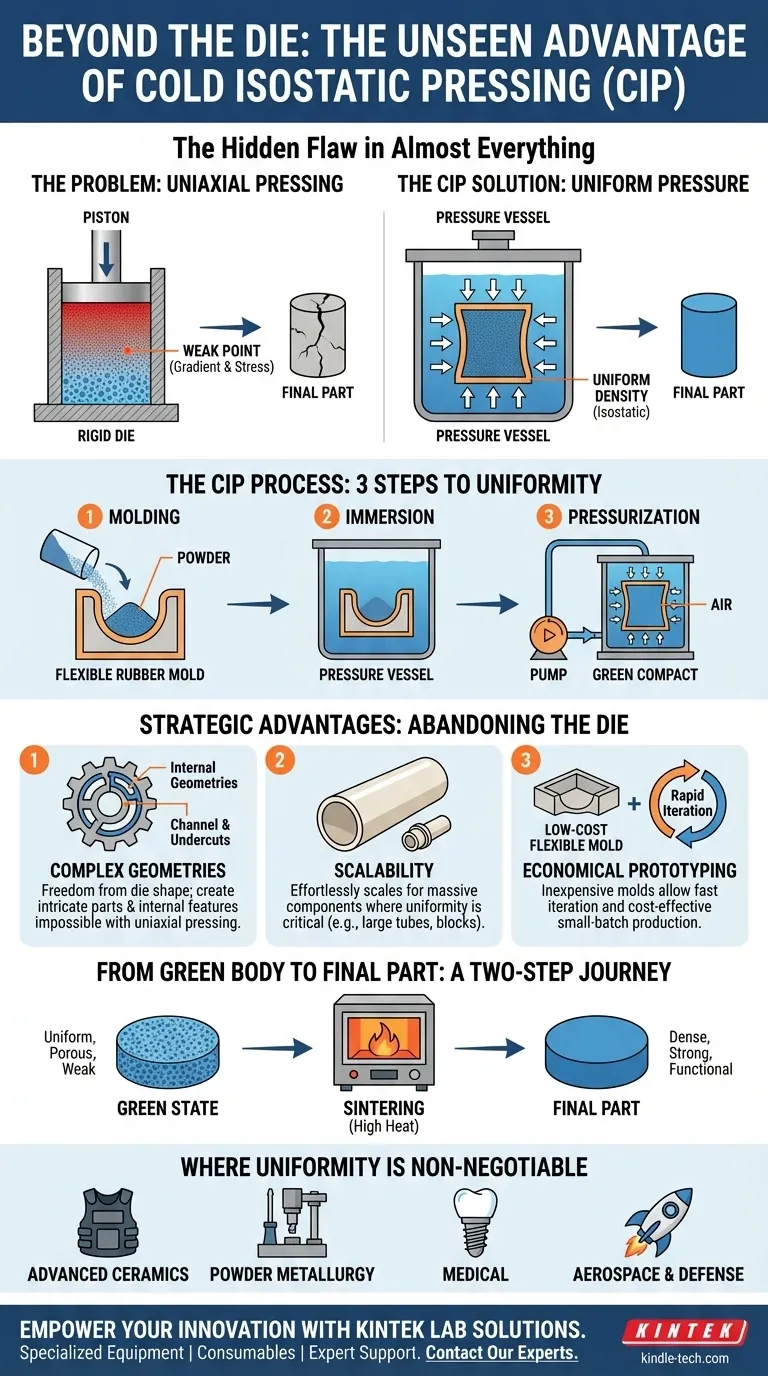
When you press a powder from one direction—the standard uniaxial method—you create a gradient. The top is dense, the bottom less so. This internal stress is a ticking clock, a built-in point of failure.

Cold Isostatic Pressing (CIP) was developed to solve this fundamental problem. It doesn’t just press a material; it surrounds and consolidates it, eliminating the weak points before they are ever created.

The Physics of Uniformity: A Lesson from the Deep Ocean

The principle behind CIP is disarmingly simple. It trades the brute force of a piston for the elegant, inescapable pressure of a liquid.

Imagine an object sinking into the ocean. The pressure doesn't just come from above; it comes from every direction equally. This is the essence of "isostatic" pressure.

The Process in Practice

The execution is just as elegant.

  1. Molding: A raw powder—be it advanced ceramic, metal, or a composite—is loaded into a sealed, flexible mold made of rubber or urethane.
  2. Immersion: This mold is submerged in a pressure vessel filled with a liquid, typically water or oil.
  3. Pressurization: A pump increases the liquid's pressure, which is transmitted perfectly and uniformly to every surface of the flexible mold. The powder particles are forced together, expelling air and forming a solid mass.

The result is a "green" compact. It's not the final product, but it's a perfect intermediate: a solid object with virtually uniform density throughout its entire structure.

The Strategic Trade-Offs: When to Abandon the Die

Choosing a manufacturing process is an exercise in managing constraints. Traditional die pressing is fast and precise for high-volume production of simple shapes. But its rigidity creates three distinct problems that CIP elegantly solves.

1. The Tyranny of Geometric Simplicity

A hard steel die can only create what its shape allows. It struggles with undercuts, internal cavities, or highly complex geometries.

CIP uses a flexible mold. This freedom allows for the formation of intricate parts—like components with internal cooling channels or non-symmetrical designs—that are physically impossible to produce with uniaxial pressing.

2. The Barrier of Scale

The forces required for uniaxial pressing grow exponentially with the size of the part. Making very large components requires impossibly large and powerful presses.

Because CIP applies pressure via a liquid, it scales effortlessly. It is the go-to method for producing large ceramic tubes, refractory blocks, and other massive components where uniformity is critical.

3. The Economics of Prototyping

Machining a hardened steel die is expensive and time-consuming. This cost is only justifiable with massive production runs.

For prototyping, R&D, or small-batch production, CIP is vastly more cost-effective. The flexible molds are inexpensive to create, allowing engineers and scientists to iterate quickly without a prohibitive initial investment.

From Green Body to Final Part: A Two-Step Journey

It's crucial to understand that CIP is not the end of the story. The "green" compact it produces has handling strength, but it has not yet achieved its final material properties.

  • The "Green" State: This intermediate part is a uniformly dense arrangement of powder particles. It is still porous and lacks the hardness or strength for its end-use application.
  • The Sintering Imperative: To achieve final density and strength, the green compact must be sintered—a high-temperature heat treatment that fuses the particles together.

This two-step process means that final dimensional tolerance must account for shrinkage during sintering. The gift of CIP is not perfect final-form precision; it is a perfect starting point for creating a flawless final part.

Where Uniformity is Non-Negotiable

The applications for CIP exist where material integrity cannot be compromised.

Industry Vertical Application Example Why CIP is Essential
Advanced Ceramics Silicon carbide wear parts, body armor Eliminates density voids that could lead to catastrophic failure under stress.
Powder Metallurgy Tool steel blanks, carbide forming tools Ensures even wear and longer tool life by removing weak spots.
Medical Zirconia dental implants, ceramic artificial joints Guarantees biocompatibility and structural integrity required for in-body use.
Aerospace & Defense Isotropic graphite, refractory metal components Produces large, complex parts with predictable and uniform thermal/mechanical properties.

The Right Tool for the Right Problem

Cold Isostatic Pressing isn't a replacement for all other compaction methods. It is a specialized tool for solving specific, often difficult, problems.

You choose it when uniformity is more important than raw speed. You choose it when geometric complexity or large scale makes traditional dies impractical. And you choose it when the economics of low-volume production demand a smarter approach.

For research labs and development teams pushing the boundaries of material science, mastering these processes is key. Whether you are creating prototypes from novel ceramic powders or developing small-batch, high-performance components, having the right laboratory-scale equipment is crucial. At KINTEK, we provide the specialized lab equipment and consumables that empower this innovation.

If you are facing challenges with material uniformity, complex geometries, or cost-effective prototyping, we can help you find the right solution. Contact Our Experts

Visual Guide
Beyond the Die: The Unseen Advantage of Cold Isostatic Pressing Visual Guide

Related Products

Related Articles

Related Products

Manual Cold Isostatic Pressing Machine CIP Pellet Press

Manual Cold Isostatic Pressing Machine CIP Pellet Press

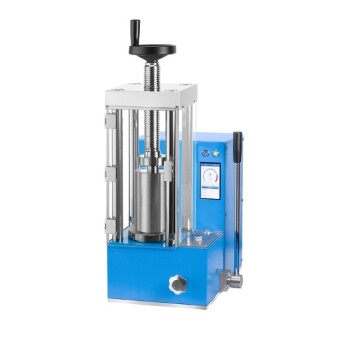
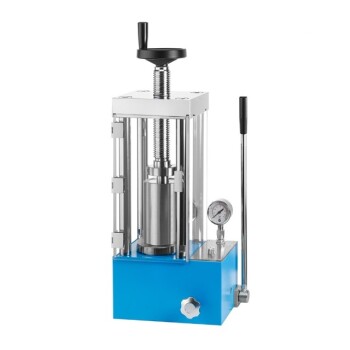
Lab Manual Isostatic Press is a high-efficient equipment for sample preparation widely used in material research, pharmacy, ceramics, and electronic industries. It allows for precision control of the pressing process and can work in a vacuum environment.

Electric Lab Cold Isostatic Press CIP Machine for Cold Isostatic Pressing

Electric Lab Cold Isostatic Press CIP Machine for Cold Isostatic Pressing

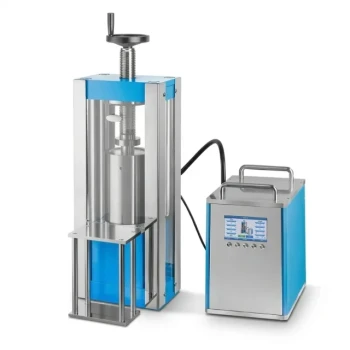
Produce dense, uniform parts with improved mechanical properties with our Electric Lab Cold Isostatic Press. Widely used in material research, pharmacy, and electronic industries. Efficient, compact, and vacuum-compatible.

Automatic Lab Cold Isostatic Press CIP Machine Cold Isostatic Pressing

Automatic Lab Cold Isostatic Press CIP Machine Cold Isostatic Pressing

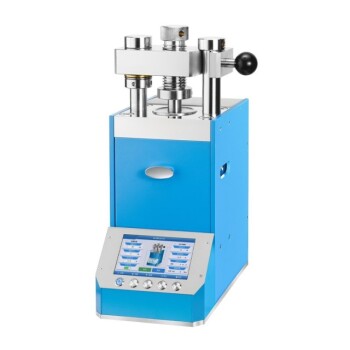
Efficiently prepare samples with our Automatic Lab Cold Isostatic Press. Widely used in material research, pharmacy, and electronic industries. Provides greater flexibility and control compared to electric CIPs.

Vacuum Cold Mounting Machine for Sample Preparation

Vacuum Cold Mounting Machine for Sample Preparation

Vacuum Cold Mounting Machine for precise sample prep. Handles porous, fragile materials with -0.08MPa vacuum. Ideal for electronics, metallurgy, and failure analysis.

Laboratory Hydraulic Press Lab Pellet Press Machine for Glove Box

Laboratory Hydraulic Press Lab Pellet Press Machine for Glove Box

Controlled environment lab press machine for glove box. Specialized equipment for material pressing and shaping with high precision digital pressure gauge.

Laboratory Hydraulic Press Split Electric Lab Pellet Press

Laboratory Hydraulic Press Split Electric Lab Pellet Press

Efficiently prepare samples with a split electric lab press - available in various sizes and ideal for material research, pharmacy, and ceramics. Enjoy greater versatility and higher pressure with this portable and programmable option.

Single Punch Electric Tablet Press Machine Laboratory Powder Tablet Punching TDP Tablet Press

Single Punch Electric Tablet Press Machine Laboratory Powder Tablet Punching TDP Tablet Press

The single-punch electric tablet press is a laboratory-scale tablet press suitable for corporate laboratories in pharmaceutical, chemical, food, metallurgical and other industries.

Laboratory Hydraulic Press Lab Pellet Press for Button Battery

Laboratory Hydraulic Press Lab Pellet Press for Button Battery

Efficiently prepare samples with our 2T Button Battery Press. Ideal for material research labs and small-scale production. Small footprint, lightweight, and vacuum-compatible.

Automatic Laboratory Hydraulic Press for XRF & KBR Pellet Press

Automatic Laboratory Hydraulic Press for XRF & KBR Pellet Press

Fast and easy xrf sample pellet preparation with KinTek Automatic Lab Pellet Press. Versatile and accurate results for X-ray fluorescence analysis.

Rubber Vulcanizer Vulcanizing Machine Plate Vulcanizing Press for Lab

Rubber Vulcanizer Vulcanizing Machine Plate Vulcanizing Press for Lab

The Plate vulcanizing press is a kind of equipment used in the production of rubber products, mainly used for the vulcanization of rubber products. Vulcanization is a key step in rubber processing.

Automatic Laboratory Heat Press Machine

Automatic Laboratory Heat Press Machine

Precision automatic heat press machines for labs—ideal for material testing, composites, and R&D. Customizable, safe, and efficient. Contact KINTEK today!

Metallographic Specimen Mounting Machine for Laboratory Materials and Analysis

Metallographic Specimen Mounting Machine for Laboratory Materials and Analysis

Precision metallographic mounting machines for labs—automated, versatile, and efficient. Ideal for sample prep in research and quality control. Contact KINTEK today!

Lab Scale Rotary Single Punch Tablet Press Machine TDP Tablet Punching Machine

Lab Scale Rotary Single Punch Tablet Press Machine TDP Tablet Punching Machine

This machine is a single-pressure automatic rotating, continuous tableting machine that compresses granular raw materials into various tablets. It is mainly used for tablet production in the pharmaceutical industry, and is also suitable for chemical, food, electronics and other industrial sectors.

Laboratory Manual Hydraulic Pellet Press for Lab Use

Laboratory Manual Hydraulic Pellet Press for Lab Use

Efficient sample preparation with small footprint Manual Lab Hydraulic Press. Ideal for material researching labs, pharmacy, catalytic reaction, and ceramics.

Heated Hydraulic Press Machine with Heated Plates for Vacuum Box Laboratory Hot Press

Heated Hydraulic Press Machine with Heated Plates for Vacuum Box Laboratory Hot Press

The lab press for vacuum box is a specialized piece of equipment designed for laboratory use. Its main purpose is to press pills and powders according to specific requirements.

Infrared Heating Quantitative Flat Plate Press Mold

Infrared Heating Quantitative Flat Plate Press Mold

Discover advanced infrared heating solutions with high-density insulation and precise PID control for uniform thermal performance in various applications.

Heated Hydraulic Press Machine with Heated Plates for Vacuum Box Laboratory Hot Press

Heated Hydraulic Press Machine with Heated Plates for Vacuum Box Laboratory Hot Press

Enhance your lab's precision with our lab press for vacuum box. Press pills and powders with ease and precision in a vacuum environment, reducing oxidation and improving consistency. Compact and easy to use with a digital pressure gauge.

Automatic Heated Hydraulic Press Machine with Heated Plates for Laboratory Hot Press

Automatic Heated Hydraulic Press Machine with Heated Plates for Laboratory Hot Press

The Automatic High Temperature Heat Press is a sophisticated hydraulic hot press designed for efficient temperature control and product quality processing.

Double Plate Heating Press Mold for Lab

Double Plate Heating Press Mold for Lab

Discover precision in heating with our Double Plate Heating Mold, featuring high-quality steel and uniform temperature control for efficient lab processes. Ideal for various thermal applications.

Manual High Temperature Heated Hydraulic Press Machine with Heated Plates for Lab

Manual High Temperature Heated Hydraulic Press Machine with Heated Plates for Lab

The High Temperature Hot Press is a machine specifically designed for pressing, sintering and processing materials in a high temperature environment. It is capable of operating in the range of hundreds of degrees Celsius to thousands of degrees Celsius for a variety of high temperature process requirements.


Leave Your Message