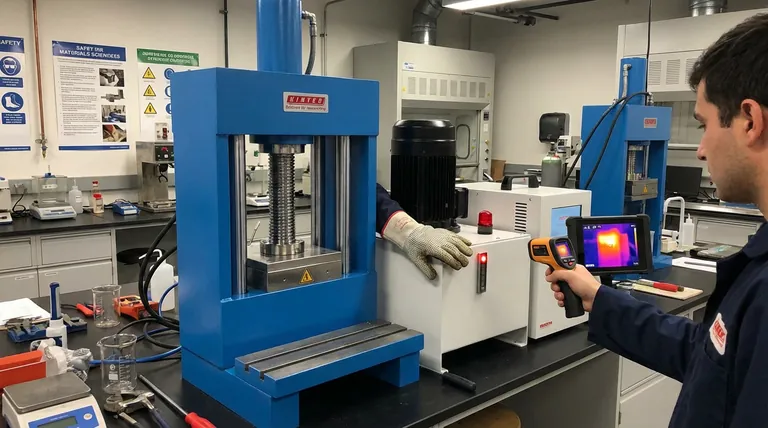
It’s a familiar scenario in many labs. You’re in the middle of a critical process—compressing a sample, forming a material—and you notice the hydraulic press is struggling. It feels sluggish, the pressure builds slowly, and a hand placed on the hydraulic power unit reveals an unsettling warmth. The machine isn't just working hard; it feels like it’s running a fever.
Your immediate thought is often a practical one: "Let it cool down for a while." But this nagging issue always returns, a quiet hum of an impending, and likely expensive, problem.
The Costly Cycle of "Cooling Down and Carrying On"
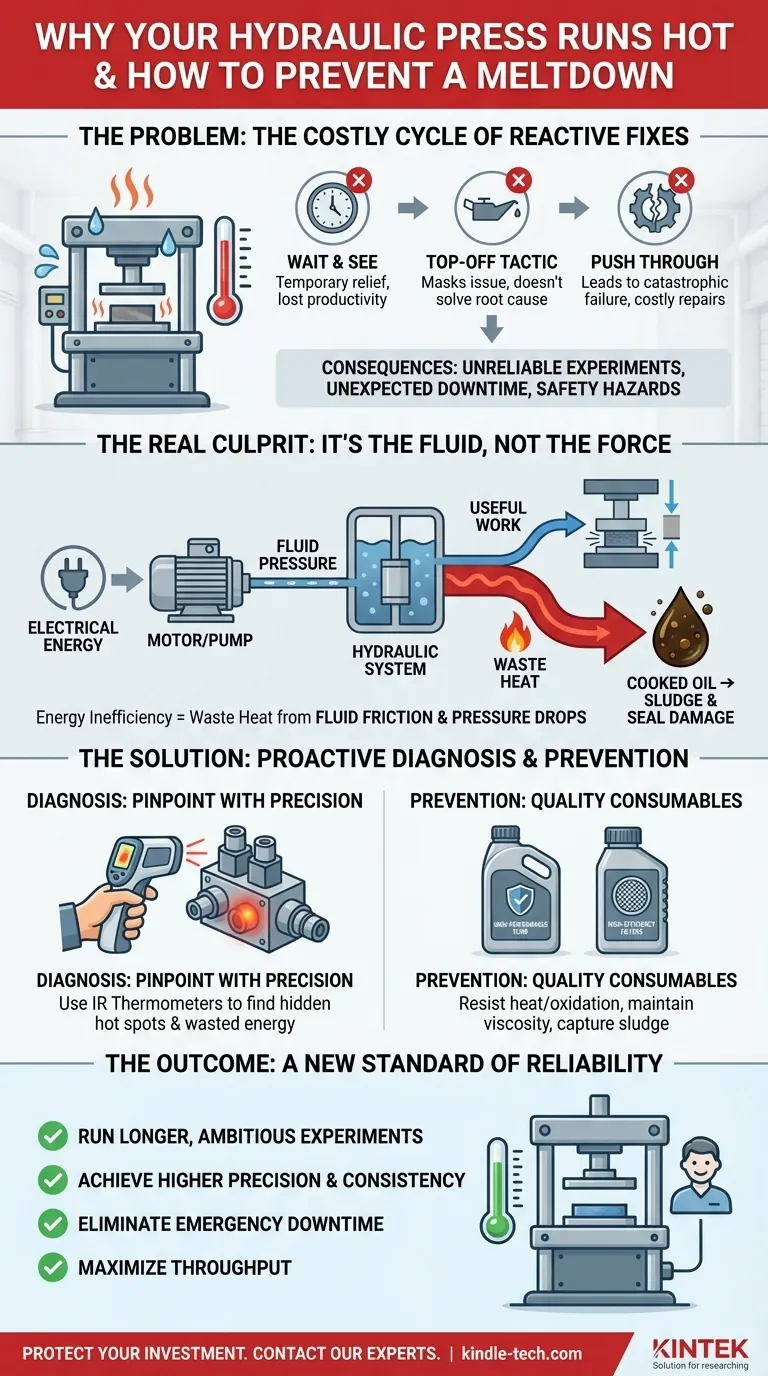
If this scene sounds familiar, you're not alone. Many labs accept a "hot and slow" hydraulic press as an unavoidable reality of aging equipment. The typical responses are often temporary fixes that mask a much deeper issue:
- The "Wait and See" Approach: Pausing work to let the machine cool down. This treats the symptom but ignores the disease, leading to constant interruptions and lost productivity.
- The "Top-Off" Tactic: Adding more hydraulic fluid, assuming the level is just low. While low fluid can cause overheating, it doesn't explain why the system is running hot in the first place.
- The "Push Through" Gamble: Ignoring the heat and hoping the machine makes it through one more cycle.
This cycle of makeshift solutions does more than just waste time. It has direct, negative business consequences. Experiments become unreliable as the press fails to deliver consistent force. Project timelines are derailed by unexpected downtime. And eventually, the temporary problem becomes a permanent one: a catastrophic failure that results in a multi-thousand-dollar repair bill for a new pump or a complete seal replacement, not to mention the safety hazard of a ruptured high-pressure hose.
The Real Culprit: It's Not the Force, It's the Fluid
Here is the critical turning point in understanding this problem: The heat is not a byproduct of the immense force the press generates. The large steel frame and ram are often near room temperature. The real drama—the source of the destructive heat—is happening out of sight, within the hydraulic fluid itself.
From Wasted Energy to Dangerous Heat
A hydraulic system is an energy conversion machine. It converts electrical energy (from the motor) into mechanical energy (the pump) and then into fluid pressure. According to the laws of physics, no energy conversion is 100% efficient. Every bit of inefficiency, every watt of lost energy, is converted directly into waste heat.
Think of it this way: The heat is a distress signal. It’s the system screaming that it's wasting energy. This waste primarily comes from two sources:
- Fluid Friction: As oil is forced through narrow hoses, tight bends, and complex valve blocks, friction generates heat.
- Pressure Drops: The single biggest offender. When fluid under high pressure is forced through a restriction (like a partially open valve or a pressure relief valve) without performing useful work, that pressure energy is converted almost entirely into heat. It's like flooring the gas pedal in your car while it's in neutral—all noise and heat, no movement.
This is why the "wait and see" approach is so dangerous. Letting the system cool down is like taking a painkiller for a broken bone. It may offer temporary relief, but the underlying damage is actively getting worse. The heat is relentlessly cooking your hydraulic oil, turning it from a life-giving lubricant into a thick, damaging sludge that clogs the system's arteries and hardens its vital seals.
Moving from Guesswork to Diagnosis: The Right Tools
To truly break this destructive cycle, you must move from guessing at symptoms to diagnosing the root cause. This requires seeing what is invisible to the naked eye. To solve a problem rooted in thermal inefficiency, you need to be able to measure temperature with precision.
This is where the right tools, born from a deep understanding of the problem, become indispensable. It's not about adding another complicated procedure to your workflow; it's about making a strategic shift from reactive repair to intelligent, predictive maintenance.
Pinpointing the Problem with Precision
Instead of just knowing your system is "hot," you need to know where it's hot. A non-contact infrared thermometer is the ideal diagnostic tool for this. By scanning the components of your Hydraulic Power Unit, you can instantly see the thermal landscape. Is the entire unit warm, or is a single relief valve 30°C hotter than everything around it? A localized hot spot is a clear signpost pointing directly to the faulty component, telling you exactly where energy is being wasted. You’ve just replaced a costly guessing game with a fast, data-driven diagnosis.
Administering the Cure with Quality Consumables
Once you’ve identified the "why," the "what" becomes clear. Preventing thermal breakdown is the goal. Using high-performance hydraulic fluids designed to resist high temperatures and oxidation is your first line of defense. These advanced fluids maintain their optimal viscosity (thickness) even when things get warm, ensuring proper lubrication and preventing the internal "leaks" that make a system feel sluggish. Coupling this with high-efficiency filters ensures that any sludge or varnish already formed is captured before it can jam a sensitive valve, turning a potential system failure into a routine filter change.
Beyond the Fix: A New Standard of Reliability
When you gain control over your hydraulic system's thermal health, a fundamental shift occurs. The press is no longer a source of anxiety and unpredictable delays. It becomes a reliable, consistent, and safe tool that empowers your work.
With a cool, efficient system, you can:
- Run Longer, More Ambitious Experiments: Start a multi-day material stress test with confidence, knowing your equipment won't falter.
- Achieve Higher Precision: A system operating at its ideal temperature delivers perfectly consistent pressure, cycle after cycle, leading to more repeatable and trustworthy results.
- Eliminate Emergency Downtime: You can move from crisis-driven repairs to a predictable maintenance schedule. Instead of replacing a $5,000 pump on a weekend, you're proactively replacing a $50 seal during planned downtime.
- Maximize Throughput: More uptime directly translates to more samples processed, more tests completed, and more progress made.
Your hydraulic press is a cornerstone of your lab's capabilities. Ensuring its health is not just about maintenance; it's about protecting your investment and unlocking its full potential. Stop letting heat dictate your lab's schedule and budget. Let's discuss how the right monitoring tools and maintenance supplies can transform your equipment from a liability into a reliable asset. Contact Our Experts.
Visual Guide
Related Products
- Heated Hydraulic Press Machine with Heated Plates for Vacuum Box Laboratory Hot Press
- Automatic High Temperature Heated Hydraulic Press Machine with Heated Plates for Lab
- Manual High Temperature Heated Hydraulic Press Machine with Heated Plates for Lab
- Heated Hydraulic Press Machine with Integrated Manual Heated Plates for Lab Use
- 24T 30T 60T Heated Hydraulic Press Machine with Heated Plates for Laboratory Hot Press
Related Articles
- Why Your Composite and Polymer Parts Keep Failing: The Secret Is Simultaneous Heat and Pressure
- The Physics of Flawless Materials: Deconstructing the Hydraulic Hot Press
- Hydraulic Hot Press: Principles, Components, Features, Advantages, and Applications
- More Than a Squeeze: The Physics and Psychology of the Hydraulic Hot Press
- Comprehensive Guide to Hydraulic Hot Press: Function, Features and Applications



















