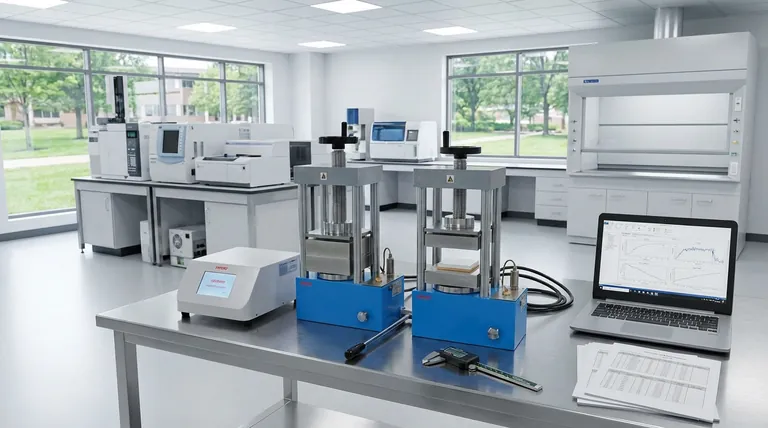
It’s a familiar scene in many labs and production facilities: a powerful hydraulic press sits at the center of the workflow, and right next to it, a tray of absorbent pads catching a slow, persistent drip of oil. The air has the faint, metallic scent of hydraulic fluid, and the constant hum of the pump is the background noise of your workday—a sound that translates directly into a higher electricity bill.
You bought the press for its force, but you live with its frustrations. Is this just the cost of doing business?
The Cycle of "Fix and Fail" We All Know
If you're managing a lab or a production line that relies on a hydraulic press, you’re likely caught in a frustrating, expensive loop. The problems feel constant, but unrelated:
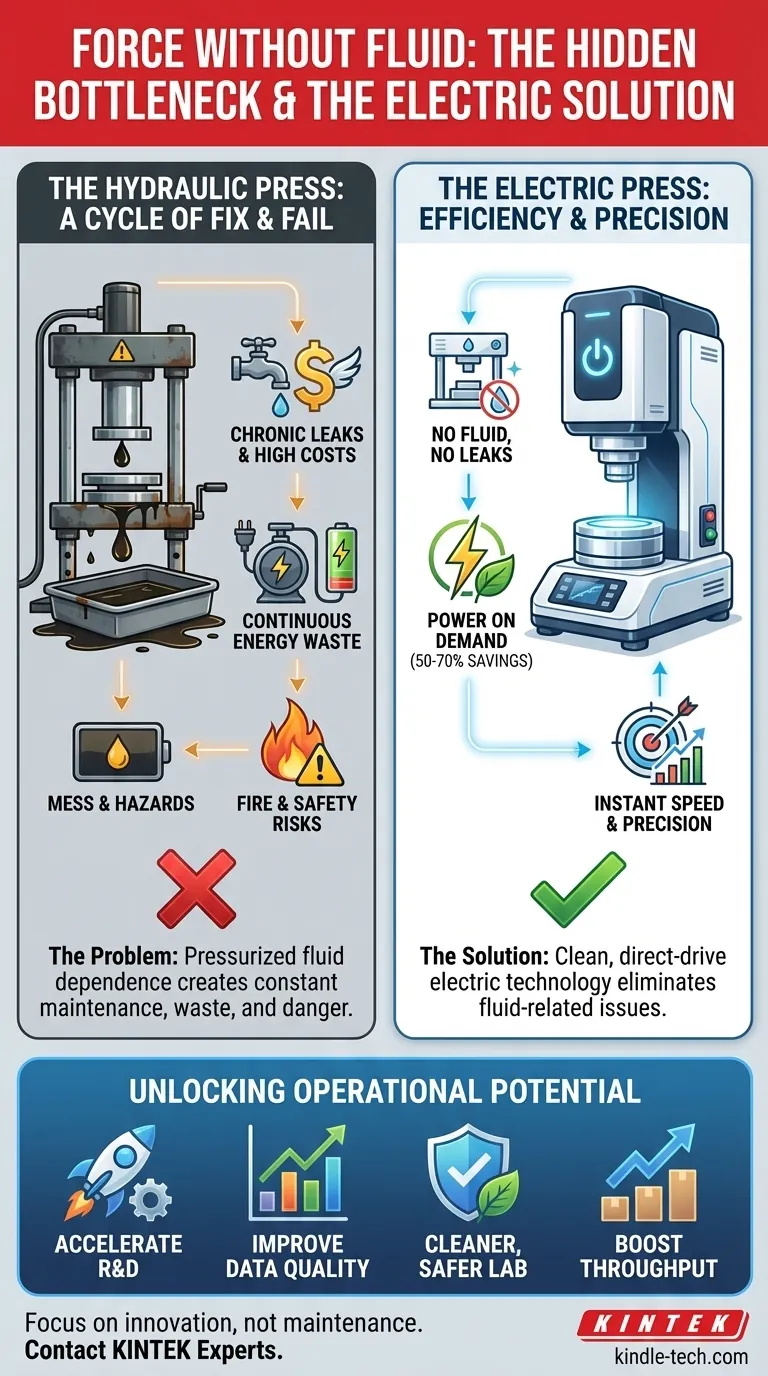
- The Chronic Leak: You replace a seal, and a month later, a hose fitting starts to weep. You fix the fitting, and a new drip appears elsewhere. Each leak means downtime, cleanup costs, and a hazardous slip risk on the floor.
- The Unseen Costs: The pump runs continuously just to keep the system pressurized, consuming significant energy even when the press is idle. You budget for replacement fluid, filters, and hoses, treating them as unavoidable operational expenses.
- The Lingering Safety Concern: Standard hydraulic fluid is flammable. Every time there's a leak, it introduces a fire hazard, requiring strict protocols and creating a constant, low-level anxiety, especially in environments with potential ignition sources.
These aren't minor inconveniences. They translate into real business consequences: project delays due to unexpected maintenance, strained budgets from high energy and consumable costs, and the ever-present risk of a safety incident that could halt operations entirely. You’ve likely tried using higher-grade seals or more expensive, fire-resistant fluids, only to find you’re treating symptoms, not the actual disease.
The Real Culprit: It's Not a Faulty Part, It's the Fluid Itself
Here is the turning point: The problem isn't that you have a "bad" hydraulic press. The problem is that the very principle it operates on—using pressurized fluid to generate force—is inherently flawed for many modern, precision-driven applications.
The hydraulic fluid is both the machine's greatest strength and its fundamental weakness.
Think about it:
- Why is it slow? To generate force, a pump must move a large volume of oil through hoses and into a cylinder. This physical displacement takes time, creating a built-in speed limit that can’t be overcome, bottlenecking high-volume workflows.
- Why is it inefficient? To be ready for the next cycle, the pump must keep the entire system under pressure. This is like leaving your car engine running all day just in case you need to drive for two minutes. It's an enormous waste of energy.
- Why does it always leak? A hydraulic system is a network of seals, gaskets, and fittings, all holding back immense pressure. Every single connection point is a potential point of failure over time. Leaks aren’t a sign of poor maintenance; they are an inevitable consequence of the design.
The common "solutions"—patching leaks, absorbing spills, and constantly checking fluid levels—fail because they accept the flawed principle as a given. They are reactive measures that never address the source of the problem: your dependence on a complex, messy, and inefficient fluid-based system.
The Solution: A Tool Designed to Eliminate the Problem
To truly escape this cycle, you don't need a better hose or a different type of oil. You need a system that delivers force without the fluid. You need a tool built on a foundation of efficiency, cleanliness, and safety.
This is where modern electric press systems, a core offering in KINTEK's portfolio of advanced lab equipment, change the game. They aren't just an "alternative" to hydraulic presses; they are the logical evolution, designed specifically to eliminate the root causes of hydraulic failure.
An electric press replaces the entire hydraulic apparatus—the pump, reservoir, hoses, fluid, and valves—with a clean, simple, and powerful electric servo-motor and actuator.
Here’s how this directly solves the core problems:
- No Fluid, No Leaks: This is the most obvious and impactful benefit. By removing hydraulic oil entirely, you eliminate the risk of leaks, spills, and fluid-related fire hazards. Your lab stays cleaner, safer, and you completely remove the cost of hydraulic fluid and cleanup consumables.
- Power on Demand: An electric press consumes significant power only during the stroke itself. When idle, it uses virtually no energy. This can reduce energy consumption by 50-70% or more compared to a hydraulic system, directly lowering your operational costs.
- Speed and Precision: With a direct-drive electric motor, you get instant response, higher ram speeds, and unparalleled control over force, speed, and position. This is ideal for applications requiring repeatable precision, from materials testing to small-parts assembly.
Beyond the Fix: Unlocking New Operational Potential
Once you are no longer spending time and money managing a fluid-based system, you unlock a new level of operational capability. What was once a problematic workhorse becomes a catalyst for innovation and efficiency.
With a clean, reliable, and precise electric press, you can now:
- Accelerate R&D and Prototyping: Run more tests in less time with faster cycle rates and immediate, precise adjustments.
- Improve Data Quality: Achieve highly repeatable force application, ensuring your test results in materials science or quality control are consistent and reliable.
- Run a Cleaner, Safer Lab: Drastically reduce workplace hazards and environmental impact, supporting your organization's safety and sustainability goals.
- Boost Throughput: For production-oriented labs, the increase in speed and reduction in downtime means you can simply get more work done, increasing capacity without increasing footprint.
Freeing your team from the constant burden of hydraulic maintenance doesn't just fix a machine; it re-focuses their energy on the valuable work that drives your business forward.
Solving your press issues is just one step toward a more efficient and reliable laboratory. If your goals involve improving safety, reducing operational costs, and accelerating your project timelines, our team has the expertise to guide you. Let's discuss the specific challenges in your workflow and find a solution that works for you. Contact Our Experts.
Visual Guide
Related Products
- Heated Hydraulic Press Machine with Heated Plates for Vacuum Box Laboratory Hot Press
- Automatic High Temperature Heated Hydraulic Press Machine with Heated Plates for Lab
- Manual High Temperature Heated Hydraulic Press Machine with Heated Plates for Lab
- Heated Hydraulic Press Machine with Integrated Manual Heated Plates for Lab Use
- 24T 30T 60T Heated Hydraulic Press Machine with Heated Plates for Laboratory Hot Press
Related Articles
- Why Your Composite and Polymer Parts Keep Failing: The Secret Is Simultaneous Heat and Pressure
- The Physics of Flawless Materials: Deconstructing the Hydraulic Hot Press
- Hydraulic Hot Press: Principles, Components, Features, Advantages, and Applications
- More Than a Squeeze: The Physics and Psychology of the Hydraulic Hot Press
- Comprehensive Guide to Hydraulic Hot Press: Function, Features and Applications



















