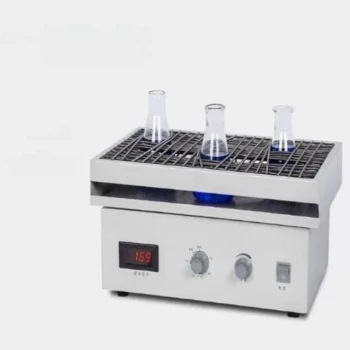
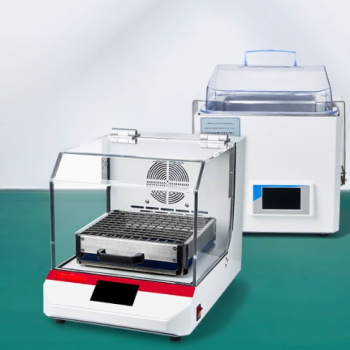
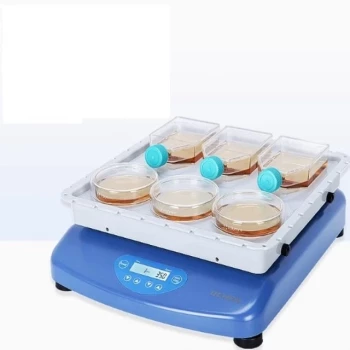
The constant temperature shaker is essential for standardizing the physical and thermal environment of acetaminophen (APAP) degradation. It provides a stable thermal environment and continuous mechanical power to the catalytic system, ensuring that reaction data reflects chemical kinetics rather than physical limitations.
By maintaining a precise temperature and providing high-frequency oscillation, the shaker eliminates mass transfer resistance and ensures thorough contact between catalysts, activators, and the APAP solution. This standardization is critical for obtaining accurate, repeatable, and scientifically valid degradation kinetic data.
Eliminating Mass Transfer Resistance in Heterogeneous Reactions
Maximizing Contact Frequency between Reactants
In APAP degradation, the reaction often involves solid catalysts (such as modified gasification slag or biochar) and liquid pollutants. The shaker provides the mechanical power necessary to keep these catalyst particles in a suspended state, maximizing the contact frequency between the pollutant molecules and the catalyst surface.
Overcoming Diffusion Barriers
Without constant agitation, a "diffusion layer" can form around catalyst particles, slowing down the reaction rate. The shaker creates a forced convection environment that breaks down these barriers, ensuring that the movement of APAP molecules to the catalyst's active sites is not the rate-limiting step.
Enhancing Fluid Shear and Molecular Diffusion
The specific rotation speed of an orbital shaker generates efficient fluid shear. This mechanical force accelerates molecular diffusion, ensuring that the persulfate activators and the target pollutants are uniformly distributed throughout the reaction vessel.
Establishing Thermodynamic Stability
Maintaining Precise Reaction Temperatures
Chemical degradation rates are highly sensitive to temperature fluctuations. A constant temperature shaker ensures that the entire catalytic reaction occurs under stable thermodynamic conditions, preventing heat-induced variations in reaction speed.
Uniform Energy Distribution
Unlike static incubators, the shaking motion ensures that thermal energy is distributed uniformly throughout the liquid phase. This prevents "hot spots" or cold zones within the flask, which could lead to inconsistent degradation results across different samples.
Supporting Biological and Chemical Synergy
In some experiments involving anaerobic sludge or specific microorganisms, the shaker maintains the optimal biological temperature (e.g., 35°C). This sustains the activity of the microorganisms while simultaneously facilitating the chemical interaction between pollutants and nanoparticles.
Ensuring Data Accuracy and Reproducibility
Reaching Adsorption-Desorption Equilibrium
Before the degradation reaction is initiated (e.g., via light or chemical activation), the shaker is often used for dark oscillation. This ensures that a complete adsorption-desorption equilibrium is reached between the catalyst surface and the APAP molecules, allowing researchers to isolate actual degradation from simple physical adsorption.
Standardizing Kinetic Data
By removing macroscopic mass transfer limitations, the shaker ensures that the measured degradation kinetic data is representative of the catalyst's true performance. This level of control is what allows experiments to be reproduced accurately by other researchers in different laboratory settings.
Understanding the Trade-offs and Limitations
Mechanical Shear and Particle Attrition
While high-frequency oscillation is beneficial for mass transfer, excessive speeds can cause mechanical shear. This may lead to the physical breakdown (attrition) of fragile catalyst particles, potentially changing their surface area and altering the reaction results.
Thermal Calibration and Stability
Not all shakers provide perfectly uniform temperatures across the entire platform. If the equipment is not properly calibrated, flasks located at the edges of the shaker may experience slight temperature variances compared to those in the center, introducing subtle errors into the data.
Evaporation Risks
Extended shaking at elevated temperatures can lead to the evaporation of the solvent. This increases the concentration of both the pollutant and the catalyst, which can artificially inflate the perceived degradation rate if not controlled using sealed vessels or volume adjustments.
How to Apply This to Your Project
When designing an APAP degradation experiment, the configuration of your shaker should align with your specific research objectives.
- If your primary focus is determining true chemical kinetics: Use a high oscillation speed (typically 150–200 rpm) to ensure that all mass transfer resistance is eliminated and the reaction is purely "reaction-controlled."
- If your primary focus is photocatalytic degradation: Prioritize a 30-minute "dark oscillation" phase to reach adsorption-desorption equilibrium before exposing the samples to light.
- If your primary focus is biological/chemical synergy: Set the temperature to the precise growth peak of your microorganisms (e.g., 35°C) and use a moderate shaking speed to avoid damaging delicate microbial structures.
By meticulously controlling the mechanical and thermal input of the shaker, you transform a chaotic physical environment into a precise, measurable chemical system.
Summary Table:
| Feature | Function in APAP Degradation | Benefit to Research |
|---|---|---|
| Mechanical Oscillation | Eliminates mass transfer resistance | Ensures reaction-controlled kinetics |
| Thermal Stability | Maintains uniform energy distribution | Prevents heat-induced data variations |
| Dark Oscillation | Facilitates adsorption-desorption equilibrium | Isolates true degradation from physical adsorption |
| Forced Convection | Breaks down molecular diffusion barriers | Maximizes contact between catalyst and pollutant |
Precision is the foundation of every breakthrough in environmental science. KINTEK specializes in high-performance laboratory equipment designed to standardize your experimental environment. From high-precision shakers and homogenizers that eliminate mass transfer resistance to high-temperature furnaces, reactors, and hydraulic presses for advanced catalyst synthesis, we provide the tools you need for repeatable, scientifically valid results.
Ready to optimize your APAP degradation studies? Contact KINTEK today to discover how our comprehensive range of laboratory equipment and consumables can enhance your research efficiency and data accuracy.
References
- Wenhao Si, Zhanggen Huang. Modified Gasification-Slag-Driven Persulfate Activation for Highly Efficient Degradation of Acetaminophen: N/O Active Site Regulation and Nonradical Oxidation. DOI: 10.3390/catal13121512
This article is also based on technical information from Kintek Solution Knowledge Base .
Related Products
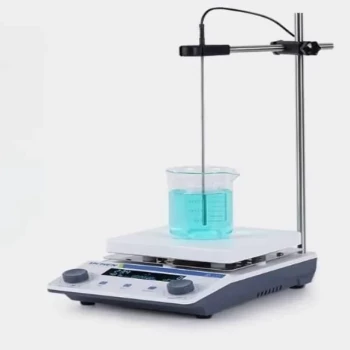
- Laboratory Small Constant Temperature Heated Magnetic Stirrer Heater and Stirrer
- High Temperature Constant Temperature Heating Circulator Water Bath Chiller Circulator for Reaction Bath
- 5L Heating Chilling Circulator Cooling Water Bath Circulator for High and Low Temperature Constant Temperature Reaction
- 50L Chiller Water Bath Cooling Circulator Low Temperature Constant Temperature Reaction Bath
- 10L Heating Chilling Circulator Cooling Water Bath Circulator for High and Low Temperature Constant Temperature Reaction
People Also Ask
- What role does a magnetic stirrer with heating play in ZnO nanoparticle synthesis? Precision Control for Quality Results
- What role does a constant temperature heating magnetic stirrer play in MFC-HAp synthesis? Achieve Material Homogeneity
- What is the function of a laboratory magnetic stirrer in Ni–Cr–P electrodeposition? Optimize Ion Transport & Coating
- Why is a laboratory magnetic stirrer required for benzoic acid esters? Boost Reaction Speed & Yield with High RPM
- What role does a laboratory magnetic stirrer play in TiO2 and TiO2-Ag sol preparation? Master Chemical Kinetics