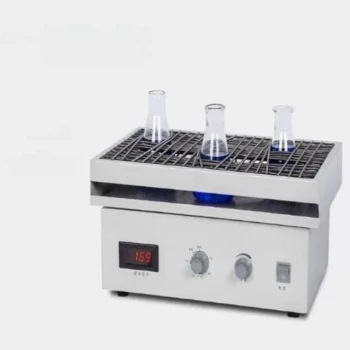
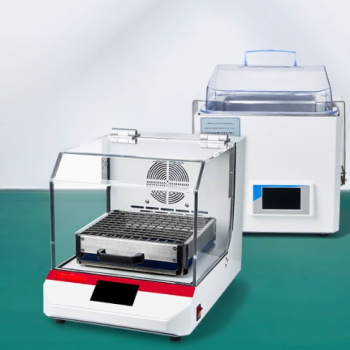
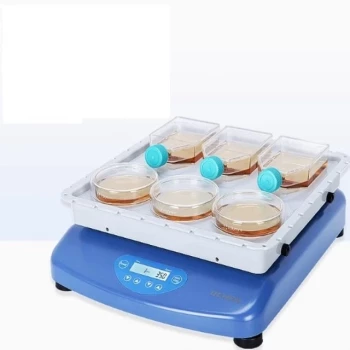
The constant temperature shaker is the engine of uniformity in the silane grafting process. It provides the simultaneous mechanical agitation and thermal stability required to ensure silane molecules, such as APTMS, penetrate and bond evenly across a substrate's surface. By maintaining a dynamic solid-liquid interface, the shaker transforms a static mixture into a highly efficient chemical reaction environment.
The core role of a constant temperature shaker is to eliminate mass transfer resistance and ensure uniform molecular diffusion. This allows silane functional groups to penetrate deep into internal pore structures, resulting in a stable, reproducible, and high-quality grafted layer.
The Mechanics of Surface Functionalization
Enhancing Mass Transfer Efficiency
In a silane coupling reaction, the movement of molecules from the solution to the solid substrate is often the limiting factor. Continuous mechanical agitation (typically around 120 rpm) creates a dynamic environment that significantly increases the efficiency of this transfer. This movement ensures that the silane dispersion remains in constant, high-energy contact with the target surfaces.
Promoting Uniform Diffusion into Porous Structures
For materials like activated porous carbon, the challenge lies in reaching the internal pore surfaces. The shaker provides the kinetic energy necessary for the APTMS functional groups to fully diffuse into deep channels. Without this constant motion, grafting would be limited to the outer shell, leaving the internal volume under-utilized.
Ensuring Molecular Alignment
Consistent oscillation facilitates the uniform arrangement of silanol molecules at the liquid-solid interface. This organized movement is critical for the formation of structurally stable self-assembled monolayers (SAMs). The result is a more resilient and cohesive molecular network compared to static immersion methods.
Thermal and Kinetic Stability
Precision Temperature Control
Silanization is a temperature-sensitive chemical reaction where the rate of grafting is heavily influenced by thermal energy. The shaker maintains a stable thermal environment (often calibrated to 25°C or specific reaction requirements), ensuring that the reaction kinetics remain predictable. This precision is vital for achieving repeatable results across different experimental batches.
Eliminating External Diffusion Resistance
In heterogeneous reactions, a stagnant layer can form around the adsorbent or substrate particles, slowing down the reaction. The shaker’s mechanical power breaks down this diffusion layer resistance, allowing for maximum contact between the adsorbate and the substrate. This is essential for researchers to obtain accurate data regarding equilibrium times and reaction rates.
Maintaining Particle Suspension
For nano-activated carbon or biochar, preventing sedimentation is crucial for a successful reaction. The shaker keeps these particles uniformly suspended in the solution, preventing them from settling at the bottom of the vessel. This suspension ensures that the entire surface area of the material is available for the grafting process.
Understanding the Trade-offs
The Risk of Excessive Shear Force
While agitation is necessary, excessively high rotation speeds can introduce high shear forces. In delicate systems, such as certain fungal cultures or fragile porous structures, this can lead to the physical degradation of the material. Finding the balance between "thorough mixing" and "material integrity" is a critical calibration step.
Energy Consumption and Equipment Wear
Running shakers for extended grafting periods (which can last several hours) increases energy consumption and mechanical wear. Over-reliance on high-frequency oscillation can lead to equipment fatigue without necessarily providing a proportional increase in grafting density. Optimization of the rotation-to-reaction-time ratio is necessary for operational efficiency.
How to Apply This to Your Project
When integrating a constant temperature shaker into your silane grafting workflow, consider your primary objective:
- If your primary focus is Maximum Grafting Density: Prioritize a steady, moderate rotation speed (120–160 rpm) over a longer duration to ensure deep pore penetration.
- If your primary focus is Kinetic Accuracy: Ensure the temperature control is calibrated to within ±1°C to eliminate thermal fluctuations as a variable in your rate equations.
- If your primary focus is Substrate Integrity: Use lower-frequency orbital oscillation to provide uniform contact without introducing damaging shear forces to sensitive materials.
By mastering the balance of thermal stability and mechanical agitation, you ensure that the silane coupling agent performs as a bridge, rather than a barrier, to your material's performance.
Summary Table:
| Key Role | Mechanism | Benefit |
|---|---|---|
| Mass Transfer | Continuous Mechanical Agitation | Increases contact energy and silane-substrate interaction. |
| Porous Diffusion | Kinetic Energy Generation | Ensures silane penetrates deep into internal pore structures. |
| Thermal Stability | Precision Temp Control | Guarantees predictable reaction kinetics and repeatability. |
| Particle Suspension | Dynamic Oscillation | Prevents sedimentation to maximize active surface area. |
Optimize Your Material Research with KINTEK
Achieve superior grafting results and chemical precision with KINTEK’s high-performance constant temperature shakers and oscillators. Whether you are functionalizing porous carbon or developing advanced polymers, our equipment provides the exact mechanical and thermal stability your process demands.
KINTEK specializes in a comprehensive range of laboratory solutions, including:
- High-Temperature Furnaces: Muffle, tube, and vacuum systems.
- Reaction Systems: High-pressure reactors, autoclaves, and electrolytic cells.
- Sample Preparation: Crushing, milling, and hydraulic presses.
- Cooling & Mixing: ULT freezers, freeze dryers, and advanced homogenizers.
Enhance your lab's efficiency today. Contact KINTEK for a tailored quote and expert support to find the perfect equipment and consumables for your specific application!
References
- Siqi Lv, Zichuan Ma. Removal of Hexamethyldisiloxane via a Novel Hydrophobic (3–Aminopropyl)Trimethoxysilane-Modified Activated Porous Carbon. DOI: 10.3390/molecules28186493
This article is also based on technical information from Kintek Solution Knowledge Base .
Related Products
- Laboratory Small Constant Temperature Heated Magnetic Stirrer Heater and Stirrer
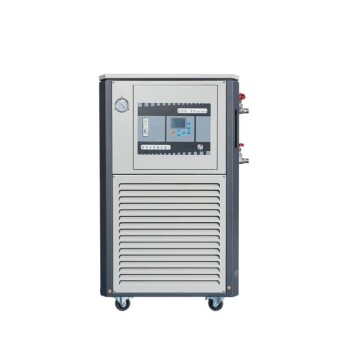
- High Temperature Constant Temperature Heating Circulator Water Bath Chiller Circulator for Reaction Bath
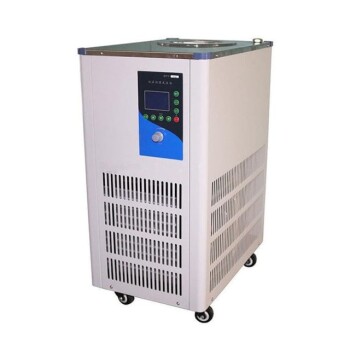
- 5L Heating Chilling Circulator Cooling Water Bath Circulator for High and Low Temperature Constant Temperature Reaction
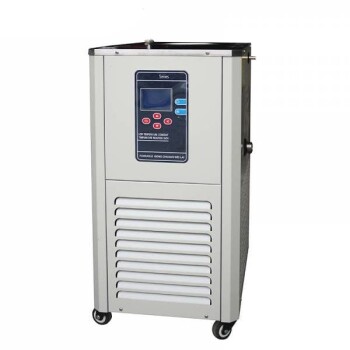
- 50L Chiller Water Bath Cooling Circulator Low Temperature Constant Temperature Reaction Bath
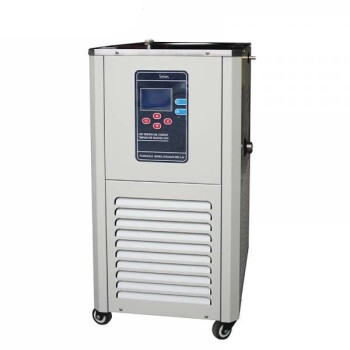
- 10L Heating Chilling Circulator Cooling Water Bath Circulator for High and Low Temperature Constant Temperature Reaction
People Also Ask
- What role does a magnetic stirrer with heating play in ZnO nanoparticle synthesis? Precision Control for Quality Results
- What role does a constant temperature heating magnetic stirrer play in MFC-HAp synthesis? Achieve Material Homogeneity
- What is the function of a laboratory magnetic stirrer in Ni–Cr–P electrodeposition? Optimize Ion Transport & Coating
- Why is a laboratory magnetic stirrer required for benzoic acid esters? Boost Reaction Speed & Yield with High RPM
- What role does a laboratory magnetic stirrer play in TiO2 and TiO2-Ag sol preparation? Master Chemical Kinetics