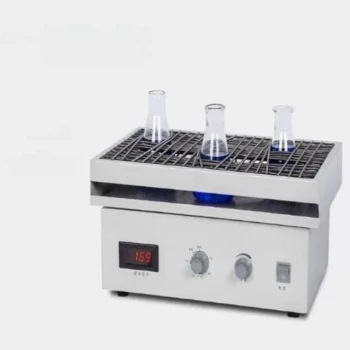
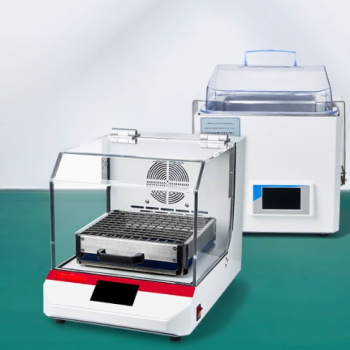
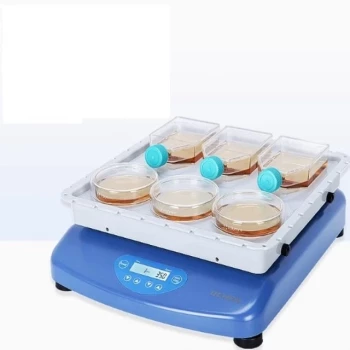
The laboratory constant temperature shaker is the primary tool for pharmaceutical adsorption kinetic studies because it provides the simultaneous thermal stability and mechanical agitation required to accurately measure how molecules bind to surfaces over time. By keeping adsorbent particles in a state of continuous suspension and eliminating external mass transfer resistance, it ensures that experimental data reflects the true chemical interaction rates rather than physical limitations.
A constant temperature shaker creates a uniform dynamic environment that removes "noise" from adsorption experiments, such as temperature fluctuations and local concentration gradients. This allows researchers to isolate fundamental kinetic parameters and determine the precise time required for a pharmaceutical solution to reach equilibrium with an adsorbent.
Eliminating Physical Barriers to Adsorption
Overcoming Diffusion Layer Resistance
In a stagnant solution, a thin "water film" or diffusion layer forms around adsorbent particles, slowing the movement of molecules to the binding sites. The mechanical force of the shaker breaks down this layer, ensuring that external diffusion resistance does not become the rate-limiting step of the experiment.
Maintaining Uniform Particle Suspension
For adsorption to be measured accurately, the maximum surface area of the adsorbent must be available to the pharmaceutical molecules. Continuous agitation keeps particles suspended throughout the liquid phase, preventing them from settling at the bottom of the flask where they would be shielded from contact.
Preventing Local Concentration Gradients
Without constant mixing, the concentration of the pharmaceutical compound would decrease rapidly near the surface of the adsorbent while remaining high elsewhere. The shaker maintains a homogeneous solution, ensuring that every particle is exposed to the same concentration of the adsorbate at any given time.
The Importance of Thermal Stability
Impact on Kinetic Reaction Rates
Adsorption is a temperature-sensitive process; even minor fluctuations can significantly alter the speed at which molecules bind to a surface. Precise thermal control (e.g., ±1°C) allows researchers to obtain repeatable kinetic data that is not skewed by ambient temperature changes in the laboratory.
Calculating Thermodynamic Parameters
By running experiments at multiple fixed temperatures using the shaker’s heating or cooling functions, researchers can calculate critical thermodynamic values like enthalpy and entropy. This information is vital for understanding whether the adsorption process is exothermic or endothermic and how it will behave in different environments.
Simulating Physiological Conditions
In pharmaceutical research, it is often necessary to simulate the human body's environment. Constant temperature shakers allow for stable incubation at 37°C, providing a realistic model for how drug carriers or toxins might interact with adsorbents within a biological system.
Understanding the Trade-offs and Pitfalls
Mechanical Shear and Particle Integrity
While high rotation speeds (e.g., 200+ rpm) improve mass transfer, excessive mechanical force can lead to particle attrition. If the adsorbent particles break into smaller fragments during the test, the surface area increases artificially, leading to inaccurate kinetic results.
Heat Transfer Lags in Large Volumes
The shaker's sensor measures the temperature of the air or water bath, not necessarily the center of the reaction flask. In large-volume studies, there may be a significant time lag before the solution reaches the setpoint, which can introduce errors in the early stages of kinetic monitoring.
Evaporation Risks in Long-Term Studies
Many adsorption studies require 24 to 48 hours to reach equilibrium. Continuous shaking at elevated temperatures can lead to solvent evaporation, which increases the concentration of the pharmaceutical compound and invalidates the final adsorption capacity data.
Optimizing Your Adsorption Study Workflow
Making the Right Choice for Your Goal
- If your primary focus is obtaining pure kinetic rates: Prioritize a shaker with high-precision RPM control to ensure that external mass transfer resistance is fully eliminated without damaging your adsorbent.
- If your primary focus is thermodynamic modeling: Invest in a unit with a refrigerated cooling system to allow for accurate data collection across a wide range of temperatures (e.g., 5°C to 60°C).
- If your primary focus is long-term equilibrium studies: Use sealed containers or a shaker with humidity control to prevent evaporation from altering the concentration of your test solution over 24-48 hour periods.
By carefully balancing agitation speed and thermal precision, you can transform a standard laboratory shaker into a high-fidelity instrument for characterizing pharmaceutical molecular interactions.
Summary Table:
| Feature | Role in Adsorption Kinetics | Key Research Benefit |
|---|---|---|
| Mechanical Agitation | Overcomes diffusion layer resistance and particle settling | Reflects true chemical interaction rates |
| Thermal Stability | Maintains precise temperature (e.g., 37°C ±1°C) | Accurate enthalpy/entropy and physiological modeling |
| Homogeneous Mixing | Prevents local concentration gradients around adsorbents | Ensures uniform exposure for every particle |
| Variable RPM Control | Eliminates external mass transfer resistance | Isolates fundamental kinetic parameters |
Elevate Your Pharmaceutical Research with KINTEK
Precision is the backbone of reliable kinetic data. KINTEK specializes in high-performance laboratory equipment designed to meet the rigorous demands of pharmaceutical and material science.
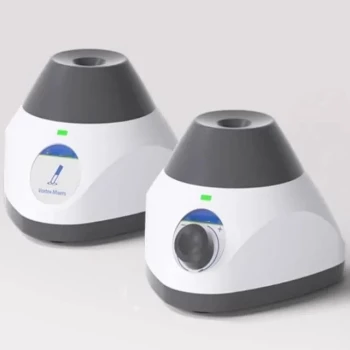
From advanced laboratory shakers and homogenizers that ensure uniform reaction environments to cooling solutions (ULT freezers, freeze dryers) and high-temperature furnaces, our portfolio supports every stage of your workflow. Whether you are modeling drug delivery or developing new adsorbents, KINTEK provides the reliability, thermal stability, and mechanical precision you need.
Ready to optimize your lab's performance? Contact our experts today to find the perfect solution!
References
- Iloh Emmanuel Onyema. Percentage adsorption of Glipizide (GLI) from deionized water and sPLW using OAC, HAC, and BAC prepared with velvet tamarind shell. DOI: 10.5281/zenodo.7810424
This article is also based on technical information from Kintek Solution Knowledge Base .
Related Products
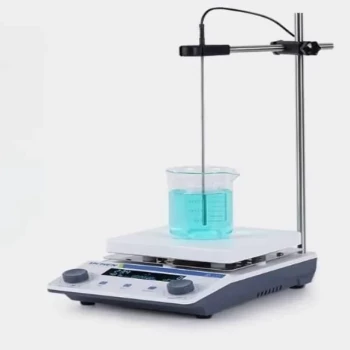
- Laboratory Small Constant Temperature Heated Magnetic Stirrer Heater and Stirrer
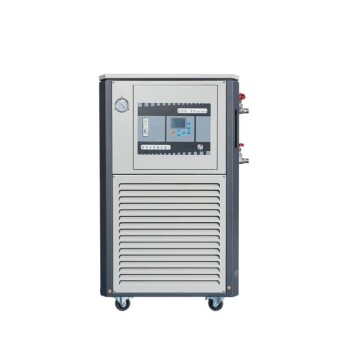
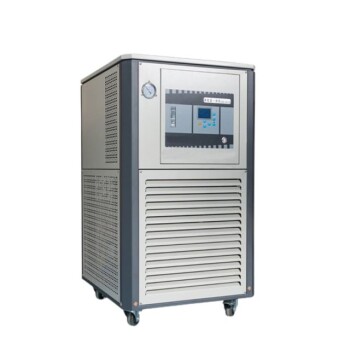
- High Temperature Constant Temperature Heating Circulator Water Bath Chiller Circulator for Reaction Bath
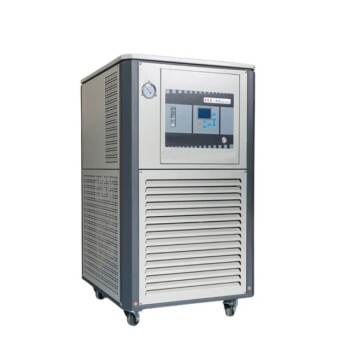
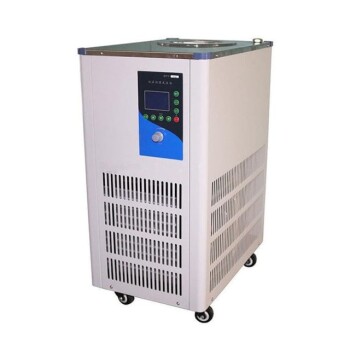
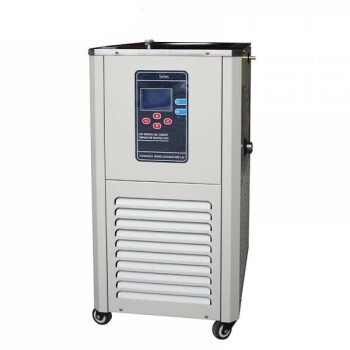
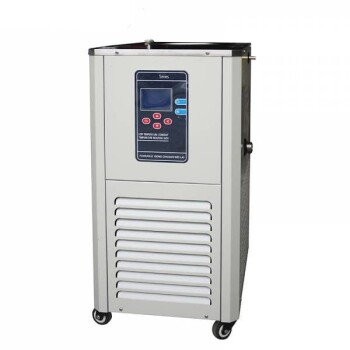
- 5L Heating Chilling Circulator Cooling Water Bath Circulator for High and Low Temperature Constant Temperature Reaction
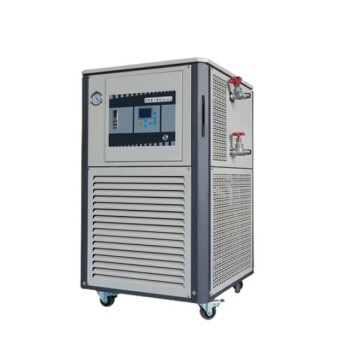
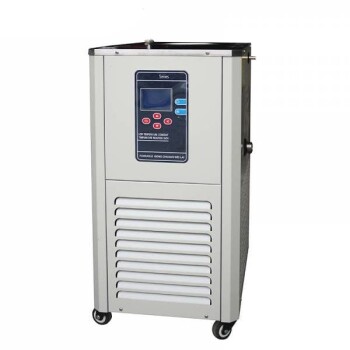
- 50L Chiller Water Bath Cooling Circulator Low Temperature Constant Temperature Reaction Bath
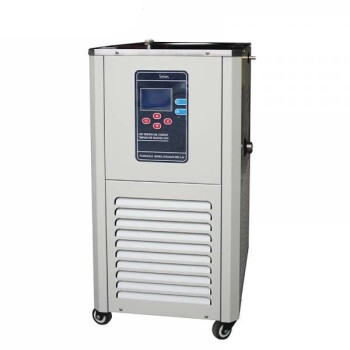
- 10L Heating Chilling Circulator Cooling Water Bath Circulator for High and Low Temperature Constant Temperature Reaction
People Also Ask
- What role does a magnetic stirrer with heating play in ZnO nanoparticle synthesis? Precision Control for Quality Results
- What role does a constant temperature heating magnetic stirrer play in MFC-HAp synthesis? Achieve Material Homogeneity
- What is the function of a laboratory magnetic stirrer in Ni–Cr–P electrodeposition? Optimize Ion Transport & Coating
- Why is a laboratory magnetic stirrer required for benzoic acid esters? Boost Reaction Speed & Yield with High RPM
- What role does a laboratory magnetic stirrer play in TiO2 and TiO2-Ag sol preparation? Master Chemical Kinetics