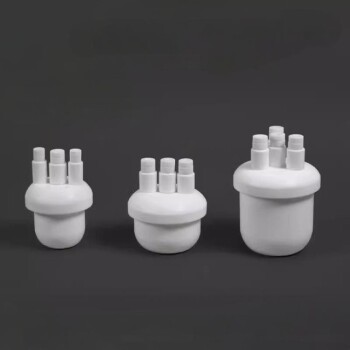
The role of a Teflon-lined stainless steel high-pressure reactor is to provide a sealed, chemically inert environment that facilitates the precise synthesis of alpha-Mn2O3 through solvothermal or hydrothermal processes. It enables controlled crystal growth by maintaining high temperatures and pressures, allowing for specific catalyst morphologies while preventing contamination from the reactor's metal body.
The Teflon-lined high-pressure reactor acts as a precision "pressure cooker" for chemical synthesis, allowing researchers to manipulate the morphology and crystallinity of alpha-Mn2O3 by controlling the subcritical state of the reaction solvent. Its dual-material design combines the structural strength of steel with the chemical resistance of PTFE to ensure product purity.
Facilitating the Hydrothermal and Solvothermal Process
Creating Subcritical Conditions
The primary function of the reactor is to create a sealed environment where solvents like water or ethanol can be heated beyond their boiling points. This creates high internal pressure, significantly enhancing the penetration and dissolution capabilities of the solvent.
Driving Uniform Nucleation
Under these high-pressure conditions, manganese precursors undergo thorough dissolution and uniform nucleation. This ensures that the resulting manganese oxide nanoparticles grow consistently within the reaction framework, leading to a more stable catalyst.
Enabling Precursor Coordination
The reactor provides the necessary energy and pressure for metal ions and organic ligands to coordinate effectively. This is essential for forming Metal-Organic Framework (MOF) intermediates or specific alpha-Mn2O3 phases that require stable, high-energy environments to crystallize.
Precision Control of Catalyst Morphology
Guiding Crystal Growth
By adjusting the reaction temperature and pressure within the reactor, researchers can guide crystal growth along specific directions. This level of control enables the production of varied morphologies, including cubes, truncated octahedrons, and octahedrons.
Influencing Recrystallization
The controlled environment facilitates the dissolution and recrystallization of manganese precursors in specific solvents such as ethanol or butanol. This process is critical for achieving high crystallinity and defined crystal planes, which directly impact the catalyst's performance.
Morphology-Specific Performance
Specific shapes, such as flower-like nanosheets or octahedral structures, are achieved by managing the decomposition of precursors (like thiourea or manganese salts) at precise pressures. The reactor ensures these conditions remain constant throughout the synthesis duration.
Ensuring Chemical Stability and Purity
Prevention of Metal Ion Contamination
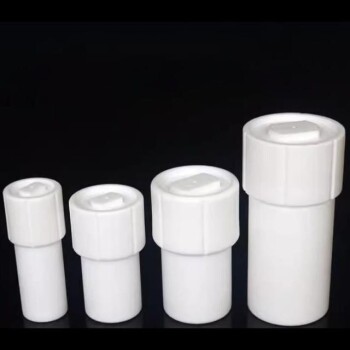
The Teflon (PTFE) liner acts as a barrier between the reaction solution and the stainless steel body. This prevents metal ions from the reactor wall from leaching into the solution, ensuring the final alpha-Mn2O3 is of high purity.
Resistance to Corrosive Reagents
Synthesis often involves strong oxidizing agents, corrosive organic solvents, or acidic components like glacial acetic acid. The Teflon liner offers exceptional chemical stability, protecting the structural integrity of the stainless steel shell from corrosion.
Maintaining a Closed System
The reactor’s ability to remain perfectly sealed prevents the loss of volatile solvents or reagents during long reaction times. This closed-loop system ensures that the stoichiometry of the reaction remains consistent from start to finish.
Understanding the Trade-offs and Limitations
Temperature Constraints
While the stainless steel shell can withstand extreme heat, the Teflon liner has a maximum operating temperature, typically around 200°C to 250°C. Exceeding these limits can lead to the deformation or "creeping" of the liner, potentially compromising the seal.
Thermal Lag and Heat Transfer
The combination of a thick steel wall and a plastic liner creates thermal insulation, meaning the internal reaction temperature may lag behind the oven temperature. Precise calibration is required to ensure the internal precursors reach the intended thermal state.
Cooling and Pressure Risks
Rapid cooling of the reactor can cause pressure differentials that damage the liner or affect crystal formation. Controlled, gradual cooling is often necessary to maintain the structural integrity of the synthesized alpha-Mn2O3 catalysts.
How to Apply This to Your Project
Making the Right Choice for Your Goal
- If your primary focus is Morphology Control: Use the reactor to precisely tune temperature and pressure variables to favor specific crystal planes like the (111) or (100) facets.
- If your primary focus is High Purity: Ensure the Teflon liner is inspected for scratches or wear before each run to prevent iron or nickel contamination from the steel shell.
- If your primary focus is Scalability: Monitor the fill degree of the liner (typically 60-80%) to ensure there is enough headspace for pressure buildup without risking a safety vent.
By mastering the high-pressure environment of the Teflon-lined reactor, you can achieve the phase purity and morphological precision required for advanced alpha-Mn2O3 catalytic applications.
Summary Table:
| Feature | Role in alpha-Mn2O3 Synthesis | Key Benefit |
|---|---|---|
| PTFE (Teflon) Liner | Provides a chemically inert barrier | Prevents metal ion contamination and resists corrosion |
| Stainless Steel Body | Maintains high-pressure environment | Enables hydrothermal synthesis above boiling points |
| Morphology Control | Regulates crystal growth directions | Facilitates shapes like cubes, octahedrons, and nanosheets |
| Sealed Environment | Prevents loss of volatile solvents | Ensures uniform nucleation and consistent stoichiometry |
| Temperature Stability | Controls thermal energy for crystallization | Enhances phase purity and crystallinity of the catalyst |
Elevate Your Synthesis Precision with KINTEK
Achieving the perfect morphology and phase purity in alpha-Mn2O3 catalysts requires equipment that can handle the heat and pressure without compromising on purity. KINTEK specializes in advanced laboratory solutions, offering a robust range of high-temperature high-pressure reactors and autoclaves designed specifically for hydrothermal and solvothermal research.
Our reactors, combined with our premium consumables like PTFE products, ceramics, and crucibles, provide the controlled environment you need for consistent, repeatable results. Whether you are a researcher focused on crystal plane engineering or a laboratory manager scaling up production, our team is ready to support your goals with reliable, high-performance equipment.
Ready to optimize your catalyst synthesis? Contact KINTEK today for a tailored consultation and discover how our high-pressure solutions can drive your innovation forward.
References
- Wangwang Liu, Wei An. Boosting Catalytic Combustion of Ethanol by Tuning Morphologies and Exposed Crystal Facets of α-Mn2O3. DOI: 10.3390/catal13050865
This article is also based on technical information from Kintek Solution Knowledge Base .
Related Products
- Stainless High Pressure Autoclave Reactor Laboratory Pressure Reactor
- Custom PTFE Teflon Parts Manufacturer for Reagent Wide Mouth Fine Mouth Sample High Temperature Bottles
- Custom PTFE Teflon Parts Manufacturer for Hydrothermal Synthesis Reactor Polytetrafluoroethylene Carbon Paper and Carbon Cloth Nano-growth
- Mini SS High Pressure Autoclave Reactor for Laboratory Use
- Custom PTFE Teflon Parts Manufacturer for Microwave Digestion Tank
People Also Ask
- Why is a laboratory high-pressure reactor necessary for synthesizing fly ash-based zeolite? Achieve Pure Crystallization
- Why is a laboratory high-pressure reactor used in the hydrothermal synthesis of hydroxyapatite catalysts?
- What role does a laboratory high-pressure reactor play in the leaching process of spent cathode materials? Optimize Recovery
- What conditions do laboratory high-pressure reactors provide for HTC? Optimize Your Biochar Production Processes
- How are high-pressure reactors used to prepare metaphosphate electrocatalysts? Master In-Situ Precursor Growth