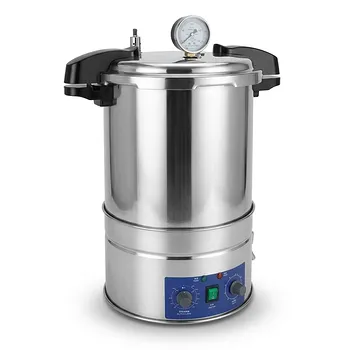
High-pressure reactors act as the fundamental containment system in the Dry Gel Conversion (DGC) method, creating the specific thermodynamic conditions required to synthesize MFI-type zeolites. By sealing the reaction environment, these vessels allow temperatures to reach approximately 453 K while trapping the resulting vapors to generate stable autogenous pressure. This closed system is essential for converting the amorphous dry gel precursor into a crystalline structure.
Core Takeaway The high-pressure reactor is not merely a heating vessel; it is a phase-control chamber that enables the rearrangement of silica sources and templates in a quasi-solid phase. Without the reactor's ability to maintain autogenous pressure at high temperatures, the amorphous dry gel would fail to crystallize into the defined three-dimensional pore structure of MFI zeolites.
The Mechanics of the Reaction Environment
Generating Autogenous Pressure
The primary function of the reactor is to create a closed system that generates pressure internally. Unlike systems that require external gas compression, these reactors rely on autogenous pressure, which is the pressure generated by the vapors of the reaction mixture itself when heated.
This pressure is critical because it forces the chemical components to interact in ways they would not under atmospheric conditions. It creates a dense, energetic environment that promotes the chemical reactivity necessary for zeolite formation.
Maintaining Thermal Stability
Synthesis of MFI-type zeolites via DGC requires significant thermal energy, specifically temperatures around 453 K. The reactor is engineered to withstand these thermal loads continuously.
Standard laboratory glassware cannot safely support these temperatures when combined with the resulting internal pressure. The reactor ensures a uniform thermal field, which is vital for consistent crystallization throughout the gel.
Facilitating the Phase Transition
Quasi-Solid Phase Rearrangement
In the DGC method, the starting material is a "dry gel," not a liquid slurry. The high-pressure reactor creates a moist, pressurized atmosphere that facilitates the rearrangement of the silica source and the organic template in a quasi-solid phase.
This environment allows the amorphous solid to reorganize its atomic structure. The reactor prevents the volatile components (like water or organic templates) from escaping, forcing them to participate in the crystallization process.
Nucleation and Pore Formation
The sealed, alkaline environment provided by the reactor is essential for inducing nucleation. This is the initial step where the disordered components begin to form an ordered crystal lattice.
Over a crystallization period that can range from 24 to 96 hours, the reactor maintains the specific physical conditions required to grow the defined three-dimensional pore structure characteristic of MFI zeolites.
Understanding the Trade-offs
Process Sensitivity
While high-pressure reactors enable the synthesis of high-quality MFI zeolites, they introduce distinct operational constraints. The process is highly sensitive to seal integrity; a minor leak results in a loss of autogenous pressure, which halts the crystallization process and leaves the material amorphous.
Safety and Complexity
Operating at 453 K under pressure requires robust safety protocols and specialized hardware (often autoclaves). This adds complexity compared to open-system synthesis methods. The equipment must be rated for pressures significantly higher than the operating pressure to ensure a safety margin, typically accommodating ranges from 1 to 15 bar.
Making the Right Choice for Your Goal
To optimize your synthesis of MFI-type zeolites using high-pressure reactors, consider the following strategic priorities:
- If your primary focus is Structural Purity: Ensure your reactor is capable of maintaining a precise temperature of 453 K without fluctuation, as thermal uniformity drives the regularity of the pore structure.
- If your primary focus is Reaction Efficiency: Prioritize reactors with superior sealing mechanisms to maximize autogenous pressure, which accelerates the rearrangement of the amorphous gel into crystalline forms.
Ultimately, the high-pressure reactor provides the isolated thermodynamic stage necessary to force solid-state materials into ordered, microporous architectures.
Summary Table:
| Feature | Function in MFI Zeolite Synthesis (DGC Method) |
|---|---|
| Containment | Seals the reaction to create a closed thermodynamic system. |
| Pressure Generation | Maintains autogenous pressure to force chemical interaction in quasi-solid phase. |
| Thermal Support | Withstands continuous 453 K temperatures for consistent crystallization. |
| Phase Control | Prevents volatile escape, ensuring templates reorganize into pore structures. |
| Environment | Provides the alkaline, moist atmosphere necessary for nucleation. |
Elevate Your Material Synthesis with KINTEK Precision
Precision in pressure and temperature is non-negotiable for successful MFI-type zeolite crystallization. At KINTEK, we specialize in providing researchers with high-performance high-temperature high-pressure reactors and autoclaves designed to maintain the rigorous 453 K thermal stability and leak-proof sealing required for Dry Gel Conversion.
From hydrothermal synthesis vessels and corrosion-resistant electrolytic cells to advanced crushing and milling systems, our laboratory equipment empowers your team to achieve superior structural purity and reaction efficiency. Don't let pressure loss compromise your amorphous-to-crystalline transition.
Contact KINTEK today to find the perfect reactor for your lab!
References
- Jianguang Zhang, Chuanbin Wang. A Comparative Study of MFI Zeolite Derived from Different Silica Sources: Synthesis, Characterization and Catalytic Performance. DOI: 10.3390/catal9010013
This article is also based on technical information from Kintek Solution Knowledge Base .
Related Products
- Customizable High Pressure Reactors for Advanced Scientific and Industrial Applications
- Customizable Laboratory High Temperature High Pressure Reactors for Diverse Scientific Applications
- Stainless High Pressure Autoclave Reactor Laboratory Pressure Reactor
- Mini SS High Pressure Autoclave Reactor for Laboratory Use
- High Pressure Laboratory Autoclave Reactor for Hydrothermal Synthesis
People Also Ask
- Graphene Fiber Synthesis: Key High-Pressure Reactor Processing Conditions Explained
- What is the primary function of a high-pressure reactor in NiMoO4 preparation? Optimize Hydrothermal Catalyst Synthesis
- What reactor is used for high pressure reactions? Select the Right Autoclave for Your Lab
- What are the hazards of high pressure reactors? A Guide to Managing Explosive Risks
- What is the key role of a high-pressure reactor in the hydrothermal synthesis of VS2 nanosheets? Precision Nano Growth