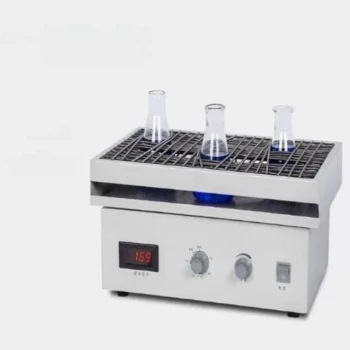
The primary significance of using a rotary shaker is the elimination of liquid-phase diffusion resistance. By providing constant mechanical energy at specific speeds—typically between 150 and 180 rpm—the shaker ensures that Chromium (VI) and Cadmium (II) ions reach the adsorbent’s active sites without being hindered by the surrounding liquid film. This forced convection maximizes the collision frequency between the metal ions and the adsorbent, allowing the system to reach equilibrium quickly and accurately.
A rotary shaker serves as the essential mechanism for ensuring uniform mass transfer during adsorption. By maintaining a constant state of agitation, it ensures that the resulting kinetic data reflects the intrinsic properties of the adsorbent rather than the physical limitations of the liquid environment.
Overcoming Physical Mass Transfer Barriers
Eliminating Liquid Film Resistance
In a static solution, a thin "film" of liquid surrounds the adsorbent particles, acting as a barrier that slows the movement of Chromium (VI) and Cadmium (II) ions. The rotary shaker provides the mechanical shear force necessary to break this film, ensuring that ion transport is not the rate-limiting step.
Increasing Collision Frequency
The continuous kinetic energy provided by the shaker increases the movement of both the ions and the adsorbent particles, such as biochar or activated carbon. This leads to a significantly higher frequency of effective collisions between the heavy metal ions and the active sites on the adsorbent surface.
Facilitating Rapid Equilibrium
By removing external diffusion barriers, the shaker allows the adsorption process to reach its dynamic equilibrium much faster. This is critical for researchers who need to determine the precise time required for an adsorbent to reach its maximum capacity.
Ensuring Kinetic Data Integrity
Uniform Suspension of Particles
To get an accurate reading of adsorption capacity, the adsorbent must remain fully suspended in the aqueous solution. The shaker prevents particles from settling at the bottom, ensuring that the total surface area of the material is available for interaction with the metal ions.
Determining Rate Parameters
Accurate kinetic modeling—such as calculating pseudo-second-order rate constants—requires that the experimental conditions remain constant. The stable rotation speed of a rotary shaker provides the consistency needed to produce scientifically valid and reproducible rate data.
Simulating Dynamic Environments
Using a shaker helps simulate the turbulent conditions found in real-world water treatment systems. This makes the laboratory findings more applicable to industrial scales where water is constantly moving and mixing.
Understanding the Trade-offs and Pitfalls
The Risk of Particle Attrition
While high speeds reduce diffusion resistance, excessively high RPMs can cause mechanical shearing of the adsorbent particles. This breakdown changes the particle size distribution during the experiment, which can lead to overestimating the adsorption rate due to an artificial increase in surface area.
Heat Generation and Stability
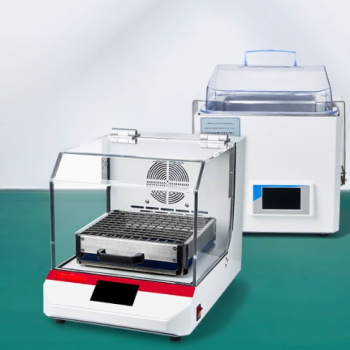
Prolonged mechanical agitation in benchtop shakers can sometimes generate a small amount of heat through friction. For temperature-sensitive kinetics, it is vital to use a thermostatic or water bath shaker to ensure that fluctuations in temperature do not skew the adsorption capacity data.
Speed Saturation Points
There is a "diminishing returns" point where increasing the shaker speed no longer increases the adsorption rate. Once the liquid film resistance is fully overcome, the rate is controlled by the internal diffusion of the adsorbent, meaning further energy input is unnecessary and potentially damaging to the sample.
How to Apply Shaker Parameters to Your Project
When setting up your kinetic experiments, your choice of shaker settings should align with your specific research objectives:
- If your primary focus is determining intrinsic material kinetics: Use a speed high enough (e.g., 180 rpm) to completely eliminate external mass transfer resistance, ensuring your data reflects the adsorbent's true chemical affinity.
- If your primary focus is simulating a specific treatment plant: Match the shaker's agitation intensity to the expected turbulence and flow rates of your target industrial application.
- If your primary focus is working with fragile biomass adsorbents: Select a moderate speed (e.g., 120-150 rpm) to balance the need for mixing with the necessity of maintaining the structural integrity of the adsorbent particles.
By carefully controlling mechanical agitation, you ensure that your study of heavy metal adsorption is both technically sound and practically relevant.
Summary Table:
| Feature | Function in Adsorption Kinetics | Key Benefit |
|---|---|---|
| Mechanical Agitation | Eliminates liquid-phase diffusion/film resistance | Ensures ion transport is not the rate-limiting step |
| Particle Suspension | Prevents adsorbent (e.g., biochar) from settling | Maximizes available surface area for ion interaction |
| Collision Frequency | Increases movement of ions and active sites | Accelerates time to reach dynamic equilibrium |
| Speed Control | Maintains stable rotation (150–180 rpm) | Provides reproducible data for kinetic modeling |
| Dynamic Simulation | Mimics turbulent industrial water environments | Increases real-world applicability of lab findings |
Elevate Your Research Precision with KINTEK
Precise adsorption kinetics require absolute control over experimental variables. KINTEK specializes in high-performance laboratory equipment, including rotary shakers and shakers engineered to eliminate mass transfer barriers and deliver reproducible results for heavy metal research.
Beyond our agitation solutions, KINTEK offers a comprehensive range of tools to support your entire laboratory workflow:
- Thermal Processing: Muffle, tube, and vacuum furnaces for adsorbent synthesis.
- Material Preparation: Crushing, milling, and hydraulic presses for pelletizing samples.
- Advanced Reactors: High-pressure autoclaves and electrolytic cells for specialized chemical studies.
- Consumables: High-quality ceramics, crucibles, and PTFE products to ensure sample purity.
Whether you are a researcher optimizing adsorbent capacity or a distributor seeking reliable laboratory supply, KINTEK provides the technical expertise and robust equipment you need to succeed.
Ready to optimize your adsorption experiments? Contact our specialists today to find the perfect equipment solution for your lab!
References
- Jarosław Chwastowski, Paweł Staroń. Pyrolytic Modification of Avocado (Persea americana) Peel for the Enhancement of Cadmium(II) and Chromium(VI) Sorption Properties. DOI: 10.3390/app132212466
This article is also based on technical information from Kintek Solution Knowledge Base .
Related Products
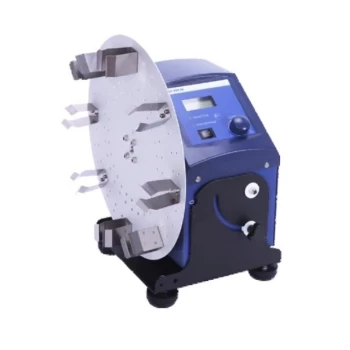
- Laboratory Disc Rotary Mixer for Efficient Sample Mixing and Homogenization
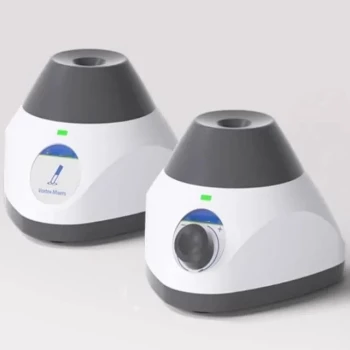
- Laboratory Vortex Mixer Orbital Shaker Multifunctional Rotation Oscillation Mixer
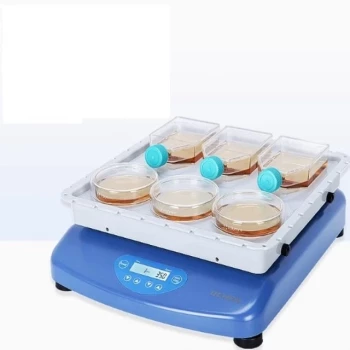
- Laboratory Oscillating Orbital Shaker
- Single Punch Tablet Press Machine and Mass Production Rotary Tablet Punching Machine for TDP
- Laboratory Multifunctional Small Speed-Adjustable Horizontal Mechanical Shaker for Lab
People Also Ask
- What is a laboratory mixer used for? Choose the Right Tool for Liquids or Solids
- What is a laboratory mixer? A Guide to Achieving Perfect Sample Homogeneity
- What are laboratory mixers used for? Achieve Perfect Sample Homogeneity and Reliable Results
- How does a high-efficiency homogenizing mixer contribute to the preparation of Tobermorite and Xonotlite precursors?
- Why is precision mixing required for concrete corrosion studies? Ensure Data Integrity through Homogenization