A constant temperature shaker serves as the critical control mechanism for ensuring both kinetic and thermodynamic consistency during biochar adsorption tests. By providing stable, continuous agitation alongside precise thermal regulation, the shaker eliminates external physical variables that would otherwise skew data. This dual functionality allows researchers to isolate the biochar's true adsorption capacity and reaction rates, ensuring that experimental results reflect the material's chemical properties rather than mechanical limitations.
The constant temperature shaker is essential for eliminating liquid film mass transfer resistance and maintaining a stable thermal environment. This ensures that adsorption data accurately reflects the equilibrium and kinetic processes required to validate predictive models and industrial potential.
Overcoming Physical Barriers to Adsorption
Eliminating Liquid Film Resistance
In a static solution, a stagnant layer of water—known as the liquid film—surrounds biochar particles, creating a barrier that pollutants must diffuse through. The shaker’s continuous mechanical power provides the necessary energy to overcome this mass transfer resistance, allowing pollutants to reach the biochar surface efficiently.
Maintaining Particle Suspension
Biochar particles naturally tend to settle at the bottom of a container due to gravity, which significantly reduces the available surface area for reaction. The shaker maintains the biochar in a suspended state, ensuring that the entire surface of the adsorbent remains in full contact with the pollutant solution throughout the experiment.
Increasing Effective Collision Frequency
The uniform rotational or reciprocating motion of the shaker increases the kinetic energy within the system. This leads to more frequent and effective collisions between the pollutant molecules (such as heavy metals or phosphates) and the biochar’s active sites, shortening the time required to reach kinetic equilibrium.
The Necessity of Thermodynamic Stability
Maintaining Isothermal Conditions
Adsorption is a temperature-sensitive process; even minor fluctuations can alter the energy state of the pollutants and the biochar surface. A constant temperature shaker maintains a precise thermal environment (commonly 25 °C), which is vital for obtaining accurate adsorption isotherm data.
Calculating Thermodynamic Parameters
To understand whether a reaction is spontaneous or heat-absorbing, researchers must test adsorption at specific, stable temperatures. The shaker ensures these thermodynamic conditions remain constant, allowing for the accurate calculation of enthalpy, entropy, and Gibbs free energy.
Ensuring Uniform Solute Diffusion
Precise temperature control prevents local concentration gradients that can occur if one part of the solution is warmer than another. This ensures uniform solute diffusion, which is a prerequisite for generating repeatable and highly accurate adsorption capacity data.
Understanding the Trade-offs and Pitfalls
The Risk of Particle Attrition
While high agitation speeds (e.g., 180 rpm) are effective for mixing, excessive mechanical force can lead to particle attrition. This physical breakdown of biochar into smaller fragments artificially increases the surface area, potentially leading to overestimations of its natural adsorption performance.
Balancing Speed and Equilibrium
If the oscillation frequency is too low, the system may suffer from external diffusion resistance, leading to an artificially slow "apparent" reaction rate. Conversely, speeds that are too high can generate heat through friction or cause splashing, which may compromise the airtight integrity of the reaction vessels.
Temperature Calibration Errors
Relying solely on the shaker's digital display without independent verification can lead to systematic errors. Even a deviation of 1-2 degrees Celsius can significantly shift the adsorption equilibrium, making it difficult to compare results across different laboratory studies.
How to Apply This to Your Research Goal
Choosing the Right Settings for Your Project
- If your primary focus is Kinetic Modeling: Prioritize a consistent oscillation frequency (e.g., 140–180 rpm) to ensure that mass transfer resistance is fully eliminated, allowing for the calculation of true reaction rates.
- If your primary focus is Thermodynamic Evaluation: Ensure the shaker’s temperature stability is calibrated to within ±0.5 °C to accurately determine how temperature shifts influence pollutant removal efficiency.
- If your primary focus is Industrial Scaling: Use the shaker to simulate specific environmental temperatures and agitation levels that mimic the flow conditions of real-world wastewater treatment systems.
By mastering the balance between mechanical agitation and thermal stability, you ensure that your biochar characterization is both scientifically rigorous and practically relevant.
Summary Table:
| Feature | Impact on Biochar Research | Primary Benefit |
|---|---|---|
| Mechanical Agitation | Eliminates liquid film resistance & prevents particle settling | Ensures maximum surface area contact |
| Thermal Regulation | Maintains precise isothermal conditions (e.g., 25°C) | Accurate calculation of thermodynamic parameters |
| Kinetic Control | Increases effective collision frequency | Faster and more reliable kinetic equilibrium |
| Uniform Diffusion | Prevents local concentration gradients | Repeatable and high-accuracy adsorption data |
Achieve Scientific Rigor with KINTEK Laboratory Solutions
Precision is the backbone of reliable biochar characterization. At KINTEK, we understand that even minor temperature fluctuations or improper agitation can compromise your research data. We provide high-performance constant temperature shakers and homogenizers specifically designed to eliminate external variables, ensuring your results reflect the true chemical potential of your materials.
Our comprehensive laboratory portfolio supports every stage of your workflow, from crushing and milling systems for sample preparation to high-temperature muffle furnaces and ULT freezers for specialized testing. Whether you are a researcher focused on kinetic modeling or a distributor looking for reliable, certified equipment, KINTEK delivers the durability and precision you need.
Ready to elevate your lab's performance? Contact KINTEK today to find the perfect equipment for your adsorption studies!
References
- Wei Zhang, Yong Sik Ok. Machine learning based prediction and experimental validation of arsenite and arsenate sorption on biochars. DOI: 10.1016/j.scitotenv.2023.166678
This article is also based on technical information from Kintek Solution Knowledge Base .
Related Products
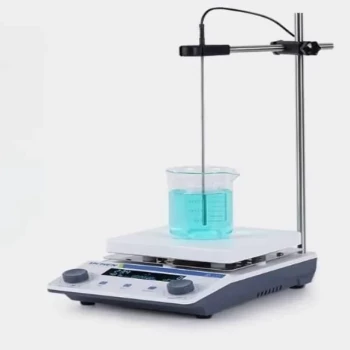
- Laboratory Small Constant Temperature Heated Magnetic Stirrer Heater and Stirrer
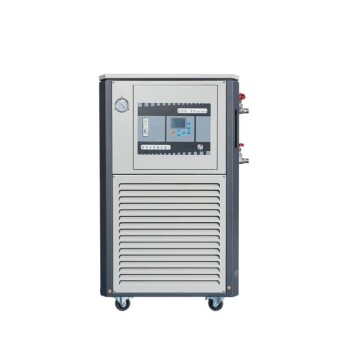
- High Temperature Constant Temperature Heating Circulator Water Bath Chiller Circulator for Reaction Bath
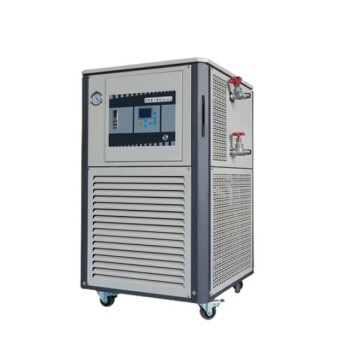
- 5L Heating Chilling Circulator Cooling Water Bath Circulator for High and Low Temperature Constant Temperature Reaction
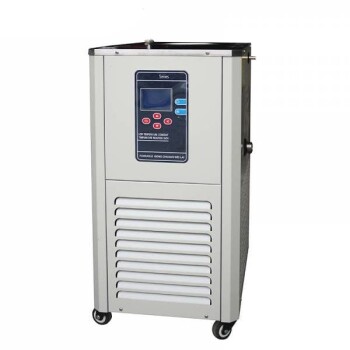
- 50L Chiller Water Bath Cooling Circulator Low Temperature Constant Temperature Reaction Bath
- 10L Heating Chilling Circulator Cooling Water Bath Circulator for High and Low Temperature Constant Temperature Reaction
People Also Ask
- What role does a magnetic stirrer with heating play in ZnO nanoparticle synthesis? Precision Control for Quality Results
- What role does a constant temperature heating magnetic stirrer play in MFC-HAp synthesis? Achieve Material Homogeneity
- What is the function of a laboratory magnetic stirrer in Ni–Cr–P electrodeposition? Optimize Ion Transport & Coating
- Why is a laboratory magnetic stirrer required for benzoic acid esters? Boost Reaction Speed & Yield with High RPM
- What role does a laboratory magnetic stirrer play in TiO2 and TiO2-Ag sol preparation? Master Chemical Kinetics