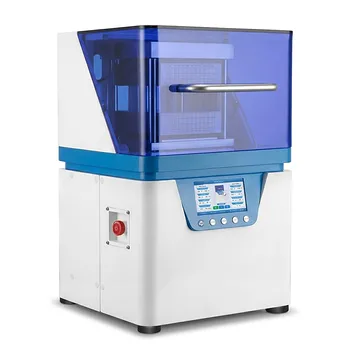
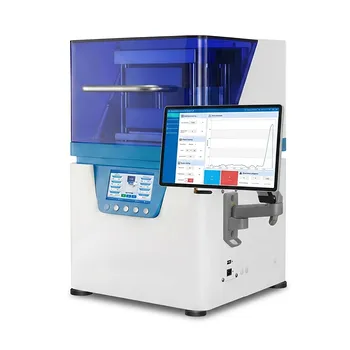
The high-pressure hydrothermal reactor serves as the critical containment vessel that enables the precise chemical transformation of metal precursors into structured composites. In the synthesis of HC/NiCo oxide composites, this reactor provides a sealed, high-pressure environment that facilitates the dissolution, diffusion, and recrystallization of nickel and cobalt salts onto carbon supports. By maintaining temperatures—typically around 120°C—above the normal boiling point of the solvent, the reactor ensures that the metal components are uniformly deposited and anchored, creating the foundation for complex, three-dimensional hierarchical structures.
The hydrothermal reactor provides the necessary thermodynamic conditions to force the uniform integration of metal oxides into carbon frameworks, a process impossible at standard atmospheric pressure. This controlled environment is the primary driver for achieving high-surface-area morphologies and robust material anchoring.
Creating the Ideal Synthesis Environment
Corrosion Resistance and Containment
The reactor is typically equipped with a PTFE (Polytetrafluoroethylene) liner, which provides a chemically inert surface. This liner protects the stainless steel outer shell from corrosive metal salts while preventing impurities from leaching into the composite.
Superheated Liquid Dynamics
By sealing the precursors in a pressurized vessel, the reactor allows the liquid phase to reach temperatures exceeding its atmospheric boiling point. This superheated state significantly increases the solubility and reactivity of the nickel and cobalt sources.
Pressure-Induced Diffusion
The high-pressure conditions within the reactor drive the metal ions deep into the pores of the carbon supports (HC). This ensures that the resulting NiCo oxides are not just sitting on the surface but are deeply integrated into the carbon matrix.
Mechanisms of Structural Formation
Dissolution and Recrystallization
The reactor facilitates a continuous cycle of dissolution and recrystallization. As metal salts dissolve in the superheated solvent, they recrystallize onto the carbon surface in a controlled manner, forming stable oxide phases.
Uniform Deposition and Anchoring
Because the reaction occurs in a sealed, homogeneous environment, the nickel and cobalt components are deposited with high uniformity. This uniform anchoring is essential for preventing the active metal oxides from detaching during subsequent use.
Development of 3D Hierarchical Structures
The specific kinetic environment of the reactor promotes the growth of three-dimensional hierarchical structures. These structures, such as nanosheet arrays or nanopillars, provide a high specific surface area that is critical for maximizing active sites in electrochemical applications.
Understanding the Trade-offs and Pitfalls
Precision vs. Scalability
While hydrothermal reactors offer extreme precision in material morphology, they are often limited by batch processing constraints. Scaling up the synthesis requires larger, more expensive pressure vessels that can maintain uniform temperature gradients throughout the interior.
Risk of Morphology Collapse
If the pressure or temperature is not precisely controlled, the intended nanosheet or rod-like structures can collapse into dense aggregates. This reduces the surface area and significantly degrades the performance of the HC/NiCo composite.
Material Compatibility
Not all carbon supports can withstand the oxidizing conditions sometimes present in a hydrothermal environment. If the reaction time is too long or the temperature too high, the carbon framework (HC) may undergo partial degradation, weakening the final composite.
Optimizing Synthesis for Your Project
How to Apply This to Your Project
To achieve the best results with a high-pressure hydrothermal reactor, you must align your reactor settings with your specific material goals.
- If your primary focus is maximizing active surface area: Prioritize longer reaction times at moderate temperatures (e.g., 95°C–120°C) to promote the growth of vertical 2D nanosheet arrays.
- If your primary focus is structural stability and anchoring: Focus on higher pressure settings and specific precipitants to ensure deep diffusion of metal ions into the carbon lattice.
- If your primary focus is phase purity and crystallinity: Utilize higher temperatures (up to 150°C) to ensure thorough dissolution and oriented crystal growth along specific planes.
The hydrothermal reactor remains the most effective tool for engineering the sophisticated architectures required for modern carbon-metal oxide composites.
Summary Table:
| Feature | Synthesis Role | Outcome for HC/NiCo Composites |
|---|---|---|
| PTFE Liner | Chemical Inertness | Prevents contamination & resists corrosion from metal salts |
| Superheated State | Increased Solubility | Enhances reactivity and dissolution of Ni/Co precursors |
| High Pressure | Forced Diffusion | Drives metal ions deep into carbon support (HC) pores |
| Homogeneous Env. | Controlled Recrystallization | Ensures uniform anchoring and 3D hierarchical growth |
Elevate Your Material Synthesis with KINTEK Precision
Achieving the perfect 3D hierarchical structure requires more than just chemistry—it requires uncompromising environmental control. KINTEK specializes in high-performance laboratory solutions, offering a premier range of high-pressure high-pressure reactors and autoclaves designed specifically for complex material engineering.
Whether you are developing next-generation battery materials or advanced catalysts, our equipment provides the thermal stability and chemical resistance (including high-quality PTFE liners) needed for consistent results. Beyond reactors, KINTEK supports your entire workflow with:
- High-Temperature Furnaces: Muffle, tube, vacuum, and CVD/PECVD systems.
- Material Processing: Crushing, milling, and hydraulic pellet presses.
- Laboratory Essentials: Electrolytic cells, cooling solutions, and specialized ceramics.
Ready to optimize your composite synthesis? Contact us today to discuss how KINTEK’s high-pressure solutions can bring precision and scalability to your research.
References
- Thirukumaran Periyasamy, Jaewoong Lee. Enhanced Activity and Stability of Heteroatom-Doped Carbon/Bimetal Oxide for Efficient Water-Splitting Reaction. DOI: 10.3390/polym15173588
This article is also based on technical information from Kintek Solution Knowledge Base .
Related Products
- Customizable Laboratory High Temperature High Pressure Reactors for Diverse Scientific Applications
- High Pressure Laboratory Autoclave Reactor for Hydrothermal Synthesis
- Customizable High Pressure Reactors for Advanced Scientific and Industrial Applications
- Stainless High Pressure Autoclave Reactor Laboratory Pressure Reactor
- Mini SS High Pressure Autoclave Reactor for Laboratory Use
People Also Ask
- How do high-pressure and high-temperature reactors ensure the effective treatment of lignocellulosic wastewater in WAO?
- What equipment is required for high-pressure high-temperature reactions? Master Extreme Chemistry Safely
- How do you control high pressure in a reactor? A Guide to Safe & Stable Operation
- How does initial oxygen pressure affect the wet oxidation of pharmaceutical sludge? Master Your Oxidation Depth
- Why is argon better than nitrogen for inert atmosphere? Ensure Absolute Reactivity & Stability