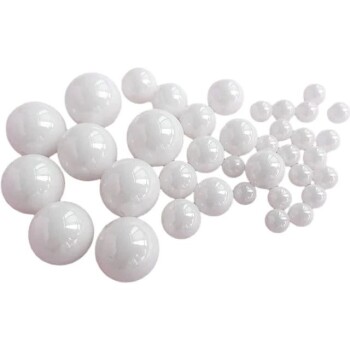
Zirconia grinding balls represent the optimal balance of physical power and chemical purity for processing sensitive battery materials. They are preferred for milling Pyr-IHF and LLZO because their high density provides sufficient impact force to pulverize hard precursors, while their extreme chemical inertness prevents the introduction of metallic impurities that would degrade electrochemical performance.
The Core Insight For battery electrolytes like LLZO, purity is the defining factor for success. Zirconia is the industry standard because it solves the "contamination paradox": it delivers high-energy impact to break down hard ceramics without shedding conductive metal ions into the mixture.
Preserving Electrochemical Purity
The Dangers of Metallic Contamination
Battery electrolytes, particularly solid-state materials like LLZO (Lithium Lanthanum Zirconium Oxide), are highly sensitive to foreign substances. Standard grinding media, such as stainless steel, inevitably wear down during milling.
This wear introduces metal ions into the powder. These conductive impurities can cause short circuits or block ionic pathways, drastically reducing the final battery's performance.
Chemical Inertness
Zirconia is chemically inert. Even if microscopic wear occurs, the material does not react with the cathode or electrolyte powders.
This stability ensures that the electrochemical properties of the Pyr-IHF or LLZO remain compromised. It guarantees the final material meets stringent battery purity standards.
The "Like-for-Like" Compatibility
For LLZO specifically, zirconia offers a unique advantage rooted in chemistry. The "Z" in LLZO stands for Zirconium.
Because the precursor mixture already contains zirconia (ZrO2), using grinding media made of the same material minimizes the risk of foreign contamination. If the media wears slightly, it essentially adds a trace amount of a base ingredient rather than a foreign contaminant.
Mechanics of Efficient Milling
High Density and Impact Force
Refining hard ceramic precursors requires significant kinetic energy. Zirconia balls possess high density, allowing them to carry more momentum than lighter ceramic alternatives.
This high density translates to greater impact force when the balls collide with the powder. This ensures efficient pulverization of hard oxides into fine, uniform particles.
Exceptional Hardness and Wear Resistance
Zirconia is extremely hard and tough. This durability allows it to withstand the high-energy environment of a planetary mill or attrition mill without fracturing.
A lower wear rate means the grinding media lasts longer and maintains its shape. More importantly, it minimizes the volume of debris generated during the process.
Understanding the Trade-offs
Cost vs. Performance Necessity
Zirconia media is generally more expensive than standard steel or alumina options. However, in the context of battery material synthesis, this cost is a necessary investment.
Using cheaper media like stainless steel is often a "false economy." While the media is cheaper, it renders the expensive electrolyte powder unusable due to iron contamination.
Brittle Fracture Risk
While tough, zirconia is a ceramic and lacks the plasticity of metal. Under extreme abuse or improper milling conditions (such as running a mill without powder), zirconia balls can crack or chip.
Operators must ensure proper filling ratios and handling to prevent mechanical failure of the media itself.
Making the Right Choice for Your Goal
To maximize the performance of your battery material synthesis, align your choice with your specific processing needs:
- If your primary focus is Electrolyte Conductivity: Prioritize zirconia to eliminate the risk of metallic ion contamination that blocks lithium-ion pathways.
- If your primary focus is Particle Refinement: Rely on the high density of zirconia to generate the kinetic energy needed to crush hard ceramic precursors effectively.
- If your primary focus is LLZO Synthesis: Use zirconia to leverage "like-for-like" material compatibility, ensuring any media wear does not introduce foreign elements.
Zirconia is not just a grinding tool; it is a critical process control variable that safeguards the integrity of your final energy storage product.
Summary Table:
| Feature | Zirconia Grinding Media | Impact on Battery Materials |
|---|---|---|
| Chemical Purity | Inert & Metallic-ion free | Prevents short circuits and ionic pathway blockages. |
| Density | High (Approx. 6.0 g/cm³) | Provides high kinetic energy for crushing hard ceramics. |
| Hardness | Exceptional (Mohs 9) | Ensures long-term wear resistance and minimal debris. |
| Compatibility | "Like-for-Like" (for LLZO) | Wear particles match LLZO precursors, preventing contamination. |
Elevate Your Battery Material Research with KINTEK
Precision milling is the foundation of high-performance energy storage. At KINTEK, we understand that for materials like Pyr-IHF and LLZO, even trace contamination is unacceptable.
Our premium zirconia grinding media are engineered to provide the perfect balance of high-impact energy and chemical inertness. Beyond milling, KINTEK offers a comprehensive ecosystem for battery labs, including:
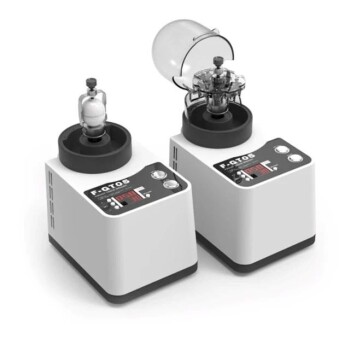
- Crushing and Milling Systems: High-energy planetary mills and attrition solutions.
- Battery Research Tools: Electrolytic cells, electrodes, and consumables.
- Advanced Furnaces: Vacuum and atmosphere furnaces for sintering cathode materials.
- Hydraulic Presses: Pellet and isostatic presses for solid-state electrolyte preparation.
Don't let impurities compromise your electrochemical performance. Contact our laboratory specialists today to source the high-purity media and equipment your innovation deserves.
Related Products
- Laboratory Jar Ball Mill with Alumina Zirconia Grinding Jar and Balls
- Precision Machined Zirconia Ceramic Ball for Engineering Advanced Fine Ceramics
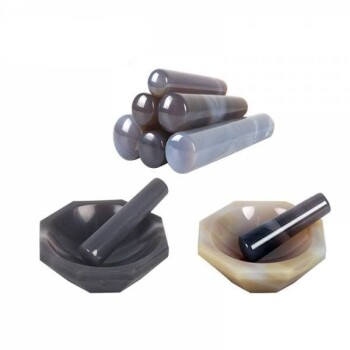
- Laboratory Jar Mill with Agate Grinding Jar and Balls
- Laboratory Ball Mill Jar Mill with Metal Alloy Grinding Jar and Balls
- High Energy Planetary Ball Mill Milling Machine for Laboratory
People Also Ask
- What are the primary functions of using a ball mill for BZCY72 powder? Achieve High Purity and Enhanced Sintering
- In what way does a laboratory ball mill affect material properties when modifying PHBV/pulp fiber composites?
- Why is a laboratory ball mill required for ultra-fine fly ash? Unlock Nano-Scale Adsorption Power
- What is the function of a laboratory ball mill in the preparation of AMMCs? Optimize Dispersion & Grain Refinement
- What is the function of a laboratory ball mill in the pretreatment of waste tire char (WTC)? Optimize Material Reactivity